
Welcome to Bob’s Book Reviews
A nonprofit website designed to bring readers to reviews/recommendations highlighting older books that Bob believes deserve a good dusting off. Positive book reviews by Bob would range from Bill Bryson’s The Lost Continent “Travels In Small-Town America” (1989); “Eyewitness to Power” Essence of Leadership Nixon to Clinton, by David Gergen (2000); Last Days of Summer, the novel by Steve Kluger; A Confederacy of Dunces, the novel by John Kennedy Toole (1980); Wait Till Next Year—A Memoir, Doris Kearns Goodwin; to Cavett, a 1974 autobiography of Dick Cavett.
Never being one to pass up an opportunity for a bit of shameless self promotion, Bob welcomes one and all to a sneak preview of his latest work----The Inn: Memoir of a “Storied” Past .This laugh filled page turner will soon be available for publication. For a sneak peek just click on this link.
For more about Bob go to the top of this landing page and click on Bob’s Bio, Bob’s Books (see his latest novel Animal Home), Bob’s Blog (fun thoughts about writing and the book business). Oh, looking for older book recommendations from notable readers — everyone from bestselling authors Bill Bryson, Carl Hiaasen, Diane Chamberlain, and Nelson DeMille to eight-time Emmy-award winning writer and producer Jonathan Hock? Just click on Notables’ Notes at the top of the page.
So, Bob loves new connections, the more readers the merrier and his relationship with (see) the WRAL.COM icon here on the home page links readers to WRAL Channel 5’s excellent website, a site that millions visit weekly and one that excerpts Bob and his notables reviews.
As to the V Foundation for Cancer Research icon, Jim Valvano, the famous NC State basketball coach, was an English major and a voracious reader. Here, with a single click readers of Page Turners from the Past can go to the V Foundation, an entity that has—to date—raised more than $ 200 million to fight this dreaded disease. Contributions to this most worthy charity are greatly encouraged. Bob wrote V&Me “Everybody’s Favorite Jim Valvano Story.”
Now, one never knows what books Bob might find fascinating. Again, although he is a fan of many of the blockbusters from the past, his review list, this being a niche gathering, will feature a regularly posted review and always close with a link to Amazon or an independent book distributor that offers the books (used and new, hardback and paper or e-book) for very affordable prices plus shipping (many in the used paperback category for as low as pennies plus shipping). Bob IS NOT compensated for these The Price Is Right sales!
Bob also reminds readers to join the millions of Americans who ask their local librarian to request titles.
So, take a stroll through Bob’s dusty shelves, click on the reviews for past page tuners that will have you turning those well worn (and greatly deserved) pages.

Bob’s New Book!
The Inn: Memoir of a “Storied” Past by Bob Cairns
Partners & Friends

WRAL is an NBC affiliate that serves the Triangle region and Eastern North Carolina. Click above to find out what's happening at the station.
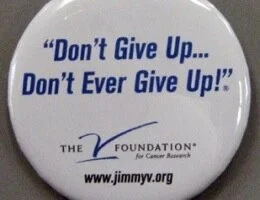
The V Foundation for Cancer Research: The meaningful words above were declared by passionate and committed former basketball coach Jim Valvano in the fight of his life against cancer. Click on image to find out more
Part 1: Baseball Book Goes Wally World
“Past Page Turner Stomach Turner”
Here’s an idea that resulted in a Past Page Turner. Sign a contract with a major New York publisher to deliver a book called Pen Men “Baseball’s Greatest Bullpen Stories Told by the Men Who Brought the Game Relief.”
“Past Page Turner Stomach Turner”
Here’s an idea that resulted in a Past Page Turner. Sign a contract with a major New York publisher to deliver a book called Pen Men “Baseball’s Greatest Bullpen Stories Told by the Men Who Brought the Game Relief.”
I’d (somehow) interview in the neighborhood of seventy five of these unique famous and infamous major league baseball players---relief pitchers, bullpen catchers and coaches. As a bonus I’d toss in first-hand relief pitching memories from the game’s great play-by-play announcers---Mel Allen, Red Barber, Ernie Harwell, Harry Cary and many more. All of this flying by the seat of my pants commitment to bag these celebrities who, spoiler alert, had little or no interest in meeting some unknown writer, who for free, wanted to record their Pen memories. Digging up pen men from the 1930s to the then, early 1990s, it would be a history focused on the Pen that, as it suddenly occurred to my interviewees, might make a lucrative biography when they “got around” to writing it themselves.
Try that one bagging the likes of, along with many others Goose Gossage, Tug McGraw, Rollie Fingers, Dennis Eckersley, Bob Ucker, Tim McCarver, Hoyte Wilhelm, quite the prick by the way, and Jim Bouton. Bouton, who later having read the advanced copy, would call the publisher threatening to “sue our asses” for something he’d said on the record about young “ladies” slipping into the bullpen to give the pitchers relief! Sue? Really Jim! Come on, we read your tell-all best seller Ball Four!
Now, as to the Wally World reference. In retrospect it may not have been a great idea to jack up the pressure of this project by deciding that, since I would be conducting the majority of these in-person interviews in one summer---from Boston’s Fenway Park to San Francisco’s Candlestick capped off early the next year with a run down to Florida for Spring Training, that this might present a wonderful family togetherness opportunity.
So, why not load up the old Cairns min-van (thanks for the Idea Chevy Chase) with an 80-year-old mother, a forty five year-old wife, who finally showed signs of a nervous breakdown in traffic somewhere near Dodger Stadium. and my two “are we there yet?” kids, ages 10 and 14.
So, “ALL ABOARD!” For a triple jointed “vacation” New England, All Points West and then if we all lived, Florida the next spring about the time Walt Disney’s cash registers started to ring) that would, unbeknownst to me, begin by driving into the teeth of a New England approaching Hurricane called (irony) Bob. Oh, having just taken on a bit more excess baggage---a couple of ancient aunts and a dog we picked up outside of Boston---in an effort to heroically beat this gale.
I would weather-the-storm only to find myself home in a couple of weeks back in North Carolina where, after pushing Florida back until the following spring, I’d launch that little 7,000 mile round-trip swing west. A drive that would suddenly, somehow again, take a family centric back seat to little out of the way stops that had nothing to do with pantsing old ball players and play-by play guys for interviews. Mount Rushmore, Yellowstone, and the Grand Canyon----you get the idea!
My mother from the rear of the van: “While we’re out here why not make a run up to Denver to see my great niece?” Great idea Mom any follow up requests? “Well, we could scoot down to San Diego to visit one of my long lost relatives.” This would, had I caved, been a cup of tea with a Susie something or other, a nonagenarian, who wouldn’t know a splitter from a slider. So, with the challenge of bagging the celebrity interviews, just to relieve the pressure, I found myself behind the wheel humping that minivan west between eight and fifteen hours a day.
How would those guys scratching and spitting out there in the Bull Pen (had they cared) have described this writing project? How about a cluster fuck!
Leg one, off to Boston where just before the hurricane hit I managed to pay a visit to an old reliever named Broadway Charlie Wagner, a natural story teller who had some great ones about his days on the road rooming with Ted Williams. Things were looking up. The next day I would chat at Fenway with Jeff Reardon, the Sox red hot closer, a guy who would wind up his career with 367 saves.
I was on my way. Then Hurricane Bob raised its ugly head and the Reardon interview was lost in the life threatening winds. Oh, we were staying with my aunts, my mother’s sisters, in Marshfield Beach, about a fifty minute drive up Route 3 to Boston’s Fenway Park.
Problem.
We hit the beach along with the hurricane, and Marshfield was suddenly under orders to evacuate. My aunt Irene refused to put Coco her schnauzer in a “safe keeping” shelter and so the writer of Pen Men, van driver, father of the freaking century had to come up with a plan post haste. What I came up with was in, fact, a bad plan. According to the radio, the storm was moving northeast. I looked at the map loaded, the aunts, Coco, my mother, the wife, and the kids and struck out for safety. Hartford Connecticut---off the storm’s path, was just a two hour jaunt up I-90.
We’d motel there and ride out hurricane. I’d call Fenway and beg for a reboot of the Reardon interview. Certainly the Sox would understand. One would think that by now I might have seen a portent of things to come on the western trip. And being of sound mind, I’d just take the St. Martin advance check, and drop it in the mail with a little note to my would-be editor saying “Due to my health (mental) I regret to inform you that the bull pen book will not be possible.”
The deal beaker should have been on the run to Hartford. We found ourselves in gridlock traffic with the Bean Town populace all beating it west to avoid the hurricane. My question was---after flipping off a horn blowing idiot with a bumper sticker that read SOUTHIE DOESN’T SUCK---how many of these windblown vehicles inching along were stocked with livid kids, three octogenarians, an angry wife, a yapping dog and a driver who was seriously considering giving up the writing project of his life?
In an attempt at brevity, I will “fast” forward to five hours later slogging in to our safe haven---a rain soaked motel off interstate I-90. I made my way through the lobby, trying to ignore the NO PETS SIGN on the front desk, noting that the place looked a bit dark and dank for early evening. The manager quickly informed me that we were very fortunate to bag the last two rooms within miles and although there had been a power outage, that things would be back to normal before we knew it. Before I grabbed my credit card, I stole a quick look back into the parking lot. Sheets of rain. The mini-van appeared to have been blown several parking spots over. “The two rooms, we’ll take them,” I said.
Sparing my readers the details I will say this. It was damned fortunate that the lobby was pitch black because otherwise I don’t think my aunt Irene could have made it to her room past management without explaining her yapping purse. In fact, we all were in for the longest, darkest evening of our lives. Somewhere around eight O’clock, the power came on. The motel’s idea of power being one candle per room. Just settling down, the kids, who were rooming with me, had gutted the motel’s snack machines for their candle lit dinner. There came a knock at our door.
Aunt Irene.
It seems that she had been constipated since early in the week, and that Coco was suffering from quite the opposite affliction. She said, according to the night clerk at the front desk, there was a pharmacy just a few miles up I-90. And….she was wondering if I might brave the storm and get a dose of Dulsolax for her and some Imodium for Coco.
So, with Jeff Reardon lost in the wind, I’d now be driving back into the teeth of a howling gale to a pharmacy where I would be asking the druggist to show me two potencies aimed at making one go and the other one stop!
Here’s the (mixed metaphor) pisser. I’m going to wrap this up by saying that yes, two days later we all---bag, baggage and Coco---landed back in Marshfield Beach. I eventually got the Reardon interview and we made it back to North Carolina to launch phase two of this ODDessy. Now as to the pisser, when I drove over a hill less than a quarter of a mile from THE LIGHTS OUT MOTEL, what do you think I saw? A freaking town lit up like a Christmas tree---so there would be no power outage in the Walgreens when a puzzled druggist led me to the purchases that would please aunt Irene greatly when one of them opened her and the other plugged up that *^%&ing Coco.
Oh, since this is a Past Page Turner book blog, readers will be “relieved” to know about the writing of a book that is now ancient history that as I awaited the Reardon interview in a rain soaked Fenway Park, I found myself in the middle of a scene that (me with ever the eye out of this kind of action) could only be described as bull pen behavior. The stands were empty. I was sitting behind the dugout when a PR lady brought a group of “challenged” children down and seated them right behind the dugout. She said, “Now some of the players will be coming out to warm up soon, and just call to them and maybe they will autograph your scorecards.”
Minutes later, Tony Pena, the quintessential bullpen catcher came out and started to long toss right there in front of the kids. Seconds later the kids were screaming at the top of their lungs, “Mr. Pena, Mr. Pena can we have your autograph?” (Or words to that effect).
Now my guess is that Tony may have been a bit hung over from the Hurricane layoff, and screaming kids wasn’t exactly what he needed to hear! So without looking at the little catcallers, he spun around and shouted to them, “Shut the f*%# Up!” Bullpen behavior of the highest order, I thought. But then Pena, who obviously had not been given a heads up by the PR lady, looked at the kids and realized. Well, he signed everything in sight but me! So, as suspected, bullpen guys are pretty good guys---just a lack of communication in this case.
As to the Reardon interview, that went well---compared to the “family” Hurricane Bob effort that led me to it. I learned a thing or two about his joining the great relievers like Gossage and Eckersly in the 300 Save Club. I thanked the big right hander and was on my way, more than pleased to throw my tape recorder in the bag, and point the mini-van South
Part 2: Wally World West
“Past Page Turner Stomach Turner”
Here’s an idea that resulted in a Past Page Turner. Sign a contract with a major New York publisher to deliver a book called Pen Men “Baseball’s Greatest Bullpen Stories Told by the Men Who Brought the Game Relief.”
One would think that after the New England beginnings---riding on the winds of Hurricane Bob, that any sane person would just tell his family, “Look, this Wally World--THE CAIRNS GO WEST--- summer vacation will just be a big disappointment. I have a book to write, dozens of interviews, I’m working under a contract with an actual completion date. Sooooo…family stays at home for this one and when I get all this interviewing and writing tied up and done, then----next summer----we celebrate by all heading west together. Who knows maybe there will be a book tour, and I’ll be chatting up Pen Men in Hollywood on ESPN’s UpClose with Roy Firestone!”
My wife: “Bob, your mother is 80 years old this might be the last time that we as a family. . . (Fill in the blank!)”
The “Are we there yet?” twins: “You promised. You promised!”
Liz: (the 10 year-old) “We went though that awful hurricane with you and that pooping machine of a dog of Aunt Irene’s so you could write your old book!”
Matt: “You promised me that I’d get to meet all those ballplayers, see a game in Dodger Stadium and Candlestick Park, and be your ‘assistant!’”
Alyce: “I’ve given our MasterCard to every freaking Embassy Suites Hotel from here to the Pacific Ocean. We are packed, loaded, and locked and so you might as well crank up that Mini Van, right now mister!”
California Here We Come!
And, by the way, what better way to kick off a good old fashioned family fun adventure like this than to have Elizabeth, again the 10-year old, just as we’d pulled out on I-40 west of Raleigh, eye-ball the pasture of an NC State University cattle breeding farm and say, “Hey, Dad, look at those two cows playing wheel bower over there. What’s up with that?”
Sadly, all I could think was what a perfect jump start for the writing of a book about the Bull Pen.
We were headed to Nashville, Tennessee. Why? Because Alyce’s cousin Susan lives in Nashville! Did her husband Charles pitch several years in the pen as a closer with the Cleveland Indians? Actually no he didn’t. Charles is an engineer, a great guy, but if the catch we had in his backyard was an indicator, then he has a fastball that wouldn’t break wind. Now, he does love baseball! And I’d be lying if I didn’t say that I had a chance to “interact” with some of the game’s great bullpen pitchers during this out-of-the-way stay in Tennessee.
When I say interact, what I mean is that I---sitting at Charles’s kitchen table knocking back a few beers---made copious notes on some of the game’s great bullpenners.
Charles has a world class gathering of gum cards---Topps, Bowman, Fleer and Red Man!
And so with pad and pen in hand, I was able to grab research from the backs of his incredible collection. It’s not that I hadn’t been doing my due diligence, research wise, on relief pitching for the past few months. But there were some new and interesting factoids here on the cards. Nice ice breakers when I interviewed these players. I mean, who knew that Tug McGraw landed the nickname Tug because he was an aggressive breast feeder? I had no idea that Lee Smith enjoyed hotdogs at the Ruthian level before crossing the white lines to save a game.
And to Top (s) it all off, Charles, realizing that he and his cards were making a contribution, was showing a great deal of interest in my project. Would I actually be talking to Harry Cary, Mitch Williams, Lee Smith, Larry Sherry, etc? Yes, I would and no offense to Alyce’s family---great people and a nice time during our two days there—but if, in fact, I was going to get these players pen memories on tape, then I had to be dealing with the real live players.
Gum cards and some of the obscure facts they brought (usually in a little cartoon blurb on the backs of the cards) were nice but don’t bring much to an interview. I had ballplayers to stalk and so the following morning we---bag and baggage---were headed to St. Louis---the Cards were playing the Cubs.
Now we might as well get right to the bag and baggage issue. If one were to grade me on the chasing down of these ballplayers, I will, with some pride, take my place at the head of the class. But when it came to the bag and baggage I probably wouldn’t be inducted into the Porters Hall of Fame. That said, I left Raleigh with a plan and somehow (usually soaked with sweat on departure mornings) made it work.
I purchased a huge Carry All bag which we called The Bump. Inside said bag---every morning while my family was waving bye-bye or destroying an Embassy Suites Breakfast Bar---I hefted and loaded seven suitcases in that bag perched atop the mini-van. Each suitcase was numbered and had its own special location---kids in the back, Alyce and me in the middle, and my mother, who clearly had packed for the distant future, in the front. When in place, they were zipped up, then snugly bungee corded to the roof for the ride west.
This might be the place that a reader would enjoy an anecdote or two about me gripping the steering wheel, barreling across the country and glancing in the rear-view mirror to see bags flying off the back of the van like shingles leaving a roof in a windstorm.
That didn’t happen!
But I’ll tell you what did. There were constant, seemingly nonstop---requests for some obscure item buried in let’s say, bag number 4 or suitcase number 7. “Dad, can we pull over? I need my Orioles cap!” “Well, while you’re getting Matt’s cap, then I think I packed my purse by mistake and could certainly use some lip gloss!”
There were no GPS’s, no Alexa in the early ‘90s. So during these unpack, repack breaks, Alyce and I would typically fight over the distances to the next hotel. In this case, as I recall, St. Louis was well within striking distance, less than four hours from Nashville. But we were going to a night game, and I had to bag my interviews before the game. So my mother’s lip gloss and Matt’s Oriole’s cap weren’t dead center on my driver/bell captain/father/writer’s radar.
I can’t say this trip mirrored Chevy Chase’s Family Vacation perfectly, but there were times when it came damned close. I did not get ghosted by a hot blonde (Christy Brinkley in a red sports car) or get trapped by vandals in East St. Louis, Illinois. But we did, thanks to a last minute, “Turn here!” from my wife, find ourselves almost out of gas, asking directions in a St. Louis neighborhood on the north side of town, a place called College Hill, which I would later learn is considered the most dangerous area in the city. How did that go? Well, it’s about 110 degrees and I’m leaning out of the driver’s window looking like Clark Griswold’s twin brother asking what had to be either a pimp or a coke dealer for directions. And by the look on his face my location in question might as well have been Buckingham Castle. “Excuse me, Sir but I’m running low on gas, and need to get to the Embassy Suites at (Alyce/Magellan is shouting the location in my ear) 610 North 7th Street. Can you help me?”
Well, now having taken a quick survey of the clientele there in the minivan and finding a grandmother, two white as the new driven snow kids and a couple of yuppie parents not exactly what you might call his “target” audience for sales, (perhaps for shooting!) he responded appropriately, saying, “If I was your white ass, I think I’d be getting out of here. You run out of gas in about an hour or so all that’ll be left of this shit machine will be the fuckin’ cement blocks it’s sittin on!”
And as I (thank you God) watched the light turn green and hit the gas Matt took time out of his busy day to shout, “Well, guess what my dad’s writing a baseball book, and we’re going to Bush Stadium to meet major leaguers tonight!”
The response which I feared would be gun fire wasn’t. The pimp/drug jockey actually shouted after us, “If you see Lee Smith, tell him he cost me a hundy large last night when he gave up that dinger to Sandberg!”
There are details that beg to be skipped and checking in to a big city hotel when you have a pressure packed night ahead of you clearly makes the list. Matt and I showered, braved the mid western heat, hit Will Call at Bush Stadium, picked up our passes and in a matter of minutes I had Matt in his seat.
Suddenly I was on the field and found myself standing behind the batting cage talking to none other than Steve Stone, the man whose curve ball made him a twenty five game winner and Cy Young Award winner with the Baltimore Orioles. Stone, bless his heart, was the radio/TV sidekick of the Great Harry Cary. Hell, forget the Cy Young Award, Stone deserved broadcasting’s medal of honor.
Imagine sitting through 162 (not counting spring training) games watching Harry load up on Budweiser while listening to him promote every swinging restaurant and bistro in Chicago. That name Harry Cary comes with alliteration but Comp Cary would be just as good. There was a comic, a great impressionist, who was a regular on ESPN’S UpClose with Roy Firestone. This guy, whose name escapes me now, not only did a great impersonation of this broadcasting icon he framed the picture of Harry to perfection.
Cary: “High inside fast ball to Dawson, a little chin music following that homer he hit the last time up. You know, Steve, I’ve had some great seafood in my life but the best in Chicago for my money is Eddie V’s Prime Seafood on Rush Street. Another high inside fastball and this time Dawson goes down in the dirt. He’s up now staggering a bit but he was clearly hit by the pitch.
You know, Steve, another great one for surf and turf is my friend Ditka’s, a great meal at a fair price. Both dugouts have emptied, and we have ourselves a real donnybrook on our hands out there now.”
This was the Great Harry Cary and so with that in mind, I asked Stone, “Do you think Harry will talk to me about relief pitching? I’m working on a book about the bull pen and . . .”
Stone took a drag on his cigar and said, “Well, it really depends on which Harry shows up tonight. He’s sitting over there in the Cubs dugout shooting the shit; take a shot at him and good luck!”
As I scurried over to the Cubs bench it occurred to me that perhaps, had I been thinking ahead, knowing that Buds were off-limits on the field, that I would have been wise to have at least offered him a handful of coupons for one of those eateries he frequented back in the Windy City.
It wasn’t just the dragging of the old family boat anchor along on this project, which (excuse the term) didn’t exactly make this project smooth sailing. I was barely into it here in St. Louis, lurking in the Cubs dugout planning my approach to Harry Carey for a bullpen tidbit or two, and as I stood there in the early evening shadows, I came to the realization that this project alone may be a bit more than I could chew.
Why did it take me this long to come out of my creative cloud? Well, I wasn’t just standing there in the dugout watching Harry conduct a local radio interview. As I looked around me, I realized that I was in line. There must have been six or seven radio, TV and print reporters---all with recognizable call letters, you know little eye catching logos like ESPN---waiting for a sound bite or comment from the great Harry Carey.
When the last of this pack had had their way with Harry, he simply stood up and said, “Gotta get up to the booth. Almost game time!”
It was like he could smell his first cold Budweiser. I’d whiffed on Harry Carey.
Then just as he tried to step by me, I blurted. “Harry, I’m a friend of Jeff Odenwald, and I’m writing a book called Pen Men, about the bullpen. Could you give me just one of your favorite bull pen memories?”
I actually heard myself say that. Beforehand I hadn’t for even a second thought about playing the Odenwald card. Jeff was a great friend. He was the Cub’s Director of Marketing, and we had talked about the book but made no promises were made from Jeff on Harry. In fact, the week before I headed west, in a phone call he’d said almost--to the word-- what Steve Stone had suggested. “Harry’s Harry, if you see him, tell him I said hello and Cairns….!”
“What?” I’d said.
“Good @&%#ing luck!”
And that’s exactly what I got, good @&*%ing luck! because Harry sat back down and said, “Turn on that recorder. I’m going to have to make this one quick!”
Now here’s something you won’t read in the book. Harry Carey, not unlike Dick Vitale, speaks in a normal voice; if you heard him in a non media conversation---no mikes, no recorders, and no cameras---you wouldn’t even recognize his speech as Harry Carey. But, boy, when I hit Record on that min-cassette of mine, here he came. It was Harry doing Harry. The story was a great one. Palmerio, the Cubs beloved first baseman, had been traded in a five player deal to the Rangers for Mitch Williams, the reliever, who was justly called Wild Thing.
Here’s Harry in full Harry voice: “So, the Chicago fans are really pissed because they loved Raffie Palmerio, and now the first time Williams comes out of the pen, it’s the ninth inning (Cubs leading by one) and all he has to do his get three outs, and its! ‘Cubs Win!’ Cubs Win!’” So what does Williams do? Well he walks the first guy, hits the second batter with a wild pitch, and then proceeds to walk the third guy to fill the bases. And the fans are really giving it to him because we’re playing in Wrigley. And that’s when I saw the greatest bullpen action in all my years in the booth because Mitch Williams stuck out the next three hitters to win the game. And Chicago? Well, boy, we all enjoyed a Bud or two that night because now we had our closer!”
Wow, thank you, Harry; thank you Jeff, and speaking of Mitch Williams, well, he’d agreed to talk to me earlier and so on the wings of Harry’s story, I was off to the Cub’s pen for a word or two with The Wild Thing!
Part 3: Wally World Whoa
“Past Page Turner Stomach Turner”
Here’s an idea that resulted in a Past Page Turner. Sign a contract with a major New York publisher to deliver a book called Pen Men “Baseball’s Greatest Bullpen Stories Told by the Men Who Brought the Game Relief.”
As to my blog (this advice to writers), the question is how can I drive 7,000 miles, carryout about a dozen crucial baseball interviews, stories that can make or break my first contract for a non-fiction book with a big time publisher, and not make this blog, When Harry (and a bunch of ballplayers) met Bob?
Well, for the sake of this writer’s blog, I’ll just let the reader assume (and since you must be reading and have figured that out) that this---taking a grandmother, wife and two antsy kids along for the ride, in fact, was no way to write a book. Maybe put me in line for bus driver, father, porter, money machine, referee and Family Man of the Year. But trust me, no way to write a book dependant on interviews from major league--we really don’t give a crap about your little project--- baseball players.
So, again, should anyone still be reading at this point with an interest in the baseball piece of this story, then I’d highly recommend Pen Men “Baseball’s Greatest Bullpen Stories Told by the Men Who Brought the Game Relief,” St. Martin’s press. You can have your very own copy from Amazon for (either hardback or paper, used for pennies)
Now, back to the blogging/heads up to any parent/writer who might be presented with an “opportunity” like the one that I’ve set up here.
As the years have passed, and the book (which eventually did get excellent reviews from the New York Times and the Chicago Tribune to USA TODAY and Booklist, thank you very much) my favorite memories aren’t of the one-on-ones with the games’ great players. The recollections of this project are from the Keroucian On The Road, Chevy Chase Wally World, and Steinbeck Travels With Charlie, moments that took place along America’s highways: Kerouac had drugs and poetry, Chevy had Christie Brinkley, Steinbeck had a poodle, and I had baseball and family.
As I fall to sleep at night now, it’s rare when one of these moments doesn’t bring a smile to my drooling face. Where a normal man might find himself counting left handed relief pitchers jumping bullpen fences, I drift off to netherland, in the “arms” of my loving family.
-
I like beer, and after 8-15 hours on the road a six pack of Bud Lights can be a welcome bed fellow, unless your 80-year-old mother and daughter are right next to you snuggled in to their Embassy Suites bed, with the elder of the twosome reciting a family history of alcoholism and retelling the story for the 100th time about how my Grandfather Cairns didn’t have a drink until he was fifty and died and alcoholic!
-
Young then, in my 40s, it was my habit to run at least three miles every morning while my family chowed down at the Embassy Suites breakfast buffets. One would think that after I’d run and showered that they’d be pleasantly packed full of bagels and cereal, perched there in the van as I bungeed down their last suitcase---waiting for the next exciting USA moment. Actually no! I’d typically find them lounging around the room, watching TV, complaining to Alyce about how many miles it would be until we saw their cousin Kristin at the University of Colorado in Colorado Springs. Then I’d hear their mother or my mother say something like, “Well, if you’re father doesn’t have to stop every ten minutes to interview some old baseball pitcher, then we should be there in about ten hours!”
-
Oh, and speaking of stopping every ten minutes. Writers, try this one on for size. Take your family/kids across the country (forget that you have interviews to conduct) and see how many times (think big here) you are badgered from the back seat to stop and see The World’s Biggest Ball of String; The Caves of Curious Creatures; The Wax Museum of the West; Barney Smith’s Toilet Seat Art Museum; Leila's Hair Museum; the UFO Watch Tower and (my mother’s request) the Salt and Pepper Shaker Museum! Final thought here: Had I made a really wrong turn and ended up in Cooperstown, New York, would I have had one request for a quick look-see at the National Baseball Hall of Fame? Probably not!
-
Oh, staggering into an EARLY BIRD DINNER SPECIAL at a Winnemucca, Nevada Embassy Suites, following a neat little nine hours behind the wheel, I decided that instead of having the “traditional” evening meal with the family that I would opt for a couple of beers and go play the slot machines in the hotel’s bar. I tossed my credit card to Alyce to cover the “eager eaters” and as I turned to make my escape for some peace, quiet and entertainment, I heard my mother say, “Alyce, you might want to keep an eye on him. You know his great uncle had a horrible gambling addiction, brought his entire family down!”
San Francisco is a beautiful city---no news flash there. Beautiful unless A.) you are trying during your jog to sort out your early morning thoughts, preparing for an interview with Steve Bedrosian, the Giant’s closer, a Cy Young Award winner and a guy who had a back story involving his son, that I knew would make a unique contribution to my stories from the pen.
In short, the hills were murder on my cramping (ten hour cooped up in a car) legs and those famous and lovely streets so crowded that I must have run into, or dodged about 200 angry vendors. All the while---back at the downtown hotel---my entourage was planning my bus, boat/tour of the Golden Gate City---everything from Telegraph Hill to Alcatraz!
With the day behind me and the ladies off to shop and then dine, Matt and I cabbed to Candlestick so daddy could conduct three important interviews, Bedrosian, Norm Sherry (bullpen catcher and brother of Larry Sherry, the Dodgers MVP for the ’59 World Series.) Norm’s claim to fame and story was that he’d caught Sandy Koufax in the Spring Training game that Koufax overcame a control problem that changed his career. And, if I was in luck, I’d pick off a few comments from Larry Anderson, a classic Pen Man, who had set a Guinness World Record for, while sitting in the Astros bullpen, attaching Sunflower seeds to his face.
Thanks to a family matter, I went two for three that day---got the Sherry, Koufax story, talked to the great Sunflower seed record holder. But when Steve Brodsian came out of the locker room for our scheduled talk where was I? Well, I was in a panic, racing around the ballpark looking for Matt who was told to stay in his seat behind the Giant’s dugout and not budge until I came back. And where did I find him? Well, he noted that a lot of home run balls were being delivered down the leftfield line to the bleachers during batting practice and, “Just thought I’d cruise out there to see if I could bag myself a couple!” he said.
So no Brodosian---but Sherry and Anderson. And then there was the little spot of family bother when Matt and I returned to the hotel from Candlestick late that night---having to pay a limo driver in the dark of night for the trip as there were no cabs in site. Matt runs into the hotel room and shouts at the top of his lungs that we came home in limo.
Daughter, his little sister, goes silent on me for three full days!
But wait there’s more---bad directions from Alyce Magellan Cairns and I, an hour late, race into the hotel lobby in St. Louie Obispo just as the hero of the ’59 series, Larry Sherry is bagging the interview---heading to the parking lot.
Bullpen luck is with me. Evidently he had talked to his brother, who I’d interviewed two days before. And Norm liked the idea for the attention to the bullpen and hadn’t found ME as his brother quoted, “…all that bad!”
Oh, a few more lowlights, reasons to never mix family with a writing project, and then I’ll give you my blog bye-bye. Promise!
On the day I was supposed to meet a mid-level retired left-handed reliever near the grand canyon, where he and his wife had RV’d in for a bit of vacation, I, running late as usual revved out of our Las Vegas Hotel, (two days of R&R there where the exhausted “alcoholic/gambler” had stayed in the room and watched old movies). So, I’d finally load up the passengers, take off ---well mapped with directions to The Hoover Dam and Grand Canyon and suddenly find myself in the damndest traffic jam of the trip. We make bad turns on top of bad turns and forty five minutes later I find myself sitting back in front of our hotel. I storm in to get “better”directions from the front desk, and as I pass my mother’s mini-van window she offers, “Robin, if the breakfast buffet is still open I could use a banana or two and maybe some packets of Sweet and Low, just for the road!”
I will spare you the story of the air conditioner blowing up in Oklahoma; the call from our neighbors in Raleigh saying that Augie, our Weimerheimer, is at the Vets with some kind of stomach problem from something she ate; the no show in New Orleans, by a former pen catcher; and the fact that my eighty year old mother---a candidate for sainthood---who had been sleeping with our daughter and in the bed next to our son for the past 16 nights, came into our adjoining room about midnight and said, “I love them both, but that’s it. I’ve had it. You’ve got them both with you two for the rest of the trip!”
As to the Florida piece of this horror story---Disney vs. Pen Men---the following spring, with the same cast of characters?
Don’t ask!
So, in summary, my fellow writers, you have several choices in regard to the writing of books that are interview dependant when your family is, oh, I don’t know, within 50,000 miles of you. In retrospect, my thoughts are, after the excitement of the positive reviews from all those major newspapers and magazines, the ego kick of being flown to Hollywood to ESPN’s Up Close With Roy Firestone, the radio, TV, bookstore readings, the way your fellow writers look at you---Don’t do it!
Unless of course you, like me, have a bit of Chevy Chase in you. And in the end, come to the realization that maybe, just maybe, you’re a better parent than you are a writer!
Joe DiMaggio “The Heroes Life”
Richard Ben Cramer
Simon and Schuster
2000
Where have you gone, Joe DiMaggio?
Our nation turns its lonely eyes to you
Woo, woo, woo
What's that you say, Mrs. Robinson?
Jolting Joe has left and gone away
Hey, hey, hey
Hey, hey, hey
The answer to Simon and Garfunkel’s question—Where have you gone Joe DiMaggio---can be found in Richard Ben Cramer’s biography of this heroic yet flawed hero.
That said, in number, the DiMaggio biographies almost match Joe’s hitting streak of 56.

Richard Ben Cramer
Simon and Schuster
2000
Where have you gone, Joe DiMaggio?
Our nation turns its lonely eyes to you
Woo, woo, woo
What's that you say, Mrs. Robinson?
Jolting Joe has left and gone away
Hey, hey, hey
Hey, hey, hey
The answer to Simon and Garfunkel’s question—Where have you gone Joe DiMaggio---can be found in Richard Ben Cramer’s biography of this heroic yet flawed hero.
That said, in number, the DiMaggio biographies almost match Joe’s hitting streak of 56.
Among others there are Joe DiMaggio; Stranger in the Bronx; Joe DiMaggio “Baseball’s Yankee Clipper”; Streak; I Remember Joe DiMaggio; The DiMaggio’s and Dinner With DiMaggio.
Many of these tomes pay homage to Joltin’ Joe. But, again, the one that touches all the bases is Cramer’s Joe DiMaggio “The Heroes Life.” Cramer, a Pulitzer Prize winning writer---through detailed research wrapped in his gift as a wordsmith and ear for an anecdote---paints a picture of America’s five tool center fielder that begs the addition of a sixth tool.
DiMaggio, for all his heroics between the white lines, was in fact himself (in today’s parlance) a TOOL!
As an athlete he was one of a kind, a tremendous ballplayer. Cramer never denies that, doesn’t miss a moment of the Dago’s heroics: the 56 game hitting streak, the record-setting number of World Series wins with the Yanks, his focus on the game and his willingness to play hurt. But Creamer elevates this biography by taking his readers through the turnstiles to an unwavering, at times relentless, box seat view of what Joe was and then eventually became.
A lot of moving parts to this personality, an introvert riding the lead float in a national tickertape parade. When the last piece of DiMaggio’s jumbled persona is in place, we learn that America deserves a share of the blame. Starved for a hero, the country took Joe by the hand and helped this son of an immigrant up on that national stage.
But DiMaggio wasn’t just the son of a fisherman who would jump ship to become the hero the nation looked to when baseball was our king. There was more there than those graceful running catches and balls hit like the game hadn’t seen since The Sultan took his swats.
Clearly, fans, hangers-on teammates, baseball’s beat writers, women, wives, his son Joe Jr., psychiatrists, columnists, New York’s “See and Be Seen Crowd ,” autograph shills, all wanted more of the Dago. And sadly in the end, Joe wanted more. He not only left and went away. When he hung up the pinstripes for the last time, he tried to take with him every cent of cash he could get his “heroic” hands on!
Sorry Joe D fans, spoiler alert! Great player granted. But when Cramer lifts the curtain, we see an often petty, more often stingy, mean spirited idol with feet of clay.
A Look Inside Number 5 (Creamer’s pullouts from the book in italics, reviewers observations in Bold Face)
On-field heroics:
A three-time Most Valuable Player Award winner and an All-Star in each of his 13 seasons. Ten American League pennants and nine World Series championships as the Yankees’ center fielder. Nine career World Series rings.
Inducted into the Baseball Hall of Fame in 1955.
He was voted the sport's greatest living player in a poll taken during the baseball's centennial year of 1969.
Call it a destiny of talent (that five tool thing again). Of the five things a ballplayer must do---run, field, throw, hit and hit for power---DiMaggio was the first man in history who was brilliant at five out of five.
Stengel:
A bad start with Joe that never got better. When Casey (who in his mind was the genius manager) came to the Yankees, he was asked how he felt to be managing an all-time great, like Dimag. “I can’t tell you much about that,” he said, “being as since I have not been in the American League so I ain’t seen the gentleman play, except once in a very great while.”
Mantle:
The rookie wunderkind, Mantle, with the help of the press was--- with Joe’s career injury riddled and winding down---the Clipper’s least favorite subject. “He was hardily sick of the stink about Mantle from the moment he arrived. Seemed like that was all he heard from the writers. What about the kid? Joe, you think Mickey could play centerfield? Actually they all seemed to have personal questions---not one of which Joe cared to discuss: his health, his failed marriage and What about Mickey? During Mantle’s rookie year DiMaggio barely spoke to the kid.
Habits:
Joe chain smoked Chesterfields, drank to excess, became a “Bim Bam, Man who rarely bothered to say Thank You Mam!” Eventually a problem drinker, he always gave his hanger on the privilege of picking up the check.” Other than drinking with Bobo’s and celebrities of the New York variety, his idea of a good time was sitting on his hotel bed watching old cowboy movies on TV.
Family: At times, in the early years Joe paid the family freight, bought his parents a modest home, invested in a family restaurant, and treated his sister and brothers in a modest way (considering his means) that might be expected of an American idol. But as he aged, his relationships with his kin faded and (where had he gone, this Joe DiMaggio?) became almost nonexistent. (When he was knocking down millions trading on his name and celebrity---following the 1989 earthquake ) he had the old family place in Frisco remodeled (at cost or less by contractors who worked for autographed baseballs which some never saw) and during this reconstruction of the old home place, there was a moment that said everything anyone needed to know about DiMaggio and “family.”
Joe walked past the little table with the phone for the house. There was the Pac-Tel bill---he checked that over. “Eighteen dollars! Marie (his sister). What are we spending money on? “It’s all yours.“ Marie said instantly. She knew his moods ---knew that bill would cause an eruption. “I only make local calls,” she said. (This was the house following the quake that Joe had walked out of with a garbage bag with $600,000 in cash from his signing sessions).
The Clipper scowled, and set the bill down. He had to check downstairs. He hadn’t had time, the day before, to inspect all his stuff there (stuff that had a card show value worth millions).
And it wasn’t just Marie. At DiMaggio’s funeral Dominic was the only living brother. Marie had passed away several years earlier, and Dominic and Joe at the end had no relationship at all.
Fame:
One time when Joe complained about the fuss people made---“I don’t understand all this limelight”---his pal Eddie Leberatore said, “Look Joe, God made Mozart, and he said, “You’re gonna be a genius for music.’ He made Michelangelo, and he said ‘You’re gonna be a genius for art.’ He made you---‘You’re gonna be a genius for baseball’” Joe thought that over, and conceded, “You might be right.”
Hangers on:
There were dozens of them over the years that would somersault off of buildings for the Dago like lemmings diving into the sea. They formed a line to kiss his World Series rings. They drove him to and from, picked up his checks, picked up his laundry, picked up his women, and in a sense picked up his life. But then:
A lot of fellows who were still around were out of Joe’s life just as wholly, and finally, as if they’d been planted six feet under. Somewhere along the line Joe had decided, they weren’t true pals, or they’d done something wrong…and he walked away. And when Joe walked away, that was it ; you were gone. You could try to call, or wanted to explain---he’d hang up. Or you could wait: he’d think it over; he was bound to call, right? What about those years of friendship? But it didn’t pay to hold your breath, Joe wouldn’t call!
Toast of the Town:
Some of the most riveting reading is about the Guys and Dolls characters laced throughout this life. Whom did he socialize with? Anyone he wanted to! But the list is a Who’s Who of New York’s celeb life---Toots Shor, Jimmy Breslin, Jackie Gleason, Hedda Hopper, Walter Winchell and more made men with last names loaded with vowels than your average police blotter!
First wife: Dorothy Olson, a gorgeous, ambitious vaudevillian, showgirl, actress, from Duluth, Minnesota was the first Mrs. DiMaggio. The kind of dame that when she walked into Toots Shor’s on the slugger’s arm, lit the place up.
Everyone loved Dorothy---including Joe, at least for a while!
The way she looked at him, he was terrific. And if there was room for improvement (say, with the way he spoke or wouldn’t speak,) that was just the proof that she was needed. Year’s later people would ask why she had given up the movies for Joe. But the way Dorothy saw it; she wasn’t giving up a career---just taking on a new one. Joe simply hadn’t had the benefit of schooling. But there were books to teach him all the words he needed. And for the rest, she could show him how to mingle socially, how to act at ease. It all went back to something Joe said that first day, on the set (with her) of Manhattan Merry-Go-Ground. “The toughest part about this whole business of acting,” he said. ‘Is being nonchalant. That’s a pretty rough thing to be!”
But Dorothy knew how---she seemed perfectly at ease. No one from Joe’s world ever remembered Dorothy displaying a moment’s anxiety.
Until this relationship led to marriage, and the bi-product little Joe D. Then the relationship (which she thought having a child would solve) was on a collision to DIVORCE.
Joe Jr.:
He and his father never had a relationship. Joe Jr. was off to private schools; his father would visit and often pass the kid off to some of DiMaggio’s hangers on to go bowling. The son was closer to his mother and to Marilyn Monroe than he was to his famous father. This was a lifetime of anger, resentment and then finally: In the end it was shame that finished Joe and his son. Shame and money---a deadly combination with DiMag. Joe Jr. never did stop drifting, or drinking. One night---late 1960s (he was out of the Marines) ---Joey was hanging around Miami Beach, and wandered into a houseboat from which a nighttime radio show was being broadcast. It was a popular show---made a big name for the host, a guy named Larry King---who, of course, put Joe Jr. on the air, straightaway. King told the story in his memoir, years later, he was shocked when Jr. started to speak about growing up a DiMaggio, ‘I never knew my father, ‘he said. “My parents were divorced when I was little, and I was sent away to private school, and my father was totally missing from my childhood. When they needed a picture of father and son, I’d get picked up in a limo and have my picture taken. We were on the cover of the first issue of Sport Magazine when it came out in 1949, my father and me, me wearing a little number 5 jersey. I was driven to the photo session, we had the picture taken, and I was driven back. My father and I didn’t say two words.
Marilyn:
With Joe and Marilyn it was always Lights, Cameras, Action---on the set, in public, this introvert and extrovert had no private life. Creamer’s writing covers the blonde bombshell as thoroughly as he does the Dago. Her Hollywood days were characterized by running feuds with the studios---over money, scripts, directors. Joe stepped to the plate in an effort to help. Meanwhile their relationship sloshed 180 degrees---from oil to vinegar to a bond that might best be described as Crazy Glue. Following their nationally publicized divorce, while Joe bedded former Miss Americas and show girls, Marilyn was under the sheets with Frank Sinatra, and Jack and Bobby Kennedy. She would eventually marry and divorce Author Miller who had plays on Broadway that would last longer than their nuptials. Marilyn became addicted to drugs, Joe to booze and self indulgence. And the result was, like another song says, Two Lonely People!
Money:
To present Joe’s greed and all out obsession with money would seem an almost impossible task for a writer---too many stories, too much evidence! Card and autograph shows were the engine that drove millions his way. And through all the grubbing for the all mighty buck, this beautifully groomed “gentleman” treated the fans as though they were dirtier than the money they were throwing his way.
There was a 1995 show called “Yankee Legends” -----when DiMaggio arrived to join Mantle, Berra, Jackson and Rizzuto, (who were chatting with the fans signing as the lines moved through). Joe wore the dark blue suit. Ignoring the others his table looked like one side of the boardroom at takeover meeting.
Large notices proclaimed.

Joe DiMaggio
Rules and Regulations for Autographs
Joe will not sign the following: bats, jerseys, Perez-Steele cards, baseball cards, plates, multi signature balls, original art, statutes, lithos, gloves, albums, caps, cloth or wood items, flats over 16X20, books, items not related to baseball, photos or NL balls, equipment or personalization. Joe has the right to refuse to sign any item that in his opinion fits into these categories.
PLEASE DO NOT BRING UP ANY ITEMS THAT JOE WILL NOT SIGN
When that earthquake hit Frisco during that World Series game, Joe was in attendance. He was ushered out of Candlestick by one of his minions and taken to a safe place to spend the night. When he was returned to his home (which had little damage and his sister was located safe and sound, which wasn’t exactly Joe’s first concern), Joe made a quick tour of the house and came out with nothing but a trash bag. Nothing would be incorrect. The bag, which Joe hustled off to a bank where he had a safety deposit box crammed with autograph cash. That trash bag contained more than $600,000---just a small portion of the luger that he acquired by simply signing his name—at from $250 to $300 a pop on pre-ordained items.
The end:
He basically died alone, with the exception of Morris Engleberg---the attorney who was there for Joe. Dom wasn’t included. But Engleberg was at his death bed ready for this long awaited moment when he would cash in on Joe’s passing---through deals, contracts, and a will. And he was there to instruct the nursing staff!
Morris stood by: But he didn’t approach, he didn’t touch Joe. He nursing staff was preparing the body for the funeral guys, who were to arrive at two a.m., by prearrangement with Morris. The nurse had folded Joe’s arms, and was about to wrap him in a sheet.
“Wait, “Morris ordered. “You need to take that ring of for me.”
“His ring?”
The nurse reached for Joe’s left hand, and pulled at the ring. But it wouldn’t budge. He couldn’t stretch out the finger and pull the ring at the same time.
Morris asked sharply: “Can’t you get something to take that off?”
“Well, yeah---we could lube it up…” But just then the ring came free.”
“What is it?” the nurse asked.
“Thirty six World Series, rookie year.”
The nurse turned the ring over---“Can I look?”... But he had only a glimpse before Morris yanked the ring out of his hands, and left the room in a hurry. All the nurse would remember was the weight of the gold, the edges worn smooth, and on the face, the soft sparkle of the diamonds.”
Following a read of this excellent Past Page Turner, some may hold fast to America’s hero, have pity for the man who carried America’s Pastime, opining that after all he was only human! Others, Creamer included, would say “Inhumane!”
For a reasonably priced copy of Joe DiMaggio “The Hero’s Life” click here.
Summer of ‘42: A Novel
by Herman Raucher
P. Putnam’s Sons (1971)
Okay, one of the all-time great beach reads for a beautiful summer’s day. That’s a given. But as winter comes whistling around your windows if you’re looking for something to cuddle up with—try Summer of ’42—it will make you laugh, make you cry, take you back to a day when the world wasn’t as complicated.
’42 will warm your heart.
Simple story—three adolescent boys in 1942 are stuck with their families on a New England beach for the summer. They’re too young to fight in the war and yet waging a horrible battle of their own against the Number 1 enemy of youth—-puberty!
by Herman Raucher
P. Putnam’s Sons (1971)

Okay, one of the all-time great beach reads for a beautiful summer’s day. That’s a given. But as winter comes whistling around your windows if you’re looking for something to cuddle up with—try Summer of ’42—it will make you laugh, make you cry, take you back to a day when the world wasn’t as complicated.
’42 will warm your heart.
Simple story—three adolescent boys in 1942 are stuck with their families on a New England beach for the summer. They’re too young to fight in the war and yet waging a horrible battle of their own against the Number 1 enemy of youth—-puberty!
Here Raucher introduces his characters:
Oscy was tousle-haired and strong, not looking like a city kid at all, but more as if he had run away from Iowa country. He featured an indelible smile. Only on rare occasion did it not appear. In pain, sorrow, anguish, despair—the smile was Oscy’s flag, and he was never known to strike his colors. He was a month older than Hermie, and he wielded those thirty-one days as a weapon of superiority and supremacy. Oscy carried with him an air of mischief, and unassailable warmth, and a private kind of boyish manliness that presaged a confident and rugged man. Oscy was something.
Benjie was something else. The youngest and scrawniest, owning the physique of a run-down John Caradine, he was more noticeably a child. He obeyed Oscy’s directives because he was nobody’s fool. And he wore an Ingersoll wristwatch that was more important to him than his penis, which, if you must know, he’d yet to discover the true use of.
Hermie was fifteen with unruly sand-colored hair and a couple of teeth that leaned on each other right smack in the front of his face. Bigger than Benjie, he was still no match for Oscy, which was why he so deftly convinced himself that it didn’t matter who the leader was. At that moment in history Hermie was painfully astride the barbed-wire fence that separated boyhood from manhood. Which way he was to fall might have been screamingly obvious to a psychologist, but to Hermie the issue was very much in doubt. And he would lie awake nights worrying about responsibilities of approaching age, like lumbago, and arthritis and how to drive a car and how to put a razor to his cheek and sinuses and migraines, and should his mother continue to buy his underwear, and when would the pimples come, and how in the world would he be able to screw, when and with whom, and would the police break in. Hermie was a worrier and a sufferer. There never was a greater worrying sufferer. It was beautiful.
Following these three along the beaches and streets of the little vacation town will take us back to a day when we fought our way through adolescence , bringing back memories that may have softened over the years but hit us where we live and how we lived, making this Raucher novel a wonderful read, one loaded with references to WWII: the music (White Cliffs of Dover, As Time Goes By, Boogie Woogie Bugle Boy), the movies (King Kong, The Pride of the Yankees, Gunga Din), actors (Lucille Ball, Bette Davis, John Caradine) products (Ben-Gay, Mum, Time Magazine, paddle ball), foods (dried eggs, dried milk, popcorn, Spam) radio shows (Jack Benny, The Shadow, Major Bowe’s Amateur Hour).
Here as the novel opens Raucher (we presume) returns as an adult to the beach where Hermie walked, played and then grew from a child to a man.
“He stopped the car and stepped out, listening to the affluent sound of a Mercedes slamming its door. He looked down at his Gucci loafers, forty-five dollars. He had come a long way, and none of it easy, but all of it worth it. He headed toward the beach-side dunes, leaving the road to walk along the high-rising crests. When his Gucci’s filled with sand, he removed them, plus the corresponding socks, which he then stuffed into their respective shoes. He had done that before around there, a long time ago. He sank his feet into the good sand, and his toes flexed like a cat’s paws. He took off his navy blazer and slung it over his shoulder, and in this manner did he walk ahead toward the house on the horizon—and back toward the last painful days of his once-glorious innocence.”
A lot happens in this novel and not much at all. The boys play, they fight, they avoid their families, they try desperately to have sex and in the end one of them grows from a child to a man—one out of three—which ain’t bad for a summer’s work. They hide in a chicken coop and study a How To sex manual Benjie found in the house his parents are renting, which proves to be his one meaningful contribution to this endless summer.
After Oscy refuses Hermie the use of the rubber his brother entrusted him with (which he refers to as a “family heirloom”) Hermie and a druggist spar over the buying of Hermie’s first prophylactic. Oscy studies Hermie’s mood swings, pronounces him insane on a daily basis all the while continuing his quest to get both of them laid. Benjie manages to stay underfoot, say stupid things and time everything the threesome do with that Ingersoll wristwatch of his—-from walking to the same dreary boring locations to eating double-dipped ice cream cones.
Speaking of timing, here Oscy and Hermie review Hermie’s workman like effort with his theater date, one of the girls they’d picked up in line to see New Voyager, starring Bette Davis and Paul Henried. It seems there’s been a misunderstanding. Hermie is under the impression—there in the darkened theater—that he’s held his date’s breast during the movie for a new record (they time everything!) but confused by the fact that it—for some reason—had no nipple.
As they leave the theater:
Oscy: “You timed it. Wow.”
“Yeah. Longest I ever got was eight minutes with Lila Harrison. And that was with hands on top. This was with hands underneath.”
“Bare boob.”
“Right.”
“And you broke your record.”
“By three minutes.”
“What’d it feel like?”
That kind of stopped Hermie. “Whaddya mean what’d it feel like. It felt like a boob.”
“Didn’t feel like an arm?”
“An arm?”
“Yeah. You know—-an arm.”
“No. felt like a boob.”
And on they go debating the “record setting event” until Oscy lowers the boom or boob as it were.
Oscy stopped and faced him. He spoke as softly as he could. No sense in getting excited over a little misunderstanding. “You were feeling an arm, Hermie. I was looking. That’s what I was trying to tell you. You were squeezing an arm for eleven minutes.” And he added, “You schumck.”
And of course when a friend sits in the dark of a theater and watches a friend squeeze a date’s arm for eleven minutes and that friend thinks he’s just topped his boob squeezing record, well it doesn’t end well between the two friends. Finally Oscy says, “What do I care if you spend your whole stupid life squeezing arms! I just thought you oughta face reality! Especially if you’re puttin’ a clock on it and goin’ for records.”
And then finally, the boys laugh at the sad reality and become friends again.
They resumed their long journey home, laughing and whacking and generally screaming into the night such observations as: “It was an arm!” An eleven-minute arm!” Lila Harrison, your record is safe!” Their voices trailed in and out of open windows, and some of the people beyond them didn’t even know who Lila Harrison was.
The misconception about the boob holding record is inconsequential to Hermie. He’s smitten, love sick over (Dorothy) a beautiful older woman, a war-bride spending her summer there on the island while her husband is fighting overseas. And Hermie’s passion for her drives this wonderful story.
Here Hermie by chance meets the woman of his dreams coming out of the local grocery store, the one he’s been watching sunbathe on the beach.
Then he saw her, and his stomach dropped from behind his belt and filled up his sneakers. She was radiant. It was the only word. Radiant. With her long legs and flowing hair and green eyes, soft and limpid green eyes, how in my dreams you haunt me—but look. She was in distress. She had more bundles than she could handle. The damsel was sure as shit going to drop them. It was the job for Super Hermie. For extra strength he bit into the last jelly doughnut and immediately felt all 129 pounds of him harden, really harden.
One of her bundles tottered and began to slip, but she somehow managed to ease it to the ground before it could break open. But then, when she bent down to get a proper grip on it, another bundle began to teeter. It was a losing fight, and finally, all the bundles slipped out of her arms, and she stood there all forlorn indeed. Sadness in a pleated skirt. Helplessness in a gray cardigan.
Super Hermie took a deep breath, wiped the jelly from his mouth, and tossed the empty doughnut bag to the winds. . . .But when he arrived at her side and opened his mouth to speak, he addressed her in so arch a manner as to sound immediately stupid even to himself: “May I offer some assistance?”
And as he helps her carry her groceries to that little white cottage on the beach a young man’s dream, smattered with nightmarish attempts at conversation (“Laughter becomes you!”), begins. With Oscy and Benjie hot on his heels in the coming weeks wondering if Hermie is going to lay her, he helps his friend Dorothy with her with projects around the cottage—which is both thrilling and exasperating as it isn’t easy for a fifteen-year-old love-sick boy to carry out mundane tasks with a tied tongue and an embarrassing erection he can’t seem to control.
Here’s a bit of Hermie’s visit to the cottage where he’s been summoned by this innocent beauty merely to help her move some heavy boxes to the attic.
“. . . Her voice came gliding out of every crack of the house. It came as a song of love. “Is that you, Hermie?”
“It is I.” He struggled with the thought of bad grammar at a time like that, wondering if it shouldn’t have been “me” and not “I.” Pronouns had never been his strong point. Especially when they were proper pronouns or possessives or other things along similar lines.
“Come in. The door’s open.”
The door was indeed open. She hadn’t lied. Fortified by that knowledge, Hermie went in. Again, here was the photograph of the handsome soldier, smiling at Hermie. Or was he laughing? Her voice fluttered out on a butterfly’s vapor trail. “I’ll be with you in a minute. Why don’t you sit down?”
“I certainly will.” That sounded wrong. “Shall,” he then said. That seemed worse. So he just sat down on the sofa and tried not to sweat, remembering this words to Benjie on that very subject a hundred years ago at the movie house. Still, he could smell the goddamn Mum coming out of every armpit, and he knew he was using up his protection rapidly. Again, he considered running. Maybe, if she hadn’t really seen him, she might think it was some other boy who’d run away. And the next time he’d see her on the beach he’d explain to her that his division had been called up. But hadn’t she asked, “Is that you, Hermie?” And hadn’t he said, “It is I,” And hadn’t that been when all the trouble started in the first place? A magnet pulled him to his feet because there was sudden music in the room.
She was standing there. No, she was walking toward him. No, she was floating, carrying a tray with coffeepot and cups, entering the room like Ali Baba on the magic carpet. He had to blink his eyes to get to her feet, down to the floor where they belonged and the Mum under his arms was so hot that it sent sputters of steam through which he could barely make out her incredible face. He was on fire, a five-alarmer. Somebody save the children.”
The ending of that summer for Hermie, Dorothy and Raucher’s readers is both bitter and sweet. Far more than a wonderful Kodak snapped of a young boy’s WWII summer.
Summer of ‘42 is a love story, one for the ages.
For a copy of Summer of ‘42, ask your librarian, order through your independent bookseller or try Amazon.com where you can buy Herman Raucher’s 1971 novel for less than Hermie paid the druggist for that well-negotiated prophylactic of his. Simply click on the book’s cover.
The Name Above The Title: An Autobiography - Frank Capra
Fan of film?
The next time you stand at the end of a film you’ve enjoyed to watch the credits roll, go straight to your nearest library or rare/old book store and ask them to show you to (or order) The Name Above The Title: An Autobiography by Frank Capra.
There is no better primer of the history of Hollywood than this engaging, anecdotal, masterpiece told by the man who was there not only to see it all---but to do it all.
Fan of film?
The next time you stand at the end of a film you’ve enjoyed to watch the credits roll, go straight to your nearest library or rare/old book store and ask them to show you to (or order) The Name Above The Title: An Autobiography by Frank Capra.
No luck there? Try Amazon!
https://www.amazon.com/s?k=Frank+Capra+autobiograph&i=stripbooks&ref=nb_sb_noss_2
There is no better primer of the history of Hollywood than this engaging, anecdotal, masterpiece told by the man who was there not only to see it all---but to do it all.
As his NY Times obituary (1897-1991) states so eloquently Capra not only was known as the director of It Happened One Night, Mr. Deeds Goes to Town, You Can't Take It with You, Mr. Smith Goes to Washington, Arsenic and Old Lace, and It's a Wonderful Life, he was also an award-winning documentary filmmaker, as well as a behind-the-scene force in the Director's Guild, the Motion Picture Academy, and the Producer's Guild.
And as we turn the pages of this elderly autobiography, we get to know, through his genius for storytelling, Hollywood’s iconic studio heads, editors, directors, and writers---from the famous and infamous actors to the key grips.
He takes us along for a career ride from the silent films, to the talkies, to the Golden Age. We meet Mack Sennett, Charlie Chaplin, and Buster Keaton. We walk the set with him; megaphone in hand, as he directs the likes of Clark Gable, Jimmy Stewart, Cary Grant, Gary Cooper, Bing Crosby, Frank Sinatra, Jean Harlow, Barbara Stanwick, Katherine Hepburn, Loretta Young, Claudette Colbert, and Bette Davis.
The Capra film/career opens with our autobiographer bluffing his way into silent movies in 1922. With no background in the making of films, he went into directing and producing a successful one-reeler. Taking it in from there, he went on to perfect his skills, jumping from props man to gag writer to producing and directing.
How visual is his writing? Close your eyes and Capra’s story, not unlike a moving picture, comes to life. And for a director who was known for his optimistic, idealistic, sentimental and patriotic films he, in this autobiography, gives us an entertaining and informative dose of inside Hollywood wars that would eventually make him shout “Cut!” and walk off the set. Which in fact, he did, during his fights with Max Sennett and Harry Cohn. For several years this genius held out against the studios (Columbia) and didn’t work for a day.
During WWII Capra was called upon to produce documentary films---one an Oscar winner. Prelude to War would introduce America to the rhyme and reasons for the fight that lay ahead. And speaking of war, there were times when he went into battle with superior officers in an effort to tell the story as he saw it. Threatened by court marshals, not only would these stories, originally produced exclusively for military showings, would at FDR’s direction, eventually play in the U.S. and in theaters around the world.
Oh, the title for his autobiography? Capra, who won three Oscars in the 1930s and 1940s, was one of the first Hollywood directors to see his name appear on marquees above the movie’s title.
Now, before you go to the internet or Netflicks to order videos of Capra’s classics, here to whet your appetite from the autobiography, are a few pullouts from Capra’s wonderful Past Page Turner.
Max Sennett (The Father of Film Slapstick). Capra worked for Sennett as a gag writer.
In the time-honored weapons for annoying the frauds---the banana peel, the snowball hitting the high hat, the slapstick, and the inflated bladder---were too few and too tame for Mack the Momus.
The banana peel he added such slippery messes as spilled wallpaper paste. He rolled the proverbial snowball---and gathered; flowerpots, bricks, bags of flower, streams from fire hoses. To the token slap of the inflated bladder he added the crunch of maces, bed slats, Billy clubs, loose floor boards, stepped-on rakes.
But even with these additions audience interest palled at too much of the same. Insatiable moviegoers demanded bigger and funnier violence. Sennett obliged with higher pratfalls, huge rubber mallets the size of small kegs, vases and statues of thin breakaway plaster to smash on people’s heads. Furniture to hurl was built of light yucca or balsa wood that splintered on contact. Windows to dive through were made of transparent candy and bricks to throw were fashioned of felt.
Ha! But audiences began to sense the new props were phony. Mayhem-in-ersatz lost its punch---and its laughs. A new prop was needed: Something that demolished dignity yet looked real---and more important---was real to audiences
They found it! When Ford Sterling, during a scene in a bakery shop, spontaneously picked up a pie ---and threw it: Eureka! The Pie! It was safe, utterly devastating---and everyone knew it was the Real Custard. The mallet is dead---Long live the Pie! Burlesque had found its ultimate weapon against pomposity---at Sennett’s by accident.
Harry Cohn:
Here his friend Briskin introduces an unknown Capra as a potential director to Columbia’s powerful Harry Cohn
“Harry, this is Frank Capra. He---“
Cohn looks up from the phone and says to Briskin, “Okay—okay---okay--! It’s a deal, it’s a deal. Scram!”
“But Harry don’t you wanna hear the---“
“For Chrissaake, Sam, will you get your ass outta here. I’m busy. Put ‘em to work.”
That was my introduction to Harry Cohn, one of the damndest, one of the biggest, and one of the most controversial characters Hollywood has ever known.
As we were leaving, practical minded Briskin summed up the bizarre goings-on with this comment. “Crazy day today---even for this joint.”
Jimmy Stewart:
Capra often selected his actors without the aid of screen tests---he just knew he knew.
For the main roles there was little interviewing. Jimmy Stewart and Jean Arthur were made to order natural team---the simon-pure idealist, and the cynical, fed-up-with-politics Washington secretary with a dormant heart of gold. They were signed up at the very inception of the project.
Later, a bit of Capra creativity:
Jimmy Stewart had to be hoarse for the final hours of his filibuster. He found it difficult to fake hoarseness, particularly when called upon to project his voice from the back row of the Senate floor. We called in a throat doctor. “Doc, we know you can reduce hoarseness, but can you induce it>” that’s a switch he laughed. “Yes, I think I can.”
Twice a day Jimmy’s throat was swab bed with vile mercury solution that swelled and irritated his vocal cords. The result was astonishing, No amount of acting could possibly simulate Jimmy’s intense, pathetic efforts to speak through red swollen cords.
It Happened One Night:
Bus films were becoming regular fare in Hollywood and had not done well at the box office. And when the word of mouth smash hit It Happened One Night opened, the critics were less than kind and then….five Oscars!
Astonishingly enough, the news about It Happened One Night (starring Clark Gable and Claudine Colbert featuring that famous hitchhiking scene which helped put both actors on the Hollywood map) was not that it made the “classic” ranks, but that it ever got made at all. A film about the making of It Happened One Night would have been much funnier than the picture itself. It would have furnished comical proof of two Hollywood adages: The only rule in filmmaking is that there are no rules, and the only prediction is that all predictions are by guess and by God until the film plays the theaters. And who would have it any other way? Uncertainty is the fun of it all; the door that can’t be locked by film rajahs against adventuresome newcomers.
Mr. Deeds Goes to Town:
Capra was advised by studio heads that he couldn’t play Mr. Deeds (Gary Cooper, a bumpkin who had suddenly inherited20 million dollars) as that same tuba playing hick whose hobby was chasing fire trucks, not after he learned that he was rich. But Capra held fast to his vision for the Cooper character.
I had learned what all committed filmmakers learn---to go for broke on your own gut judgments, for gut decisions are of a piece with your talents. And talents are not self-acquired, but gifts from on high.
….Did this new “dedication” affects my picture making, or my relationship with other creative minds? Yes, it did---drastically. Beginning with Mr. Deeds goes to town my films had to say something. And whenever they said had to come from those ideas inside me “that were hurting to come out.” No more would I accept scripts hurriedly written and count on my ability to “juggle many balls I the air” to make films entertaining ; no more would I brag about my powers to “shoot the phone book” and make it funny…..and regardless of differences with studio heads, screenwriters, or actors---the thought, heart, and substance of a film were mine.
You Can't Take It with You: You can’t Take it with You had to be my next film. But---producer Sam Harris’s asking price was staggering: two hundred thousand dollars! Harry Cohn’s sequel blew out the phone fuses. “Tell that goniff Harris I wouldn’t shell out two hundred G’s for the second coming!”
Then came the year of exile and lawsuits---Cohn bought me You Can’t Take it with You (the Broadway play) for two hundred thousand dollars! The record price made theatrical headlines.
Why this mania to film Kaufman and Hart’s play? Because it was a laugh riot? Pulitzer Prize play? Of course/ But I also saw something deeper, something greater. Hidden in You Can’t Take It With You was a golden opportunity to dramatize Love Thy Neighbor in living drama. What the language of film might say more entertainingly to movie audience—it could prove, in theatrical conflict that Christ’s spiritual law can be the most powerful sustaining force in anyone’s life.
The conflict: Devour thy neighbor versus love thy neighbor. The weapons: a bank full of money against a household of love. The stakes: the future happiness of two young people, a Kirby son and a Vanderhof granddaughter; and more important, the viability of a lamb when confronted by a lion.
But you may ask can a defenseless lamb cope with a lion armed with fangs and claws and a willingness to use them? He can. And how he does, was, for me, a new dramatic format that I used in practically all my future films.
Arsenic and Old Lace
Having purchased the rights to the play Arsenic and Old Lace, Capra rounded up an all-star team of actors (Carry Grant) and paid them handsomely to shoot the film almost overnight. He just let the comedy run wild, knowing this Broadway smash hit couldn’t fail as a film and that he’d make a small fortune by taking the deal on a box office percentage basis. He then learned that this guaranteed classic was tied up contractually by Jack Warner and couldn’t be shown in public theaters for four years.
In a blackout in London it was easy to recognize American soldiers ‘voices in Piccadilly Circus, or in Grosvenor Square. A couple of times, listening to GI’s horse playing around, I heard them shout: “Charge!
Soon after, at the RAF mess in Pinewood, several British flyers came running up to my table, brandishing imaginary cutlasses and yelling: “Charge!”
I pointed my finger at them and cried out: “You guys have seen Arsenic and Old Lace---right?”
“Righto!” And we laughed our bloody heads off, we did,
Old softy Jack Warner had released the film to all our armed forces a full year before he could play it in public theaters. Batty Teddy Roosevelt’s “Charge!” up the stairs became a catchword where ever Americans wore uniforms. Late on the Los Angeles Dodger baseball fans took it up as a call to action. Other baseball fans followed, until today, “Charge!” is a familiar battle cry for home-team rooters in several sports.
You will probably remember the big plot to make Arsenic and Old Lace on a percentage basis so that I wouldn’t have to dig in tot the old sock to keep my family going while was in uniform. How did that plot work out? A disaster. The picture was not played in theaters until 1944. Then it made money so fast my first percentage check was for $232,000! Great! Oh, sure. The federal and State income taxes on it added up to $205,000!
Mr. Smith Goes to Washington:
After attending a White House press conference in preparation for the producing of Mr. Smith Goes to Washington, having just watched FDR answer world shaking questions regarding WWII, Capra had second thoughts about the wisdom of his film.
“Panic hit me. Japan was slicing up the colossus of China, piece by piece. The Nazi panzers had rolled into Austria and Czecholoslovakia; their thunder echoed over Europe. England and France shuddered. The Russian bear growled ominously in the Kremlin. The Black cloud of war hung over the chancelleries of the world. Official Washington from the President down was in the process of making hard, torturing decisions.
And here was I, in the process of making a satire about government officials; a comedy about a callow, hayseed Senator who comes to Washington carrying a crate of homing pigeon----to send messages back to Ma---and disrupts important Senate deliberations with a filibuster.
Capra leaves the press conference shaken, again doubting the wisdom of the film, He is now caught in a pre-production panic and wanders off, ending up at the Lincoln Memorial.
“ and there in the most majestic shrine we have in America, sat the colossal marble figure of our greatest man---rumpled, lanky, homely---his eyes daily filling the hearts of thousands of Americans with deep, deep compassion that seemed to well out of from his own great soul; eyes that seemed to say, “Friend, I have seen it all. It is good.”
Along with dozens of tourists I read the words that were carved on the memorial wall, the words of Lincoln’s Gettysburg address. I heard the voice of a child reciting the words. There next to me, an eight year old boy was holding the hand of a very old man---whose body and sight were failing---and reading him Lincoln’s inspirational words in a voice as clear and innocent as a bell.
“I went back (then) to Hollywood to get to work on Mr. Smith Goes to Washington. The panic was over. It is never untimely to yank the rope of freedom’s bell.”
Highest non-battlefield Military Honor.
Capra, angry about being called in by his superiors on his last day, is “drummed” out of the Army with a bit of a surprise
“I remember General Marshall uncoiling a parchment from its binding ribbon and reading words, some which I caught: “….the United states of America…greeting…the President…Act of congress….awarded the Distinguished Service Medal…Capra…Signal Corps…meritorious….distinguished…duties ….of great responsibilities…1945…Secretary of War…”
Then General Marshall picked up more parchment and read a longer citation of my Army efforts. But I was beyond hearing.
The Distinguished Service Medal…me! The highest award the Army can bestow outside of actual combat. General Pershing had received the Distinguished Service Medal, and General Eisenhower, and General Marshall.
And now General Marshall is coming over to pin that great honor on me. Camera bulbs flash…I look like a bum…I flush with shame. The general shakes my hand…other generals surround me…pump my hand …don’t break now…frank McCarthy rescues me…leads me to his office and out into hall…I walk down the hall…like a zombie….citations in one hand, medal box in the other…got into the first washroom…into a cubical…lock the door…sit on the toilet seat…and cry like a baby…
Okay, now get your hands on The Name above the Title. So vivid and visual is Capra’s writing that you’ll hear him shout, “Cut!” and “Roll ‘Um!”
The Kid: The Immortal Life of Ted Williams
by Ben Bradlee, Jr.
Little Brown (2013)
Everything we wanted to know about Ted Williams and more?
At first blush yes, hell yes! After all this is the umpteenth book written about Williams, a 775 page tome that if dropped on the scales would outweigh one of The Kid’s Louisville Sluggers, the lumber that the Splendid Splinter spent a career baking, boning, primping, until they—in the hands of that incredible swing of his—made him the greatest left-handed power hitter to ever play the game.
But thanks to this Ben Bradlee, Jr. biography, what we have is: EVERYTHING we wanted to know about Ted Williams.
Ted Williams was half Mexican. Ted Williams made a career of not only knocking down American league fences he carried a lifelong chip on his broad shoulders the size of one of those satin Pedro’s South of the Border pillows. And, says Bradlee, this can be traced back to the kid’s shame of his Mexican background and his upbringing by a single mother who spent more time on the streets of San Diego banging a tambourine for the Salvation Army than she did at home raising Ted and his younger brother.
Once we’ve learned that his mother was Mexican and how it impacted Williams’ personality, did Bradlee need to shake the kid’s family tree until reprobate uncles and alcoholic aunts came tumbling out? Perhaps not. Are there a few too many graphic details about the cryptogenics and where the man’s head hangs today? For this reader, yes.
by Ben Bradlee, Jr.
Little Brown (2013)
Everything we wanted to know about Ted Williams and more?

At first blush yes, hell yes! After all this is the umpteenth book written about Williams, a 775 page tome that if dropped on the scales would outweigh one of The Kid’s Louisville Sluggers, the lumber that the Splendid Splinter spent a career baking, boning, primping, until they—in the hands of that incredible swing of his—made him the greatest left-handed power hitter to ever play the game.
But thanks to this Ben Bradlee, Jr. biography, what we have is: EVERYTHING we wanted to know about Ted Williams.
Ted Williams was half Mexican. Ted Williams made a career of not only knocking down American league fences he carried a lifelong chip on his broad shoulders the size of one of those satin Pedro’s South of the Border pillows. And, says Bradlee, this can be traced back to the kid’s shame of his Mexican background and his upbringing by a single mother who spent more time on the streets of San Diego banging a tambourine for the Salvation Army than she did at home raising Ted and his younger brother.
Once we’ve learned that his mother was Mexican and how it impacted Williams’ personality, did Bradlee need to shake the kid’s family tree until reprobate uncles and alcoholic aunts came tumbling out? Perhaps not. Are there a few too many graphic details about the cryptogenics and where the man’s head hangs today? For this reader, yes.
But there is little not to like about this most comprehensive biography and in the end it confirmed that the very complex (probably bi-polar)personality of Ted’s could change directions as fast as a Fenway fair pole flag, from to as sweet as his swing to as sour as the bile he expectorated at the Boston press box.
Ashamed of this mother but loved her to his dying day. Hated sports writers whom he called “the knights of the keyboard” but secretly slipped them cash when they were down and out. A blasphemous self proclaimed atheist he would eventually publically reach out to God. He could be nasty to his own kids and yet incredibly nice to others, with a positive focus on the sick and dying (The Jimmy Fund).
And as his story unfolds it’s these ill fitting pieces of this persona that make the 700 plus pages read more like three hundred. A great deal of this can also be attributed to Bradlee’s copious research with examples a plenty including detailed accounts of his fight against the draft boards in an attempt to dodge WWII and Korea (this was more about money and the loss of playing time and big contracts than what the public perceived as cowardice) and then, ironically as a Marine bomber pilot how heroically he fought those wars he so desperately tried to dodge—right down to the detailed story of Williams’ crash landing after being winged by enemy fire over Korea.
A very smart cookie in the lexicon of his day and Bradlee feeds us numerous anecdotes that showcase Williams the incredibly talented perfectionist—hitting, pitching, fishing, photography; anything he touched had to be done right. When it wasn’t he exploded like one of those bombs he dropped in North Korea. And baseball purists who crave the game’s numbers won’t be disappointed. The Williams’ stats and records are all here to be scrutinized. So prepare to be impressed. Just compare and contrast.
But as we peel the onion under that Red Sox cap of his, it makes a reader pause. How could this accomplished womanizer (he got hotter than his bat in his 30s and kept it swinging most of his life), a man who could be so crude, foul mouthed and misogynic, (he missed the birth of his first child because he was “busy” fishing in the Florida Keys) be so generous with his time and wealth, so compassionate that (again) he’d never refuse a visit to a hospitalized kid (unless the press got wind of it and were planning to alert the public to Williams’ acts of kindness). Yet this man who accumulated 2,654 career hits clearly missed as a father, begetting two daughters (one with major personal issues) and a son (John Henry), who he loved dearly, but in the end would rob his father of both cash and dignity.
Like many great athletes who’ve competed for the spotlight (Mickey, Willie and the Duke) Williams vs. DiMaggio became an American obsession. Save WWII, they were the water cooler topic of the day. In ‘41 DiMaggio ran off a 56-game hitting streak. The Kid capped off that historic season by hitting over .400. “The Dago’s the best all-round ballplayer!” said Yankee fans. “Ted’s the betta hitta!” countered Beantowners.
On this subject we hear from teammates, friends, family, and confidants. Then, in Bradlee captured quotes, the two players weigh in. Williams always gave Joe high praise, calling him the “best ballplayer who ever lived.” Conversely DiMaggio, who could be quite petty, publically dished out “left-handed” compliments regarding the Splendid Splinter (“Williams is the best left-handed hitter”). But privately, to friends, he never gave The Kid his due (“a good left-handed hitter but a weak arm and not a complete player.”).
Perception being reality DiMaggio was the picture of class, Williams the uncut gem. And Williams was okay with this.
On a hot summer day in the late ‘50s, after his final swings at the plate, Williams took a late inning early exit from a meaningless game in Washington, DC’s Griffith Stadium. With my dad on my heels, I did the same, heading to the visiting team’s locker room. I wanted to be there when Ted walked out. When the green door opened out came the best left-handed hitter to ever play. Handsome as hell, he wore gray slacks, a blue blazer and a white open necked shirt and I, alone, (save my dad who stayed back) walked under the stadium’s old girders toward the street in the shadow of greatness, trailing the famous Ted Williams. As I chatted him up on his way to a cab stand he said very little, nodding several times when he stopped to sign my baseball. Then a man appeared and asked if he’d sign his scorecard for his son. Williams said, “Bring your son along to the game next time and I’ll sign for him!”
As I watched his cab pull into traffic I was left with an autographed ball and the memory of my moment with the American icon. More than half a century has passed now and there’s not a baseball fan in the world who doesn’t know that Ted Williams could hit. But what struck me personally about The Kid, Mr. Bradlee’s excellent biography, was for all the author uncovered in this well excavated dig into Williams’ DNA (the great, the bad and the ugly)—Mr. Bradlee reinforced something I’ll never forget.
The Kid was good to this kid!
For a copy of The Kid, ask your librarian, order as a Christmas gift through your independent bookseller or try Amazon.com where you can buy the 2013 novel for less than The Kid paid his butcher for those bones he used to hone his bats. Simply click on the book’s cover.
The Great Santini
by Pat Conroy
Houghton Mifflin (1976)
There are characters we love and there are characters we love to hate.
The Great Santini, i.e., Bull Meecham, a Marine Fighter pilot, may be the perfect hardnosed, brave, single-minded man to have in the air over an enemy country, shooting down rival planes, dropping bombs on evil empires. But there’s a problem. World War II and Korea are behind him now, the fighting’s over and when he lands the plane he has to come home.
Home to a family he rules with an iron fist. Lillian, his beautiful Atlanta bred wife loves him, but lives to protect their kids from the oft violent, crude, rude, racist and socially unacceptable bull of a father.
When Lieutenant Colonel Meecham returns from that one-year tour in Europe the family—having lived comfortably with Lillian’s mother in Atlanta—is relocated to yet another marine base (they’ve lived in so many) and find themselves in Ravenel, South Carolina, where many adjustments must be made.

by Pat Conroy
Houghton Mifflin (1976)
There are characters we love and there are characters we love to hate.
The Great Santini, i.e., Bull Meecham, a Marine Fighter pilot, may be the perfect hardnosed, brave, single-minded man to have in the air over an enemy country, shooting down rival planes, dropping bombs on evil empires. But there’s a problem. World War II and Korea are behind him now, the fighting’s over and when he lands the plane he has to come home.
Home to a family he rules with an iron fist. Lillian, his beautiful Atlanta bred wife loves him, but lives to protect their kids from the oft violent, crude, rude, racist and socially unacceptable bull of a father.
When Lieutenant Colonel Meecham returns from that one-year tour in Europe the family—having lived comfortably with Lillian’s mother in Atlanta—is relocated to yet another marine base (they’ve lived in so many) and find themselves in Ravenel, South Carolina, where many adjustments must be made.
Lillian tells her oldest daughter, Mary Anne, how military families adjust, “Remember, darling, what I told you. If you have a lemon, make lemonade. You have to give a town a chance to grow on you. You have to open yourself up to a town. Be willing to take chances. You’ve been in the Corps long enough to know that.”
Santini is feeling the pressure of taking over a squadron of fighter pilots from the 367 who (orders from above) need shaping up. This is Lt. Colonel Meecham’s last chance to make Bird Colonel and Varney, his superior officer who is trying to make General, hates Bull Meecham but has signed off on him due to his ability to make men into flying machines. Again, Varney despises Santini. Santini broke his nose in a bar fight back when they were both lieutenants during WWII.
Santini, upon arrival at his new base, makes his case to his old friend Colonel Hedgepath.
Bull stood up and began pacing the room hitting his open hand with his left fist. : “That’s what I find hard to believe. Here I am one of the best f_____ing leaders in the Marine Corps. One of the best, Virge, and you know it. You could give me a platoon of Marines and I could make Harlem safe for white people in three days. Give me a squadron and I could turn Havana into a parking lot in a few hours. I’m good and I know I’m good and here I am a goddam light colonel while you and Varney are bird colonels. Now I’m not saying you shouldn’t be a bird, Virge, but you know what I’m saying.”
His friend Virge responds: “I think you’ve had trouble in the Corps, Bull, because you are just too modest about your abilities. You lack self-confidence and motivation. If you weren’t such a quiet, timid guy, Bull, I think you would do well when the promotion boards meet.”
So again, the Great Santini, a man who blurs the line between abuse and leadership with great ease is on a mission. And his family, his men, the community of Ravnel, nothing will stand in his way.
Ben, the oldest son and Conroy’s co-protagonist, is a gifted athlete who has come to an age where he realizes—an understatement here—that he will never please his father and never ever be like him.
Here to his mother Ben says, “My children are never going to go through what I have gone through.”
“Well, if I were you, mister,” Lillian (his mother) shot back, “I’d count my blessings. Other children haven’t had your advantages. Some children don’t have enough food to eat, others are sickly, others don’t have a roof over their heads, and others have parents who hate them.”
“And some children have diabetes,” Ben said, “and some have leprosy, some get eaten by tigers, some are born without arms, some get struck by lightning, and some use leaves for toilet paper.”
Lillian laughed to herself, “You’re like him in so many ways.”
“Like who?”
“Like your father.’
“Don’t say that,” Ben said, as if in pain.
The remaining Meecham children include the aforementioned Mary Anne, a sarcastic, sacrilegious intellect who believes the best defense is a good offence and rips through the family insulting everyone from Ben—who is her primary target—to her little brother and sister, Karen and Matt. Only Okra the Meecham dog gets a pass.
Before Ben climbed into bed, Mary Anne stole into his room. “Oh, my hero, my jump-shooter. Let me touch your feet. No your golden hair or your runny red nose. Let me touch your emerald belly button.”
“. . . poor dumb jock of a brother. Your brain has begun to rot since basketball season started. . . .heroes don’t appeal to me. They think of others and do silly things, like die for causes. I like to think about myself. Before I do anything I ask myself, ‘What good will this do for my favorite person, the charming and elegant Mary Anne Meecham?’”
In the Great Santini we get one of Conroy’s most well drawn characters. The children fear him and yet he waltzes through his days and nights not only oblivious to this fact but believing that’s the way it should be. They are the family of a marine officer therefore they are marines.
He orchestrates war games in the house, orders work details and when he comes home from Happy Hour at the base he is rarely happy. The troops (as he calls them) stay clear of Santini.
Santini calls his troops to arms: “Listen up hogs,” he said to his children. They placed their forks on their plates, folded their hands in their laps, and listened with eyes that betrayed nothing. The Meecham children had mastered the art of staring at their father with eyes that were dazzlingly bland.
“At promptly 1100 hours, your commanding officer will conduct the first Saturday Morning Inspection of the quarters. You will be at strict attention by your doors as soon as you hear the Marine Corps hymn played on the commanding officer’s lawn. You will clean up your rooms. You will police up the bathroom. You will help your mother in all matters. You will salute the colors. You will report to me when you are finished. You will work cheerfully until your detail is completed to my satisfaction. You will report to me any goldbricking on the part of a brother or sister who tries to take advantage of my kind nature and tries to shirk his or her responsibility. Now do you hogs have any questions?’” he asked.
In a great coming of age scene Ben beats his father for the first time ever in a one-on-one backyard basketball game. Santini, the loser, tries to change the rules and continue play until he, Santini, wins. When Ben refuses we see Bull Meecham in action. “Bull took the basketball and threw it into Ben’s forehead. Ben turned to walk into the house, but Bull followed him, matching his steps and throwing the basketball against his son’s head at intervals of three steps. Bull kept chanting, “Cry, cry, cry,” each time the ball ricocheted off his son’s skull.”
Following this scene we realize how Ben’s mother “lives to protect her life and the life of her children” from The Great Santini—denial!
Ben: “I used to keep count of the times he hit me and the reason. I did it for about two years. It makes funny reading now. In October 1958, I was slapped by Dad for not moving fast enough across the room when I was bringing him a beer. The next year he punched me for striking out three times in a baseball game. Another time he got me by the throat and slammed my head against the wall over and over again until you stopped him. That time, I had woke him up after he had been on a cross-country night flight.”
His mother’s response: “You’re exaggerating again. I don’t remember those times.”
So we have a volatile character in Santini, and yet the novel is laced with Conroy’s poetic passages, sentences that we read and then reread, vivid descriptions that run the gamut, from the picturesque South Carolina lowlands and rivers to spot-on descriptions of marines in action, the training, the brawls, and the debauchery.
And it is a book of visual scenes—some crude, some poignant , others upsetting but all done with that Conroy touch that would result in the brilliant film that earned Robert Duvall a 1981 Oscar nomination for Best Actor in a Leading Role and Michael O’Keefe an Oscar nomination for Best Actor in a Supporting role.
But, as compelling as we find the Santini and Ben characters there’s a real story here and readers will turn the pages of this older bestseller to enjoy the players who support this tale, Conroy’s well crafted personas who enable the Meecham family and more pointedly, Ben, to get past Santini and through what might otherwise be a dreadful life.
There’s Toomer: The son of the Meecham’s maid is a stuttering black man who grows and sells flowers door to door from a mule cart in Ravenel and becomes the target of one of the town’s racist evil and violent bullies.
He was a short man like his mother, extraordinarily dark with fine high-cheekbone structure to his face that gave his whole demeanor a darkly brooding nobility. On his left foot he wore a corrective shoe and he walked with a slight limp. He leaned far over on his knees and held the reins lightly as he pulled up beside Ben. His eyes were amused and curious.
“That’s about the ugliest c-c-cat I ever did see, white boy,” he said to Ben pointing a stubby finger at Okra.
“Well, that’s just about the ugliest cow pulling that wagon that I ever saw, too,” Ben replied.
“This ain’t no cow. This h-h-here is Man-O-War, winner of the Ken-tucky Derby.”
“It sure looks like a cow to me,” Ben said noticing the man had not smiled yet. “But this ain’t no cat. This here noble beast is Rin-Tin-Tin, star of stage, screen and TV set.”
And then: “Your name’s Toomer, isn’t it?” Ben asked.
“That’s what my mama called me.”
“My name’s Ben Meecham, Toomer. I live here at the house. I met your mama this morning and she seems like a real nice lady.”
“She sure raise a fine boy,” Toomer said breaking out finally in a huge smile.
Sammy Wertzberger: Ben’s ballsy high school friend whose self-deprecating sense of humor and lousy judgment offer both comic relief and, at times, unwanted trouble for Ben.
Here Sammy recues Ben after a failed date (that his father forced him to go on). The girl has rejected him and taken off with another boy:
The Rambler pulled in front of him and a small-boned boy leaped out of the car and walked back toward Ben with a ludicrously exaggerated swagger. “You’re probably saying to yourself, Ben, that a true stud like Sammy Wertzbeger always has a date with some gorgeous honey on a Saturday night. But it just so happens that I’m resting my body from a drive-in movie last night where I was attacked again and again by a lovely nymphomaniac.”
“Sammy, I’ve never been so glad to see anybody in my whole life.”
Sammy continues as Ben jumps in to his car: “Let’s make like horseshit and hit the trail.” Sammy says.
“Thanks for following, me Sammy.”
“The night is young,” Sammy said to Ben. “And there are thousands of women waiting to get their hands on the both of us.”
Mr. Dacus: the high school principal and former football coach who sees Ben and his father from a very objective and experienced perspective.
“I play basketball because I have to win a scholarship,” Ben announced.
“No, that’s not true,” Mr. Darcus disagreed. “That’s not even close to the truth. You play because you love your father.”
“I hate my father,” Ben said darkly.
“No you love him and he loves you. I’ve seen a lot of Marine fathers since I’ve been at the high school. Ben, hundreds upon hundreds of them, year after year. They’re a tight-assed lot and your father is as tight-assed as any of them. They love their families with their hearts and souls and they wage war against them to prove it. All your dad is doing is loving you by trying to live his life over again through you. He makes bad mistakes, but he makes them because he is a part of an organization that does not tolerate substandard performance. He just sometimes forgets there’s a difference between a Marine and a son.”
This Great Santini is one of the more unique characters to grace the pages of American literature. And in the end, like all great characters—-to be admired by readers for his consistency.
The publisher’s liner notes in the Dial Press Trade paperback edition calls Bull Meecham “Conroy’s most explosive character—a man you should hate but, but a man you will love.”
As the novel comes to a close the son he abused in so many ways struggles with the love-hate question in regard to his father. Well this reader, who thank the Lord didn’t have a man like that for a father, saw Bull Meecham with no uncertainty. “I loved to hate The Great Santini!”
For a copy of The Great Santini, ask your librarian, order through your independent bookseller or try Amazon.com where you can buy Pat Conroy’s 1976 classic for less than Bull Meecham tipped bartenders in the base’s Officers Club. Simply click on the book’s cover.
A Good Life
Newspapering and Other Adventures
by Ben Bradlee (1995)
Good Life, Great Read!
Miss the days when, coffee in hand and in slippers and robe, you’d wait for the sound of the morning paper to hit the front porch?
Ben Bradlee’s autobiography takes us back to the day when, of a morning, you’d open a Post, Times, Gazette or Herald and read earth shattering news, banner headlines not only announcing but making history—KENNEDY ASSASSINATED, BREAK IN AT DEMOCRATIC HEADQUARTERS, PENTAGON PAPERS RELEASED, WATERGATE HEARINGS BEGIN, VIETNAM RAGES, NIXON RESIGNS.
And Ben Bradlee may not have set the type but he sure as hell helped set the standard. No newspaperman in recent history made a greater impact on the future of U.S. journalism than the Washington Post’s managing editor.
Perfect, made all the right calls? No not even close. But it’s hard to imagine a more candid, accurate and generous account (he heaps praise on this fellow editors and writers) from the eye of the storm than Bradlee’s.
The early days—his growing up in Boston—have their moments. And Bradlee’s years as a slack-off—drinking, carousing, card player—at Harvard comes equipped with self-deprecating humor. His stint in the Pacific—zipping up and down in harm’s way on a Navy destroyer chasing Japanese subs, covering landing operations and firing deck guns at point blank range into enemy aircraft—makes riveting reading. . . while serving as a great reminder of what Bradlee and the Great Generation were thrown into during that “second war to end all wars.”

Newspapering and Other Adventures
by Ben Bradlee (1995)
Good Life, Great Read!
Miss the days when, coffee in hand and in slippers and robe, you’d wait for the sound of the morning paper to hit the front porch?
Ben Bradlee’s autobiography takes us back to the day when, of a morning, you’d open a Post, Times, Gazette or Herald and read earth shattering news, banner headlines not only announcing but making history—KENNEDY ASSASSINATED, BREAK IN AT DEMOCRATIC HEADQUARTERS, PENTAGON PAPERS RELEASED, WATERGATE HEARINGS BEGIN, VIETNAM RAGES, NIXON RESIGNS.
And Ben Bradlee may not have set the type but he sure as hell helped set the standard. No newspaperman in recent history made a greater impact on the future of U.S. journalism than the Washington Post’s managing editor.
Perfect, made all the right calls? No not even close. But it’s hard to imagine a more candid, accurate and generous account (he heaps praise on this fellow editors and writers) from the eye of the storm than Bradlee’s.
The early days—his growing up in Boston—have their moments. And Bradlee’s years as a slack-off—drinking, carousing, card player—at Harvard comes equipped with self-deprecating humor. His stint in the Pacific—zipping up and down in harm’s way on a Navy destroyer chasing Japanese subs, covering landing operations and firing deck guns at point blank range into enemy aircraft—makes riveting reading. . . while serving as a great reminder of what Bradlee and the Great Generation were thrown into during that “second war to end all wars.”
His post-war stepping stones, stories of the jobs that lead to the Post’s managing editor position must be told—early newspapering at the award winning New Hampshire Sunday News, earning his stripes on his first tour with the Washington Post, U.S. Press attaché stationed in Paris, and then as the European correspondent of Newsweek. But these early adventures, even considering the divorce from his first wife, Jean, and his affairs (not necessary in that order), are up against some rather strong autobiographical competition. I mean, who but Ben Bradlee (which he sees as the fortune that followed him his entire good life) would find themselves as the centerpiece (of sorts) of our history.
And that’s what makes A Good Life one of America’s great modern day autobiographies.
So, he and Tony, wife number two, come back from Paris with Newsweek’s bureau, buy a townhouse in DC’s Georgetown and who should move in several doors down? How about Senator John F. Kennedy? They have children of a like age, hit it off famously, socialize as couples and in the end Bradlee and Kennedy become closer than perhaps a U.S. President and a Newsweek reporter should be. At least as Bradlee tells it that’s what Jackie thought!
So we’re there from the Bay of Pigs, to Vietnam to that fateful day in Dallas.
And for all his entertaining Zelig moments (the man finds himself rubbing elbows with more people of fame and influence than Forrest Gump) our writer takes us into the heads, hearts and ink stained offices of that business we once called newspapering. We hit the mean street beats with reporters, feel editor’s angst over when to and when not to say, “Print it!” His compelling story of how he orchestrated the sale of Newsweek to the Washington Post is a career game changer, one that deservedly earns an entire chapter. Then (in part his reward for the above transaction) Bradlee finds himself, with the blessings of the Post’s owner Katherine Graham, back at the Post as the deputy managing editor and then finally as managing editor. Here, sleeves rolled up he carries out the dirty work of an ME—fights unions, strives for equal coverage for minorities and sometimes, in his words, “—-s up!”
There may be no better example of the latter than the hiring and failure to vet Janet Cooke, a talented writer who fabricated a story that won the writer and The Washington Post the Pulitzer—an undeserved prize that disgraced the Post, its editors and writers.
And of course, there are no better examples of his triumphs than—hands on the reins—the Washington Post’s coverage of the Vietnam War, the Pentagon Papers, and Watergate.
A few of Bradlee’s—right place at the right time—moments from this compelling autobiography appear below:
Vietnam: The Post’s take: “The news was dominated by Vietnam in a way that is hard to imagine today. Vietnam, and the many, many descendants of Vietnam, owned page one, it seemed, for years. Our correspondent in Vietnam was John Maffre, a solid journeyman reporter who had been chosen primarily because he was single and therefore thought to be capable of prolonged absences. The Post had no one in Vietnam for too long, and when Maffre got there he covered the war the way von Clauswitz might have covered it—as if there were armies facing each other across well-defined front lines.
“But reporters like Neil Sheehan for the United Press, Peter Arnett for the Associated Press, and David Halberstam of the New York Times had written with perception and bravery and energy about the new realities of the war, where our allies were less committed than our enemy and our soldiers were fighting a cause that increasingly lacked public support. I wanted a Hemingway who could write like an angel, and who could explain the drama we were seeing on our TV screens in terms of the young soldiers who were sent off to change Vietnam, but were changing America in the most fundamental ways.
“And I found Ward Just, who came with me from Newsweek to the Post. The son on an Illinois publisher, Ward Just is one hell of a novel writer today. Then, he was just a wonderful young reporter/writer, who found drama everywhere he looked—the drama that turned details into truth and isolated events into history. Sometimes Just would get a single quote that would tell an entire story. We spread one of those quotes, from a frightened GI surrounded by his enemies, eight columns over the top of the front page: ‘Ain’t Nobody Here but Charlie Cong,’ as in Viet Cong. Sometime later, Charlie Cong threw a grenade in the general vicinity of Ward Just, spraying his head, back, and legs with shrapnel.
“Under Russ, (Post editor) the editorial page was strongly for resisting tyranny wherever it ruled, and pursuing the fight against communism in Vietnam. President Johnson once thanked Wiggins for his support, saying that the Post’s editorials were worth two divisions to him. Many of the reporters—and a lot of their wives—thought the paper’s editorial support of the war was morally wrong. I concentrated on trying to discover what was going on in Vietnam, on trying to determine who was telling the truth about Vietnam, before it occurred to me to find out where I stood myself. Tony Bradlee (his wife) was marching in the streets with one of the many anti-Vietnam protests, and while I was trying to figure out who was organizing the protests, and how well—or poorly—they were reflecting American opinion.”
Here Bradlee discusses the truth about Vietnam from the perspective of a newspaper man: “. . . at the time when the Watergate story was gathering its fatal steam Nixon commented, “That it was a dangerous form of journalism should have been understood by the Post, whose editor, Ben Bradlee, has since observed: ‘We don’t print the truth. We print what we know, what people tell us. So we print lies.’”
“The fact is that the truth does emerge, and its emergence is a normal, and vital, process of democracy. If readers are generally too impatient to wait for the truth to emerge that is a problem. It is our problem in the press. It is far easier and more comfortable for them to accept as truth whatever facts misfit their biases. It is impossible to underestimate the importance of reader bias in any serious study of press criticism.
“What was the truth of the Battle of Tonkin Gulf? At the time—August 4, 1964—the Johnson administration said the truth was that North Vietnamese PT boats attacked two American destroyers, and LBJ used the attack to force passage of the Tonkin Gulf Resolution. It passed the House with no opposition and passed the Senate with only two votes against, and then was used to justify the American pursuit of the Vietnam War. Hundreds of thousands of words were written about the battle and that resolution, but were they the truth?
“Twenty years later—twenty years!—Admiral Jim Stockdale revealed in his book Love and War that to the best of his knowledge there were no Vietnamese PT boats and therefore no battle. He was in a position to know. On the night in question he was in a Sabre Jet fighter flying cover over the two American destroyers at the time of the “battle.” He wrote that he was as sure as a man can be, after scouring the sea for more than two hours that the destroyers were firing at phantom radar blips, not enemy PT boats.”
*Stockdale would spend seven years as a Vietnamese prisoner of war and then later run for VP as Ross Perot’s running mate.
Pentagon Papers:
Beat by the NY Times: “On Sunday June 13, 1971, the top half of the Post’s page one was devoted to the White House wedding (Tricia Nixon) but the top half of The New York Times revealed at last what their long-awaited blockbuster was all about: Six full pages of news stories and top-secret documents, based on a 47-volumne, 7,000 page study, “History of U.S. Decision-Making Process on Vietnam Policy, 1945-1967.” The Times had obtained a copy of the study, and had assigned more than a dozen top reporters and editors to digest it for three months, and write dozens of articles.
“The Post did not have a copy, and we found ourselves in the humiliating position of having to rewrite the competition. Every other paragraph of the Post story had to include some form of the words “according to The New York Times,” blood—visible only to us—on every word.”
Playing Catch-up (we pick up here as the Post gets involved when they get their hands on a version of the documents. The New York Times had just been “silenced” by the Federal Courts and so the Bradlee decision becomes—with the Post’s lawyers taking a conservative stance—to publish or not to publish): “Two decades later it’s hard to figure out why the hell the Pentagon Papers had become such a casus belli for the administration. I knew exactly how important it was to publish, if we were to have any chance of pulling the Post up—once and for all—into the front ranks. Not publishing the information when we had it would be like not saving a drowning man, or not telling the truth. Failure to publish without a fight would constitute an abdication that would brand the Post forever, as an establishment tool of whatever administration was in power. And end the Bradlee era before it got off the ground, just incidentally.
“I was getting painted into a corner. I had to massage the lawyers, especially Beebe (the attorney who had left a prestigious DC law firm to run the Washington Post), into at least a neutral position, while preventing the reporters from leaving him no maneuvering room during what we all knew was going to be the ultimate showdown with (Post owner) Kay Graham. Suddenly, I knew what I had to do. . . . I placed a call to Jim Hoge, then the managing editor of The Chicago Sun-Times. Would he please, urgently, send a copy boy down to whatever Chicago courthouse was trying the divorce case of president of McDonald’s Harry Sonneborne, vs. June Sonneborne, starring Edward Bennett Williams for the defendant, and give Ed this message: ‘Please ask for a recess ASAP. Need to talk to you now. Urgent.’
“I had known Williams for more than twenty years and trusted his common sense more than anyone else. He was the best in the business. Fifteen minutes later, he called back all business, with a curt “What’s up?” Without loading the dice—really—I took him through everything: what the Times had written, how we had tried to match them for three days, how we had finally gotten our own set of the Pentagon Papers, what we planned to do tonight, what the lawyers were advising us, how Beebe was getting caught in a bind, the public stock issue, the threat to the Post’s three TV stations, how we were headed for a Fail-Safe telephone call with Kay. Maybe ten uninterrupted minutes, and then I shut up.
“Nothing from Williams for at least sixty seconds. I was dying. And then finally, ‘Well, Benjy, you got to go with it. You got no choice. That’s your business.’ I hugged him, long distance, and walked casually downstairs back into the legal debate. When I had the right opening, I told them what Williams had said, and I could see the starch go out of Clark and Essaye (Post attorneys), and I could see the very beginning of a smile on Beebe’s face. Such was the clout of this man. After another hour of argument, it was Show Time, and Fritz (Beebe), Phil, Howie and I went to the four different phones in our house and placed the call to Kay. I didn’t want to think about what I would have to do if the answer was no.
“Fritz outlined all of our positions, with complete fairness. We told her what we felt we had to do, what Williams had said, we told her the staff would consider it a disaster if we didn’t publish. She asked Beebe his advice. He paused a long time—we could hear music in the background—then said, ‘Well, I probably wouldn’t.’ Thank God for the hesitant ‘Well,’ and the ‘probably.’ Now she paused. The music again. And then she said quickly, ‘Okay, I say let’s go. Let’s publish.’
I dropped the phone like a hot potato and shouted the verdict, and the room erupted in cheers.”
Watergate:
A brief summation of this chapter of our history with the hope being that it will send readers to A Good Life for all Bradlee’s well chronicled details. “The Washington Post had played the key role in keeping Watergate on the national agenda, almost alone for the first nine months. From the break-in on June 17, 1972, until Judge Sirica revealed his “surprise” on March 23, 1973 (McCord’s revelation of White House involvement), the Post had been the engine behind the efforts to find out the truth behind Watergate. After McCord’s letter, other engines kicked-in—the Senate Watergate Committee and its hearings, other newspapers, especially the New York Times and Los Angeles Times, plus Time Magazine, the Washington Star-News, and Newsweek, and finally the Judiciary Committee of the House of Representatives and its dramatic hearings.
“What exactly was the role of The Washington Post? I have spent many hours trying to penetrate all the truths and the mythology created by the great, new American urge to celebrate the men and women involved in the news, and come up with the answer to that question.
“First, Watergate happened . . . without The Washington Post. Men in rubber gloves, loaded down with hundred-dollar bills, sophisticated electronic-eavesdropping devices, and walkie-talkies broke into the office of the Democratic National Committee, and the Post had nothing to do with the burglary.
“Second, the energy of The Washington Post and particularly the skill and perseverance of Woodward and Bernstein fixed Watergate forever in history. Together, we kept it on the national agenda. And there the arrogance and immortality of the men around Richard Nixon were slowly illuminated—first by the Post, and later by many other individuals and institutions.
“But Woodward and Bernstein had done the heavy lifting that brought the story to that dramatic pass—with state-of-the-art support from Katherine Graham, the owner-publisher, and four of the senior editors: managing editor Howard Simons, Metro Editor Harry Rosenfeld, city editor Barry Sussman, and myself. Katherine’s support was born during the labor pains that produced the Pentagon Papers. Early on in Watergate, she would come down to the city room and ask us if we were sure we knew what we were doing. Once she asked me—not in jest—“if this is such a great story, where are the rest of the press?” But before too long she was coming down before she left every night, and generally once or twice more every day. What did ‘we’ have for tomorrow, and what were ‘the boys’ working on for the next day or two?
“The boys had one unbelievable asset: they worked spectacularly hard. They would ask fifty people the same question, or they would ask one person the same question fifty times, if they had reason to believe some information was being withheld. Especially after they got us in trouble by misinterpreting Sloan’s answer about whether Halderman controlled a White House slush fund (Bradlee approved they had “misprinted” this information).
“And, of course, Woodward had ‘Deep Throat,’ whose identity has been hands-down the best kept secret in the history of Washington journalism.
“Throughout the years, some of the city’s smartest journalists and politicians have put their minds to identifying Deep Throat, without success. General Al Haig was a popular choice for a long time, and especially when he was running for president in the 1988 race, he would beg me to state publically that he was not Deep Throat. He would steam and sputter when I told him that would be hard for me to do for him, and not for anyone else. Woodward finally said publically that Haig was not Deep Throat.
“Some otherwise smart people decided Deep Throat was a composite, if he (or she) existed at all. I have always thought it should be possible to indentify Deep Throat simply by entering all the information about him in All The President’s Men into a computer, and then entering as much as possible about all the various suspects. For instance, who was not in Washington on the days that Woodward reported putting the red-flagged flower pot on this window sill, signaling Deep Throat for a meeting?
“The quality of Deep Throat’s information was such that I had accepted Woodward’s desire to identify him to me only by job, experience, access, and expertise. That amazes me now, given the high stakes. I don’t see how I settled for that, and I would not settle for that now. But the information and the guidance he was giving Woodward were never wrong, never. And it was only after Nixon’s resignation, and after Woodward and Bernstein’s second book, The Final Days, that I felt the need for Deep Throat’s name. I got it one spring day during lunch break on a bench in MacPherson Square. I have never told a soul, not even Katherine Graham, or Don Graham, who succeeded his mother as publisher in 1979. They have never asked me. I have never commented, in any way, on any name suggested to me. The fact that his identity has remained secret all these years is mystifying, and truly extraordinary. Some Doubting Thomases have pointed out that I only knew who Woodward told me Deep Throat was. To be sure. But that was good enough for me then. And now.”
And yes, as A Good Life’s subtitle so aptly puts it, along with the newspapering, there are “other adventures.” Bradlee’s account of how the Watergate coverage and then the film All The President’s Men, not only changed the lives of Woodward, Bernstein and Ben Bradlee, it had a life-long affect (positive and negative) on the country, on Katherine Graham, as well as numerous writers and editors who supported this herculean effort.
In his closing, along with the trials and tribulations of his personal life (patching up divorces, healing family wounds, the affair with and then marriage to Style writer Sally Quinn) Bradlee presents readers with insightful thoughts regarding the responsibilities of the press: he clarifies the difference between gossip and news, articulates how a good editor defines slander and reinforces why ethics should always remain a newspaper’s watchword.
So, A Good Life, indeed, Mr. Bradlee. For all your good fortunes—being in the right place at the right time—you, in the end proved to be the consummate reporter. You tell your story well and have our thanks for the sharing.
For a copy of A Good Life ask your librarian, order through your independent bookseller or try Amazon.com where you can buy the 1995 autobiography for less than the newsstand price of a Washington Post on August 9, 1974, the day Nixon resigned. Simply click on the book’s cover.
Catch 'Em While You Can
No need for a show of hands here, but how many of us have heard ourselves say, “I wish I’d have done that?”
Right to the point here.
None of us are getting any younger and the older members of our families have our history between their ears. While these memories are still functioning our job is to record these recollections.
It’s our last shot at our family’s history, the story about our past to be passed on to future generations.
No need for a show of hands here, but how many of us have heard ourselves say, “I wish I’d have done that?”
Right to the point here.
None of us are getting any younger and the older members of our families have our history between their ears. While these memories are still functioning our job is to record these recollections.
It’s our last shot at our family’s history, the story about our past to be passed on to future generations.
Now, just to let you know that I have practiced what I’m preaching here, I did this with my family but I’ll also refer to my books, Pen Men “Baseball’s Greatest Bullpen Stories Told By The Men Who Brought The Game Relief, “ and V&Me “Everybody’s Favorite Jim Valvano Story.”
In writing those oral histories—equipped with my hand-held recorder—I interviewed several hundred people. Of those hundreds at least fifty are no longer alive.
From V&Me, well Dean Smith just passed away last week. And the week before we lost Don Shea, my old friend the WTVD TV sports reporter, who became one of V’s business partners. Yesterday it was Jerry Tarkanian, the UNLV coach.
Like the voices of Pen Men these folks’ stories (in many cases), had I not captured them, would have been gone forever. If my premise had no merit the National Baseball Hall of Fame wouldn’t have asked (and received) all 72 cassette tapes of the voices of Pen Men.
Oh, pardon the transition, but that said, how many of us have living memories of WWII in our family?
Better get them!
Okay, point made. Now let’s get busy.
-
Purchase (should you not have one) a hand-held recorder and a number of mini-cassettes. There are some excellent digital recorders (which I use as well) but sometimes the recordings get lost in the technology and so I’d recommend the use of tapes—which you can label and keep—that’s what the Baseball Hall of Fame now has in their archives—-my cassettes labeled with each announcer, player or baseball guy’s name.
-
Okay, if you’re looking for a hand-held recorder (good old Amazon), click here. If you’d rather use a hand-held video camera that can work as well but bring the recorder as a backup because some people (“Oh, how do I look? Etc.) clam up when the little red light comes on.
-
Identify the oldest and most lucid members of your family, the folks who know the stories and have the history. Shake your family tree until the names of these people fall like acorns. They don’t have to be elders; any of us might have stories that have been passed along over the years.
-
Make a list and add to this list when Cousin Mary says (during your interview), “Oh, you have to talk to Katherine, she has the best stories.” For the most part you’ll get and enjoy important, meaningful pieces of your family history.
Who knows, Katherine may even come up with something as fun and as trivial as this!!!!
My uncle Chub (90) told me this one last year and now Chub and I are the only ones who know the story about my Grandfather Roop who, as the town’s butcher and saint, fed the little mill town of Union Bridge, Maryland, through the Great Depression. “So, on Halloween his son Johnny (my uncle who was later killed heroically in the Pacific in WWII) hooks a manure spreader to a pickup truck, waters down his load and as he’s fertilizing main street with the town cop on his tail, Johnny slams on the brakes, the cop rear-ends something that came from, well a rear-end and tears up the front end of the police car. When the officer arrives at my Grandfather Roop’s meat market he hands Grandy a bill for $265 for damages done to the car. My grandfather calmly walks to the huge basket where he kept the town’s IOUs pulled about a dozen of the cop’s unpaid bills and counting them out says, “Here you go, Donnie, this should cover it!!
-
Back on task. Place these names of potential interviews (or anything you ever heard these relatives relate at reunions, etc.) on a note pad in preparation of your interviews. For instance (me talking to my older sister here about our grandparents) “E.A. I have a vague memory of Popa and Nana’s Georgetown town house, in Washington, DC. I know the address was 2733 P Street and I remember staying there in the late 1940s—there was a little cafeteria nearby, where we walked down a flight of stairs to eat. I remember the kitchen in the town house had furniture painted a bright green and that Nana had a fox stole that we called, ‘Na Nya!’ but that’s all I recall. Oh, except that from their bedroom window we could see a red light flashing off in the distance and that it was atop the Capital. Tell me everything you remember about 2733 P Street and our visits there.”
-
It’s time to turn on that hand-held recorder, and with pen in hand open a loose leaf tablet, and to sit back and listen. If the storyteller triggers another memory that you might have or even one that isn’t in your notes, make a note and then use that note as a follow-up question. “You just mentioned our trips to the Smithsonian when we visited, I don’t recall that at all. Any specific stories from our trips there?”
-
If you have old family photographs (may not even know who the people are) bring then along for the interviews as they make a wonderful catalyst for conversation.
-
Okay, say your great aunt Sue lives in California and you’re here in North Carolina. How do you interview her? Through a series of phone calls or e-mails arrange to carry out the interview on the phone. There are neat little ear pieces for your recorders that make this possible. I interviewed Goose Gossage, the Hall of Fame pitcher, at three in the morning from his apartment in Japan where he was playing at that time. Ryan Duren, the great Yankee fastballer, the one with the thick wire rimmed glasses talked to me via the phone from a bathtub somewhere in Wisconsin.
-
Oh, look for surprises. That’s one of the many joys of this process. I was talking to Mace Brown, the man who threw one of the most infamous pitches in baseball history, the one where Gabby Hartnett took a Mace fastball into the dark of the night costing the Pirates the pennant. It was called The Homer in the Gloamin’ I was prepared for this story, knew it down to the pitch count. And when Mace gave me it from his perspective he suddenly turned to his wife who was washing dishes and said, “Hon, do you remember that little movie camera I bought you that you used to film Babe Ruth’s last home run?” And then he told the story of the Babe’s last three in Forbes Field in Pittsburgh and how after he’d hit the last one (Ruth was with the Boston Braves then) how the Bambino touched home plate and came right to the Pirates dugout to go down the runway to the Braves locker room. Then just as he was ready to make his exit, he suddenly plopped down on the bench next to Brown, a rookie Pirates pitcher, looked down the bench at the Bucs players and said, “Boys, that last one felt good!”Now, that’s history and thanks to Mace Brown we know what Babe Ruth said after hitting his last home run. You may not have any Babe Ruths in your family but trust me you will, through this process, record some home runs.
-
When you’ve interviewed everybody and anybody (it doesn’t have to be family, it can be close friends or neighbors) there are technical ways to take the spoken word and put it in writing.
-
I sit at my computer and type every word that’s said into a document, going back and forth with the recordings—rewind, type, rewind, type. This is a very tedious task but it pays dividends in the end because by the time you’ve finished—although a great deal of the conversation may be unusable—you know what was said. Trust me repetition is a tremendous teacher.
-
So you have it word for word transcribed. Now, don’t be shy about this, when necessary edit the heck out of it. Don’t change it; just make it make sense conversationally. Let one story lead to another to another until you have a “chapter” called, again for instance, “My Sister E.A Remembers Our Family.”
-
When the identifying, the questioning, the recording, the transcribing and the editing is done, read each piece carefully and if you see anything that might merit a follow-up question (again, sometimes a phone call will do) go for it. You want the gathering to be complete!
-
The presentation of this oral history is the easy part. Any and every printer or printing store—KINKOS—can take a disc of your work and present it to you in bound copies that will look like you’ve been published by Random House.
-
About those old family photographs. Drop them into the copy. It will only enhance the history.And, hey, the finished product makes a great gift but the gift we’re talking about here isn’t limited to a package being opened by your great aunt on Christmas morning—it’s the life story of your family, something to be enjoyed and appreciated for generations to come.
The Gold Coast: A Novel
by Nelson DeMille
Grand Central Publishing (1990)
What do you get when two dying breeds—old blueblood money and the mafia—clash in one of America’s great novels?
The Gold Coast by Nelson DeMille.
Hey, I’ve read the novel three times but since the publisher captured the story with such clarity I’ll humbly bow to this succinct and spot-on dust jacket summary.
Welcome to the fabled Gold Coast, that stretch on the North Shore of Long Island that once held the greatest concentration of wealth and power in America. Here two men are destined for an explosive collision: John Sutter, Wall Street lawyer, holding fast to a fading aristocratic legacy; and Frank Bellarosa, the Mafia don who seizes his piece of the staid and unprepared Gold Coast like a latter-day barbarian chief and draws Sutter and his regally beautiful wife, Susan, into his violent world. Told from Sutter’s sardonic and often hilarious point of view, and laced with sexual passion and suspense, The Gold Coast is Nelson DeMille’s captivating story of friendship and seduction, love and betrayal.
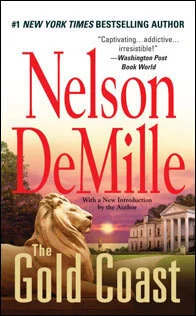
by Nelson DeMille
Grand Central Publishing (1990)
What do you get when two dying breeds—old blueblood money and the mafia—clash in one of America’s great novels?
The Gold Coast by Nelson DeMille.
Hey, I’ve read the novel three times but since the publisher captured the story with such clarity I’ll humbly bow to this succinct and spot-on dust jacket summary.
Welcome to the fabled Gold Coast, that stretch on the North Shore of Long Island that once held the greatest concentration of wealth and power in America. Here two men are destined for an explosive collision: John Sutter, Wall Street lawyer, holding fast to a fading aristocratic legacy; and Frank Bellarosa, the Mafia don who seizes his piece of the staid and unprepared Gold Coast like a latter-day barbarian chief and draws Sutter and his regally beautiful wife, Susan, into his violent world. Told from Sutter’s sardonic and often hilarious point of view, and laced with sexual passion and suspense, The Gold Coast is Nelson DeMille’s captivating story of friendship and seduction, love and betrayal.
Now, should you be one of the unfortunates who hasn’t read this novel (from the land of The Great Gatsby) get your page turning hands on a (2008) reprint ASAP. Over the years the jury has come in on this—Mr. DeMille’s very best novel, me thinks!—giving the author a clear perspective of how The Gold Coast was and continues to be perceived.
We see this in the author’s retro/intro of the 2008 edition: “The themes of this story are diverse, and aside from an intriguing plot, good writing, interesting locales, and informative peeks into other worlds and cultures, what ultimately makes for a good novel are the characters.”
Ah Mr. DeMille, those Gold Coast characters! Mamma Mia! Page Turners saw John Sutter, the voice of the story, as a real jerk. But in the way that guys have been known to look at this designation, i.e., “He’s our kind of jerk!”
Sutter is witty, ballsy, and arrogant with a law degree that didn’t come from the locksmith school. He graduated from the New Haven YALE and draws every breath in total awareness of his education, his bloodlines, his intelligence and his rightful place on this earth, which happens to be The Gold Coast. So he’s a bit of snob but a rare one in that he knows it and laughs at the snooty gene pool swimming around him—Roosevelts, Vanderbilts, Woolworths, Whitneys, Morgans. These grown up trust-fund babies simply splash and dip (reluctantly) with the nouveau in a world that’s no more real today than had Disney designed it himself.
Susan is one of them. A card carrying (not credit for God’s sake—little snooty calling cards that simply say Susan Sutter, Stanhope Hall!) bitch of the first order. The intelligent gorgeous daughter of William Stanhope and heir to mansion, estate and fortune she—when taking time off from fulfilling her sexual fantasies with John—paints local landscapes, does a bit of ladylike gardening, lunches with her Gold Coast gazebo “equals,” wheels around the Gold Coast in her classic Jaguar and rides horseback on the estate.
*Oh, those guys that DeMille mentions in the introduction who say they would hate Susan but would love something called Susan Sutter Redhead Night? Count me in—on both counts!
John and Susan, parents of two grown children, do love each other but perhaps in a way that those of us below the Sutters’ social/financial water line might find hard to understand. Can we say prenup? John, the Wall Street lawyer, has the career but she has the old money. And, Susan, (as John would attest when he finds himself in a tax “situation”) like her father, never touches the principal!
And then we have Frank Bellarosa. Rude, crude and by the standards of the Sutters’ and their Gold Coast brethren—socially unacceptable. Frank is clearly the poster boy for Machiavelli’s Prince, “. . .a man who by definition has a cynical disregard for morality and a focus on self-interest and personal gain.”
Disregard for morality! This freakin’ guy’s a known (albeit not indicted or convicted) killer. And yet, like Tony Soprano, (DeMille’s don preceded the Sopranos by nearly a decade) there’s something about this bad-boy Bellarosa that makes him a seductive magnet—one that the Sutters find themselves stuck with and to.
*Note to John, never trade favors with a Mafia don. You might find yourself in court perjuring yourself while defending a murderer!
* Note to Susan, moths should never fly too close to the flame. They invariably get burned!
Well once again (see The Charm School, Word of Honor, and any of the dozens of his other bestsellers), Nelson DeMille has come up with the ultimate conflict, one so original, so edgy that at times we virtually ruffle the pages to discover—be it John, Susan and or Frank—-who’s doing whom!
Then there’s the dramatic Gold Coast setting, complemented by DeMille’s riveting descriptive passages of land (estates) and sea (John’s a country club sailor).
Ah, lest we forget the kinky Sutter sex. Boys and girls, there are fantasies galore. The one on horseback earns DeMille yet another Page Turner Mamma Mia! And, I should hope an extra bucket of oats for Susan’s steed Zanzibar, who dutifully plays the role of the “rocking” horse.
The Gold Coast author Nelson DeMille
All this with well layered insights into these two dying breeds—high society and the Mafia. And now (I’m beginning to tire as it is incredibly hard to type and applaud at the same time) all that said, it may just be DeMille’s sardonic dialogue that kicks this one over the top, making the novel so damned compelling.
So, now a Page Turners from the Past welcome to Nelson DeMille’s Gold Coast!
For starters from these DeMille snippets a bit of sardonic dialogue that might best be called: What’s Up With the Sutters.
Susan sometimes surprises me with little flashes of insecurity. If I were a more manipulative man, I would promote this insecurity as a means of keeping her attention, if not her affection. I know she does it to me. I asked “Would you consider living in our East Hampton house?”
“No.”
“Why not?”
“Because I like it here.”
“You like East Hampton,” I pointed out.
“It’s a nice place to spend part of the summer.”
“Why don’t we sail around the world?”
“Why don’t you sail around the world?”
“Good question.” Bitchy, but good. Time to promote insecurity. “I may do that.”
Susan stood. “Better yet, John, why don’t you ask yourself what you’re running from?”
“Don’t get analytical on me, Susan.”
“Then let me tell you what’s bothering you. Your children aren’t home for Easter, your wife is a bitch, your friends are idiots, your job is boring, you dislike my father, you hate Stanhope Hall, the Allards (retired servants who came with the estate ) are getting on your nerves, you’re not rich enough to control events and not poor enough to stop trying. Should I go on?”
“Sure.”
“You’re alienated from your parents or vice versa, You’ve had one too many dinners at the club, attractive women don’t take your flirting seriously anymore, life is without challenge, maybe without meaning, and possibly without hope. And nothing is certain but death and taxes. Well, welcome to American upper-middle class middle age, John Sutter.”
“Thank you.”
“Oh, and lest I forget, a Mafia don has just moved in next door.”
“That might be the only bright spot in this picture.”
“It might well be.”
Susan and I looked at each other, but neither of us explained what we meant by that last exchange. I stood. “I feel better now.”
“Good. You just needed a mental enema.”
While Sutter holes up in his office after a marital spat we see one of John’s issues—jealousy: “At about five P.M., the fax machine dinged, and I walked over to it out of idle curiosity. A piece of that horrible paper slithered out, and I read the handwritten note on it.
John,
All is forgiven. Come home for cold dinner and hot sex.
Susan
I looked at the note a moment, then scribbled a reply in disguised handwriting and sent it to my home fax:
Susan,
John is out of the office, but I’ll give him your message as soon as he returns.
Jeremy
Jeremy Wright is one of the junior partners here. I suppose I was pleased to hear from Susan, though it was not I who needed forgiving. I wasn’t the one rolling around (innocently by the way) in the hay with two college kids and I wasn’t the one who thought Frank Bellarosa was good looking (not so innocently). Also I was annoyed that she would put that sort of thing over the fax. But I was happy to see that she had regained her sense of humor, which had been noticeably lacking recently, unless you count the laughing from the hayloft.
As I was about to walk away from the fax machine, it rang again and another message came though:
Jerry,
Join me for dinner, etc.?
Sue
I assumed, of course, that Susan had recognized my handwriting, I replied:
Sue,
Ten minutes.
Jerry
To Know the Sutters Is To Know Their World: “Perhaps it would be instructive to understand the neighborhood into which (“the handsome”) Mr. Frank Bellarosa had chosen to move himself and his family. It is quite simply the best neighborhood in America, making Beverly Hills or Shaker Heights, for instance, seem like tract housing.
It is not a neighborhood in the urban or suburban sense, but a collection of colonial era villages and grand estates in New York’s Long island. The area is locally known as the North Coast, though even realtors wouldn’t say that aloud.
It is an area of old money, old families, old social graces and old ideas about who should be allowed to vote, not to mention who should be allowed to own land. The Gold Coast is not a pastoral Jeffersonian democracy.
To Know Sutter’s Neighbor Is To Know His World: “We drove around the Old Italian section of Williamsburg, which had never been very large, and what was left of Italian Williamsburg seemed rather forlorn.
. . . We left Brooklyn and went into Ozone Park, Queens, which is also an Italian neighborhood. Frank had some relatives there, and we stopped at their row house and played bocci ball in an alleyway with a bunch of his old goombahs who wore baggy pants and three-day whiskers. Then we all drank homemade red wine on a back porch, and it was awful, awful stuff, tannic and sour. But one of the old men put ice in my wine and mixed it with cream soda, of all things. Then he sliced peaches into my glass. Frank had his wine the same way. It was sort of like Italian sangria. I guess, or wine coolers and I had an idea to market the concoction and sell it to trendy places like Buddy’s Hole (Gold Coast) where the clientele could drink it with their grass clippings. Ozone Park Goombah Spritzers. No? Yes?
Here, over drinks and cigars at Bellarosa’s Alhambra estate Frank, giving John an offer he ultimately can’t refuse, tells Sutter how it IS.
“You probably read in the papers that I killed a guy. A Columbian drug dealer.”
This was not your normal Gold Coast brandy-and-cigars talk and I didn’t know quite how to respond, but then I said, “Yes, I did. The papers made you a hero.”
He smiled. “Shows how ____ed up we are. I’m a _____ing hero. Right? I’m smart enough to know better.”
Indeed he was. I was impressed.
He said, “This country is running scared. They want a gunslinger to come in and clean up the ____ing mess. Well, I’m not here to do the government’s job for them.”
I nodded. That was what I had told Mr. Mancuso (the FBI agent who watches Frank’s comings and goings at Alhambra).
Bellarosa added, “Frank Bellarosa works for Frank Bellarosa. Frank Bellarosa takes care of his family and friends. I don’t want anybody thinking I’m part of a solution. I’m definitely part of the problem. Don’t ever think otherwise.”
“I never did.”
“Good. Then we’re off on the right foot.”
“Where are we going?”
“Who knows?”
But Bellarosa does know and after several more drinks we learn exactly where, as he shares his belief that Alphonse Ferragamo, the U.S. District Attorney is (due to a grudge) framing him for the death of a Colombian drug kingpin, all to have the Colombians bump Frank off, saving Ferragamo and the government the trouble of proving Bellarosa’s guilt in court.
. . . “I need a very upright lawyer to go talk to Ferragamo. He’s the key. He’s got to call one of his press conferences and say that he has new evidence about who hit Carranza, or say he’s got no evidence at all. You talk to him about that.’
“But maybe I don’t believe your side of this.”
“You will when you see Ferragamo’s face after you tell him I know what he’s been up to.”
. . . Frank Bellarosa, whose good instincts had kept him free and alive, perhaps put too much faith in his ability to spot danger, tell friends from enemies, and to read people’s minds and hearts. That was why I was sitting there; because Bellarosa had sized me up in a few minutes and decided I was his man. I wondered if he was right.
Later in a chat at The Creek, Sutter’s exclusive country club, seduction and vulnerability join hands as John makes the fatal mistake of asking the Don for a favor: “I was not in the best of moods, as you may have guessed. I think that having a fight with an IRS man is the mood-altering equivalent of having a fight with your wife, I inquired of Mr. Bellarosa, “So what would you do? Pay the guy off? Threaten to blow his brains out?”
Bellarosa’s eyes widened as though he were shocked by what I’d said, and I found that almost comical. Bellarosa replied. “You never, never hit a federal agent.”
“If you met Mr. Novac, you’d make an exception.”
He smiled but said nothing.
I asked,” So should I bribe him.”
“No, you’re an honest man. Don’t do anything you don’t usually do. It don’t work.” He added. “Anyway, the guy’s probably wired and thinks you are, too.”
. . . Listen, I want the name of your tax lawyer, Frank. Not the one you used when you went up for two years, the one you use now who’s keeping you out of jail!”
The drinks came and Bellarosa dangled the horrible dyed cherry by its stem and bit it off.
“Your tax lawyer,” I prompted.
He chewed on the cherry. “You don’t need no lawyer. Lawyers are for when you gotta go to court. You got to head this off.”
“Okay, how?”
“You got to understand why before you know how.”
“I understand why. I don’t want to fork over three hundred thousand dollars and go to jail for a few years. That’s why.”
“But you got to understand why. Why you don’t want to do that.”
“Because it was an honest mistake.”
“No such thing, pal.”
Sutter goes back to the problem—he owes the IRS over $300,000 for failing to report a profit on a property he’d sold and here, with Bellarosa’s help, he comes up with the real reason why the IRS is on his case. He’s a slick tax attorney who—by knowing how to tiptoe through their mine fields and identify their loop holes—has made a lucrative career by beating the IRS at their own game:.
Bellarosa: “So now you know why. Now you got to talk to Mr. Melzer (Bellarosa’s man), he’ll tell you how.”
Now with a favor asked a favor is owed and Sutter finds himself on a path of no return, one that leads us, with Susan’s “help,” to the incredible climax of The Gold Coast.
In closing I’m reminded that Mr. DeMille (I suspect to entertain himself and his readers while making his points) salted old jokes (John makes Frank laugh) into the dialogue. So, very random here but after turning the last page I recalled an old one. It goes like this.
Frank Sinatra takes Ms. Farrow his (third) bride-to-be home for the first time to meet his mother and presents her with this introduction.
“Mamma! (Pause) . . . Mia!”
Please forgive the skewed context but that, Mr. DeMille, IS how Page Turners from the Past feels about The Gold Coast.
Mamma mia! Whatta novel!
For a copy of The Gold Coast, ask your librarian, order through your independent bookseller or try Amazon.com where you can buy DeMille’s 1990 masterpiece and get a better deal than Frank Bellarosa gave the Sutters when he had his crew move Susan’s horse barn. To order simply click on the book’s cover.
For DeMille’s latest bestseller Radiant Angel, click here.
Like Rithmetic---Readin' and Writin' Adds Up
f adult readers dig deep enough into their past they’ll find a writer to whom they owe a debt of gratitude.
A bit overdue but I’m here today to say, “Thank you, John R. Tunis!”
A lousy little grade school student, I loved lunch, recess, and hated everything else, especially fifth period, which we called library.
Hey, for forty minutes a day you had to be quiet and read.
If adult readers dig deep enough into their past they’ll find a writer to whom they owe a debt of gratitude.
A bit overdue but I’m here today to say, “Thank you, John R. Tunis!”
A lousy little grade school student, I loved lunch, recess, and hated everything else, especially fifth period, which we called library.
Hey, for forty minutes a day you had to be quiet and read.
It was my habit to grab anything off the shelf that had pages, find a nice warm spot in the sun next to a window and eye-ball Jane Duncan who was outside playing right field in an older girl’s gym class.
So it wasn’t all bad. But then one day it got better. Taking a break from my fixation on Jane I happened to glance down at a book I’d randomly snared.
The Kid From Tomkinsville, by John R. Tunis.
Reading the dust jacket I learned that Roy Tucker would enter the big leagues (a place I still thought I might end up some day) and that this unsophisticated country boy (which I could also relate to) would be overwhelmed by the luxuries of professional baseball (ah, the dream!). That he’d be taken under the wing of the Dodgers’ veteran catcher Dave Leonard (I happened to be a pretty fair Little League catcher) and that Roy would soon learn that he’d be facing a great deal of hard work if he ever hoped to pitch for the Brooklyn Dodgers.
Then, just as Roy began to prove himself worthy to wear the Dodgers flannels, a freak accident would threaten to dash his hopes of leading the team to a winning season.
Hold on to your library cards! Robin Cairns had become a reader.
Hey, I’m not saying that I didn’t still grab an occasional peek just to see how Jane was doing out there in her little gym suit. But that was the moment. I was in for the long haul from the first page of this book to the final page of Tunis’s very last novel.
This recent find, The Kid from Tomkinsville, just happened to be the first of Tunis’s baseball series—eight novels about the Brooklyn Dodgers. I would read them all, the Dodgers series, then on to the Iron Duke, All American and Keystone Kids.
I’ve since learned (thank you Wikipedia) that the The Kid from Tompkinsville is often cited by sportswriters and commentators as the book that inspired childhood reading. So I was one of Tunis’s little page turners, one who would grow up to write a number of baseball pieces for Sports Illustrated and SI for Kids, as well as two baseball books, including a novel called The Comeback Kids. Hmmm, interesting a novel with the word kids in the title!
Having trotted out the above creds, I do so well aware that mine are NOT Hall of Fame numbers when compared to other baseball writers who followed in Tunis’s footsteps. These minor accomplishments are—for me—just a confirmation that writers can and do influence writing and reading.
I mean how else do you explain the fact that I can still name the characters from the Tunis books, with Roy Tucker, the Tomkinsville protagonist a given (hell, the character influenced Bernard Malamud’s hero in The Natural), and that two of my favorites were the lesser known Razzle, a grizzled old pitcher, and Chiselbeak, the Dodgers clubhouse attendant.
So it was through Tunis’s books that I learned about writing—characters, character development, plotting, the setting—all about time and place. All the while these stories of his fueled my passion for sports and at this ripe old age baseball remains one of the great loves of my life.
According to our friends at Wikipedia, Tunis (December 7, 1889 —February 4, 1975) is considered by many to be the ‘inventor’ of the modern sports story. He was an American writer and broadcaster. Known for his juvenile sports novels he wrote short stories and non-fiction, including a weekly sports column for The New Yorker magazine.
After graduating from Harvard and serving in the Army during World War I, he began his writing career freelancing for American sports magazines. For the next two decades he wrote short stories and articles about sports and education for magazines including Reader’s Digest, The Saturday Evening Post and Esquire.
And yet he never really considered himself a children’s writer. That said, all but one of his twenty-four books were published for juveniles and their success helped create the juvenile fiction book market in the 1940s.
Iron Duke received the New York Herald Tribune Spring Book Festival Award for best juvenile novel and was named The Horn Book Magazine Best Book. The Child Study Association of America gave its Golden Scroll Award to Keystone Kids.
I’m positive that the awards were well deserved but more importantly (at least to me) John R. Tunis’s works—and I read them all several times—impacted my life in a way that far surpassed lunch and recess. Given my choice today I’ll take library—the homeroom of John R. Tunis and of reading, and writing.
Book Signings: Fame or Down In Flames?
There have been many misconceptions in my life. High school for instance, sitting there on the bench during basketball games thinking that if I could just drop about 30 pounds that our head cheerleader would come crawling to me like a lonely reptile!
Numerous others come to mind but the in-store book signing experience might just top my list.
At best it’s that 15-minutes of fame Andy Warhol promised us. At worst, well, at least it will be fun.
Not so fast my published or soon-to-be published friends!
Now, I have to be clear about this experience because it applies, in my case, to a published author whose name wouldn’t turn a head if I tossed one of my books in a passing car’s open window.
There have been many misconceptions in my life. High school for instance, sitting there on the bench during basketball games thinking that if I could just drop about 30 pounds that our head cheerleader would come crawling to me like a lonely reptile!
Numerous others come to mind but the in-store book signing experience might just top my list.
At best it’s that 15-minutes of fame Andy Warhol promised us. At worst, well, at least it will be fun.
Not so fast my published or soon-to-be published friends!
Now, I have to be clear about this experience because it applies, in my case, to a published author whose name wouldn’t turn a head if I tossed one of my books in a passing car’s open window.
And to my friends at book stores who do a great job with book signings, this life experience isn’t necessarily directed at you—this is just a heads up to future signers. Regardless of the experiences that await them they should know that in-store signings come with the publishing territory and is something that they all should consider doing.
At least once!
So, your book comes out, if it’s a national publisher or good regional press the publicist cranks out a press release, reviews begin to straggle in and somewhere in the backwash, through the publicity, calls are made from the publisher to booksellers—from the small independents to the Barnes & Nobles— “Bless ’em all, Bless ’em all.The long and the short and the tall”.
Eventually an events person at one of these stores bites and your publicist rings you up to say that they have “… an incredible opportunity for you.”
Thank you Jesus!
It seems that the Barnes & Noble in your hometown wants you to come for a book signing. “Thanksgiving and Christmas are the big book selling window, so how does December 12 sound?”
“Well, that sounds great, I happen to have that date open (along with every other cold December night).
You learn that you may be asked to read a passage or two from the book, open the floor to a question and answer session and should expect to be signing books well into the night.
Publicist: “Does this work for you?”
“Absolutely!”
And there’s more good news. The book store will not only publicize the event in their newsletter they’ll splash little signs around their store—leading up to this big hoo ha—letting the free world know that Bob Cairns will actually be in the store—from 7:00 p.m. until 9:00 p.m. on December 12 (or whenever) to meet, greet and sign his new book.
“Wow!”
Let’s make that a small w—how about “wow!”
One important comment here. No matter how many times you do this you will never, ever be quite prepared for the experience. And again, I’m not talking about authors with the million dollar advances whose names are twice the size of the book’s title on their latest cover. These writers have freakin’ groupies, boy groupies and girl groupies, readers of all ages, fans who would buy a 20 pound armload of their books just to stand and gaze into the author’s (often) myopic eyes and gush about the book reading like poetry as the author inscribes something in iambic pentameter like, “ To Doris, all the best, Bill Bestseller.”
As an NC State University PR guy, whose job from time to time was to play the role of the publicist (Jim Graham’s Farm Family Cookbook for City Folks, by Jim Graham, the revered NC Commissioner of Agriculture; and then Secrets of Success “North Carolina Value-Based Leadership,” General Henry Hugh Shelton, 14th Head of the Joint Chiefs of Staff) I saw how book signings can and should go—long lines of gleeful buyers, books in tow, happy to meet, greet and (to the sound of a ringing register) leave with their signed copies.
Now, I’m struggling here, trying to come up with one personal experience that might come close to mirroring the above. Well, there was this one time (long story short) where the publisher kicked in a couple of hundred bucks for Champaign and I, according to Nancy Olson, then owner of Books at Quail Corners, crowned my event as the one that, thanks to my friends who showed up in number, set a rather dubious record—more booze consumed with less books sold in the history of the store.
But, again I’m grasping for a positive here, the one thing that I took from that experience (which was my first) was the fact that after I read from my baseball novel The Comeback Kids, there was this “lady” seated up front in one of the folding chairs, who began waving her hand. When she spoke I knew she was clearly drunk, and believe me I may not know much about selling books, but I know drunk. Anyway, she just gushed about the book and announced that her husband was the world’s biggest baseball fan and that “I just had to come to their home and read a passage or two to him!”
Hummmmm!
And then it hit me. This was the woman who my wife and I had met at a party several months before. And, she, along with her also drunken husband, the fellow she thought I might like to drop by and read to sleep, had been so obnoxious and insulting that night that I had suggested (face to face) that she and her husband could both do something to themselves that would be unfortunately impossible and considerably uncomfortable. Then, my wife and I walked out the front door.
Well, she didn’t recognize me, obviously had no recollection of our meeting, so I kindly thanked her for the invite and told her that I’d get back to her on the personal reading for her husband.
That my friends, if not the highlight of my book signing experiences, is one of the more memorable.
Others come to mind.
-
The flop sweats at a Chapel Hill coffee shop where the high-brow audience (while I read about baseball) traded conversational comments regarding the merits of the latte vs. the cappuccino. I recall, just as I was reading what I thought might be the funniest line in the novel, someone drowning the punch line in mocha, as in “My, you must try this mocha, it’s to die for!”
-
The night I sat and sold zero books at a Research Triangle Barnes & Noble, having given up my Duke vs. NC State basketball tickets for this opportunity. Here an apologetic events person bowed and scraped, stating that they’d never (considering all the publicity they’d done) had a writer get shut out (her words) and that perhaps it was because I had written a basketball book (V&Me: “Everybody’s Favorite Jim Valvano Story”) and that I’d agreed to sign on the very night that NC State was (right down the road) playing Duke in basketball. Do ya, think?
-
For yet another book store biggie “signing opportunity” I raced home from Pinehurst and the U.S. Open Golf tournament. Here I sat alone at a table, looking not unlike the You Know What in the punch bowl, while passersby refused to make eye contact (think street savvy New Yorker walking down one of Manhattan’s mean streets). It was so bad that I (a technique that I would recommend for any future ignored signers out there) actually left my “punch bowl” and began to look at books on nearby shelves, pretending to be a shopper. And then, there she was. A beautiful young girl was standing at my table looking at the pile of unsigned books. This was a June event and (so said the events lady) promised to be “. . . a natural for Father’s Day shoppers!” I left my faux shopping search, took my seat and asked, “Would you like a V&Me for your dad for Father’s Day?”“Well, no not really,” she said. “I’m an intern with PRSTREET and your friend Graham Wilson (the owner of the agency) asked me to come by tonight and get a photo of people lined up in front of your table with you signing books. He said he promised you that he’d run it in the PRSTREET newsletter. Blushingly, I recalled that I had asked Graham if he could do something like this, and so with the help of the store’s very apologetic events lady wrangled a few employees and queued them up for the photo op. That may have been the only book I signed that night and several weeks later—to add insult to injury— I received a copy of the newsletter featuring the photo from my friends at PRSTREET.
One more—and this was a classic—at the NC State book store they have an annual big percentage off Christmas sale. I was, again, Bic in hand, seated at a table by a very nice guy who had written a children’s book about an NC State Christmas Wolf (or something) and this guy was just killing me. Huge line—lambs to the slaughter—at the Christmas Wolf, almost nobody interested in V&Me.
I had promised to sit and sign until 9 p.m. and as the clock slid into that third hour with my sales at about a book an hour, I, having a two-hour drive home on a Friday night, called my wife and said, “I’m out of here!” And then he showed up. Suddenly here at my table was a man in his early 60s, just the right age to have been there when Jim Valvano and the Cardiac Pack won the National Championship in ’83.“May I ask you a question,” said the fan. “Certainly,” said I, pushing a book forward preparing to tell him what Jim Valvano was really like. “Can you tell me where the john is,” the guy said, “I’ve gotta go like a racehorse!”
I think you’re getting the idea, so I’ll close by saying this: did I ever sell any books at book signings? Certainly, and again, it is something that every author must do. But for me—the no-name author—more often than not those Andy Warhol 15-minutes ended in flames rather than fame.
So go in eyes wide open, aware that this signing deal is just that . . . a deal. And that there’s a bit of legalized prostitution at work here. You want attention for you and for your book. Booksellers, aware that traffic sells other books, aren’t just interested in selling your book. They rely heavily on you, the author, to help bring out the troops and will ask for names and e-mail addresses of friends, relatives, and workmates, anyone who they might pepper with notices of your Big Moment.
Hey, come to think of it, maybe that was it. Start with a bookseller (emphasis on seller), then toss in my friends, relatives, and workmates, give me, the no-name author a stir, and, well, I don’t wish this for you, but perhaps that’s why more often than not I found myself in full blush afloat in the proverbial book signers punchbowl.
Independents' Day
Okay, even those whose daily reading is limited to road signs and that annoying “Crawl” that runs along the bottom of our TV screens have probably (at least) seen the DVD of the movie “You’ve Got Mail!” Hell, it starred Tom Hanks and Meg Ryan so thanks to these two great actors and a reasonably good (somewhat touching) script we have a nice introduction to the subject of this blog.
The small independent booksellers are getting screwed to their shelves by BIG BOX booksellers, those corporate giants who’ve all but priced (volume, volume, volume) the smaller booksellers out of the marketplace.
So, for the sake of the Tom Hanks character (Mr. Big Bookseller Pants’ viewpoint in the flick) we thought it might be helpful to readers to go to a quintessential independent seller (the Meg Ryan-like store) to remind us what (if anything) makes little “bookers” a viable—-in today’s economic environment—place to shop.
Okay, even those whose daily reading is limited to road signs and that annoying “Crawl” that runs along the bottom of our TV screens have probably (at least) seen the DVD of the movie “You’ve Got Mail!” Hell, it starred Tom Hanks and Meg Ryan so thanks to these two great actors and a reasonably good (somewhat touching) script we have a nice introduction to the subject of this blog.
The small independent booksellers are getting screwed to their shelves by BIG BOX booksellers, those corporate giants who’ve all but priced (volume, volume, volume) the smaller booksellers out of the marketplace.
So, for the sake of the Tom Hanks character (Mr. Big Bookseller Pants’ viewpoint in the flick) we thought it might be helpful to readers to go to a quintessential independent seller (the Meg Ryan-like store) to remind us what (if anything) makes little “bookers” a viable—-in today’s economic environment—place to shop.
Pat Wilson (our Meg Ryan) manages the Pelican Book Store in Sunset Beach, a beautiful little beach town on the North Carolina coast.
Bob: Pat, we’ve been to your shop, it’s wedged in an upscale strip mall just off a major beach road, easy access, plenty of parking, etc. Pelican is a very attractive store with a nice book balance—from the latest bestsellers to older paperbacks.
Readers can browse the aisles of your small well-kept shop, knowing that you’re perched right there behind the counter ever on the ready to lead them to the latest good read. That’s all well and good; we love your store but tell us why we should shop the Pelicans of the marketplace as opposed to loading up with a bag of 20 percent off deals at a Barnes & Noble or Books-A-Million before heading home or to the beach.
Pat: I think one of the great pluses you’ll find in the independent book store is in the shop’s staff. The person working with you is probably going to be an avid reader. All of our employees read and spend a great deal of time looking for good books to read, keeping an eye out for books for us to recommend.
When you go to one of the cookie cutter stores, a Books-A-Million or Barnes & Noble, you are probably going to be waited on by youngsters who are there to draw their paychecks. That’s not the case in the independent. We are a business but we make it our business to help our customers find that special book and typically when we recommend it we’ve read it.
That’s what we do and when you go into one of the Big Boys they often can’t tell you whether it’s good or not. The odds are that they not only haven’t read it they may not even know where to find it
Bob: How about Amazon, Barnes & Noble or other booksellers on-line?
Pat: If you buy it from Amazon or Barnes & Noble on-line you can see their write-ups or reviews, but they have ulterior motives when they give a review. Then pop-ups on your computer will tell you that if you liked this book then you’ll like another book they’re selling. And that just isn’t always the case. A lot of that marketing is ridiculous. They don’t have readers, it’s all computer-based and their computers don’t read anything.
Bob: How about pricing, the independent vs. the corporate giant?
Pat: Our prices in this independent and with many independents, well, we discount our hardback bestsellers at 20%. You can’t find a better price anywhere else. That’s one of the great myths of the independents vs. the big bookstores, and here’s another fact—if you do get it cheaper at one of the big corporate stores . . . for every penny you save there you may double that savings by buying from an independent where the sellers read, care and recommend.
The savings will be in our suggestions because when you leave you haven’t bought a bad book. You can lose every penny you “save” at one of the biggies by buying a bad book! We have a book on our shelf right now that is so good and I haven’t seen it being recommended anywhere. It’s called I Am Pilgrim, by Terry Hayes, and it is so good and we know it because we’ve all read it here. So we’re selling it and people are leaving with a book that is really, really good. I’ve had people call me back and say, “You were right, it was so good!”
Bob: And oh, we hear that the independent booksellers have an angel; according to a NY Times piece, James Patterson has donated $1,000,000 to help save the independents, saying, “I just want to get people more aware and involved in what’s going on here, which is that, with the advent of e-books, we either have a great opportunity or a great problem. Our bookstores in America are at risk. Publishing and publishers as we’ve known them are at stake. To some extent the future of American literature is at stake.”
Can the Patterson grant make a difference and did any of that cash fly to the Pelican?
Pat: No, but let me say just how much we appreciate the fact that there are so many authors who know that we are out here selling books and the fact that they care about the smaller independents. This is very important to us.
Bob: There are a lot of bad books out there, how do these duds get published?
Pat: One of the biggest problems with the publishing world right now is simply this: we don’t have the great editors anymore. And the editors we have aren’t strong enough to tell a bestselling writer that he or she needs to take a piece of the manuscript back and rewrite it.
I’ve read writers that have big names, good writers but you can see that they are writing with big contracts, maybe on a deadline, and, my guess is that they’re beginning to “mail them in!” And they aren’t being told that they need rewrites. The editors or publishers are trying to keep their stable of authors happy, ones that name alone will sell the book, writers who have produced bestsellers and so they let them get away with crap.
Bob: Ah, but there are some great books, what are you recommending these days?
Pat: There are some wonderful books, Cutting for Stone by Abraham Verghese, Plainsong by Kent Haruf, The Color of Water by James McBride. Mary Alice Monroe, who often writes about environmental issues, has produced some great beach reading—The Beach House, Beach House Memories and The Summer Girls come to mind
Bob: Like most booksellers, you have signings but you’re often co-hosting with Silver Coast, a local winery. This would appear to be a stroke of marketing genius; I mean a few glasses of wine and a good book, not a bad combination.
Pat: We started working with the Silver Coast Winery when we had a Southern author who we wanted to host, an author who we knew would bring out a big crowd. As you know, we have a small bookstore here at the beach and she was coming to read and sign in mid-season—the summer—and this island almost sinks under the weight of the tourists during the summer.
So we asked the local winery if we could have the reading and signing there and boy did it work. We had over 200 people and so we’ve been doing this ever since. I think it’s about $10 admission which includes two glasses of wine and the opportunity to hear and meet a well- known author. So yes, this isn’t something that you will see at a major chain in a big city—-a winery/reading at the beach—and it’s been quite a success.
Bob: Any other ways that a smaller bookstore reels in the writers for events like this?
Pat: Well it occurred to me that one of the reasons we couldn’t get some authors interested in what we were doing was simply the fact that authors want to get their sales numbers up, they have to if they want to get on the NY Times Bestsellers List. That’s just part of the publishing game. So I had to agree to become a contributor to the NY Times bestselling list.
Here’s how that works. We have to fill out and file a report on what books we’ve sold weekly and believe me that’s a job. I’m very lucky, one of the ladies that work for me takes care of that. We have a little scanner and that tracks every book we sell and this list goes to the NY Times, so when you see that Times list that’s real—and they, of course, are working with the smaller stores and, of course, the big chains as well, tracking the sales of books with the result being the list you read in the newspaper. They don’t make up the numbers—so we did that and got a lot of the bigger authors to come as a result.
Bob: I’ve been in your store a number of times and I’m impressed with the way you take the time to talk to your customers, sometimes it appears to be like something my mother would have called, “Old Home Week!”
Pat: We know so many of our customers—we might know that their spouse is sick or we may be chatting with a lonely widower who came in simply because they wanted to talk to someone.
We’re like the bartender without the booze—and sometimes I’m really in the middle of something and you know what I say to myself, “set it aside,” and so I’ll stop and talk. It’s what we do; we have to realize that the conversation is more important than anything else we might be doing at that time.
Bob: I’m sure that your clientele is built on word of mouth, so there must be a lot of regulars.
Pat: Let me tell you about two of my customers. I have this one customer who is handicapped and he pulls up in his Jaguar and parks in the handicapped spot. Typically, earlier that day he’s called me and said, ‘I need two books to read.’ And we tell him what we’ve got and how much it will be. When he pulls up there we take the books out to him and he hands us a check and we hand him his books. Again, he’s disabled and it’s too much trouble for him to get into the store.
And I have another fellow who lives here in North Carolina, about four or five hours away and he writes me letters. He’s often writing something doing research and so he’ll want books on subjects as diverse as clowns, comedians, or Negro baseball leagues.
I find them, order them if we don’t have them in stock, and mail them to him. He sends us a check. After the last shipment I got a letter from his wife who wrote to say, “Keep it up it’s just like Christmas when his books arrive in the mail.”
So the job can be very gratifying!
Bob: I know that marketing can be the key to keeping the cash register ringing, any other areas of sales that help keep an independent afloat?
Pat: We trade used books for used books and so if you bring in a book I will give you X amount of credit—there’s a formula—toward the purchase of another one. Now I don’t take just anything, I have to think that it’s good for a resale, but people here at the beach are looking for used books because people don’t want to take a new or a good book out on the beach—and they don’t’ want to take their e-books or readers on the beach. So this location is great for selling used books, you can’t really take an e-book out on the beach and read it in that bright sunlight, and then there’s the issue of sand, sun, water which can be harmful to a nice hardback or e-book.
Oh, we also ship for people, we’re a UPS pick up and around the second week in December it gets crazy around here. We’ll Xerox for our customers, fax, print, all ways to keep the numbers up.
Bob: As to actual product, is this just book sales at the Pelican or do you have other “impulse” items that might appeal to your clients?
Pat: Well, we sell a ton of jigsaw puzzles. Another natural tie-in item is greeting cards and we have great photo cards—from the beach. The photos are taken by a fellow who lives out here on the island and we also have some cards that are painted by a North Carolina artist and he does the poetry (inside) and they are different and unique—designed for customers who are living or visiting the beach.
And our “beachie” Christmas cards are big because if people live at the beach they want everyone to know they live at the beach. So we have to hunt for these specialty cards, there’s a little publisher/printer in Southport that I buy my Christmas cards from and they are very popular with our customers, very unique.
Bob: You are a small independent at the beach, how seasonal IS your business?
Pat: Our business here is unique in that it spikes on July 4th, that’s our crescendo. It starts in late April and builds all the way to the 4th of July and by the 4th the island if sinking from all the people that are here for the beach.
Oh, we have a bump before Christmas and I always work Christmas Eve because (laughs) that day we have all these 50-year-old “children” coming in to see their retired parents, “kids” who have forgotten to get enough gifts or any gifts. So this place is a madhouse on Christmas Eve.
Bob: Well it isn’t Christmas Eve but we know you have customers waiting so we’ll close by asking you to tell any and all potential book buyers out there just what kind of person they’ll likely be dealing with when they shop an independent like the Pelican.
Pat: Well if they’re like the Pelican and like me and my staff, they are people who love people—all kinds of people—and I tell them you aren’t my customers you are my friends, and I mean that. We love the store and I think that’s what people are attracted to. They get it, it comes across, we care for our customers and our store and we put every book in a special place, our books live in certain places. Sometimes people will say. “Well what’s the order of your books? Why is that one over there?” And I say, “Well it lives there because that’s where it’s always lived!”
I don’t have the heart to move them. Like I said, we are not Barnes & Noble, we don’t have huge sections, we put books in certain places because we think that’s where our books should live
Bob: I better go, this IS beginning to sound like Meg Ryan in You’ve Got Mail, by the way what did you think of that movie, did Hollywood get the independent vs. the big conglomerate bookstore issues right?
Pat (laughs): Well they got the story right. But I’ll close with this thought as it applies to the independent bookseller; Meg Ryan should have never given up!
* To visit Pat and the Pelican go to: http://pelicanbookstore.com/
A Walk in the Woods
by Bill Bryson
Broadway Books (1998)
Okay, before you run for your walking sticks and take a vicarious, hilarious, and educational stroll up the Appalachian Trail with Bill Bryson, you should know that this rave has nothing to do with the fact that the author mentions me early in the second chapter.
Well, not by name but certainly by category.
That category being idiot!
You see, before Bryson makes this magnificent trek—with his hefty friend Katz puffing along at his heels—to prepare for the 2,100 mile hike (give a step or three) he grabs a few books just for reference, one being Bear Attacks: Their Causes and Avoidance, wherein he learns that the black bear, that furry “friend” might feed on any passerby stupid enough to fail to realize that these Yogis and Smokeys aren’t cartoons but dangerous man-eating (under the right/wrong circumstances) animals.

by Bill Bryson
Broadway Books (1998)
Okay, before you run for your walking sticks and take a vicarious, hilarious, and educational stroll up the Appalachian Trail with Bill Bryson, you should know that this rave has nothing to do with the fact that the author mentions me early in the second chapter.
Well, not by name but certainly by category.
That category being idiot!
You see, before Bryson makes this magnificent trek—with his hefty friend Katz puffing along at his heels—to prepare for the 2,100 mile hike (give a step or three) he grabs a few books just for reference, one being Bear Attacks: Their Causes and Avoidance, wherein he learns that the black bear, that furry “friend” might feed on any passerby stupid enough to fail to realize that these Yogis and Smokeys aren’t cartoons but dangerous man-eating (under the right/wrong circumstances) animals.
Berries and leafy trees it would seem have, in hundreds of cases over the years in the U.S., just served as the sides for their human entrees.
Bryson, awaiting spring and his first step on the Appalachians Trail, refers here to that reference book, Bear Attacks: Their Causes and Avoidance (the key word in my case being avoidance).
Bryson says, “If this is not the last word on the subject then I don’t really want to hear the last word. Through long winter nights, while snow piled up outdoors and my wife slumbered peacefully beside me, I lay saucer eyed in bed reading clinically precise accounts of people gnawed pulpy in their sleeping bags, plucked whimpering from trees, even noiselessly stalked as they sauntered unawares down leafy paths or cooled their feet in mountain streams. People whose fatal mistake was to smooth their hair with a dab of aromatic gel, or eat juicy meat, or tuck Snickers in their shirt pocket for later.”
He goes on: “Black bears rarely attack. But here’s the thing. Sometimes they do. All bears are agile, cunning and immensely strong, and they are always hungry. If they want to kill you and eat you they can, and pretty much whenever they want.”
So, it was there on page 23, reading the above passage that I—hands now trembling along with Bryson’s—dropped A Walk in the Woods and scurried off to dig into my old files in search of the photo (see below) of me snuggling up to a wild black bear in North Carolina’s Pisgah Forest.
Short version: I was writing a TV spot with NC State’s Creative Services team for Don Herbert’s (of Mr. Wizard fame) syndicated series called How About. The NC State video, Radio Telemetry and the Bears of the Pisgah, featured a university zoologist who trapped black bears in the NC Pisgah Forest, gently put them to sleep with a dart, performed a complete physical on the fuzzy omnivores, then placing a radio collar around their unsuspecting necks tracked them through the mountains to see where they were munching berries, and doing all those other things that bears are reputed to do in woods.
All in the name of science.
I guess our video guys thought it would be a cute photo op if I cuddled up with a sleeping bear, a beast that I now learn, should she have come out of her snooze, could have earned me a page or two in the second edition of the bear scare book Bryson was referencing.
*Readers should note, having had quite a few berries since this 1990 snapshot that the young bear (NOT A CUB!) and I have, shall we say, put on a few.
Now that we’ve established the fact that I’m an idiot and had once done something that brought me even closer to A Walk in the Woods, let’s get back to Bryson’s pre-stroll point—this hiking the Appalachian Trail would NOT be a walk in the park, and along the way the challenging, grueling march from Georgia to Maine by our twosome would doubtlessly be shadowed by a great deal of danger.
People have died on this walk at the hands of murderers, at the claws of bears and by the bites of snakes. As Bryson does his pre-hike research he realizes that the freakin’ wooded trail he’s about to stagger into may just be a zoo without keepers. There have been documented sightings of all matter of wild four-legged creatures—bobcats, panthers, mountain lions, and coyotes.
Bryson ruminates, “What if I lost the trail in blizzard or fog, or was nipped by a venomous snake or lost my footing on moss-slickened rocks crossing a stream and cracked my head a concussive blow? You could die from a twisted ankle. I didn’t like the feel of this at all.”
And then there was the weather. Don’t get Bill started on hypothermia!
So how much fun could this be?
Well, curled up in the safety of my bed, reading by the warmth of my night light more fun than one can imagine. And all thanks to a brilliant writer with an eye and ear for everything that a walk of this proportion might afford, not the least of which includes ambushes from outlandish characters—there’s Mary Ellen an idiotic bore, Chicken John a lost soul who was always, well, lost. It seems the woods were full of them—characters who managed to attach themselves to our perambulating heroes as they huffed and puffed along their “merry” way.
Speaking of characters, Katz plays Pancho to Bryson’s Cisco and frankly, although there are hundreds of times Bryson could have done without him, in the end he knows he couldn’t have done it without him.
It all starts with a casual note on Christmas cards to old friends with Bryson wondering if any of them might be interested in hiking the AT with him next summer and ends with one lone responder. Here Bryson watches his old friend stagger off a commuter plane “prepared” for the hike. Bryson hasn’t seen Katz in years. In their early 40s now they had hiked in Europe after college and ended up despising each other.
Bryson: “I tried to remember the last time I had seen him. After our summer in Europe, Katz had gone back to Des Moines and had become, in effect, Iowa’s drug culture. He had partied for years, until there was no one left to party with, and then he had partied with himself, alone in small apartments, in T-shirt and boxer shorts, with a bottle and a Baggie of pot and a TV with rabbit ears.”
This ends badly with a drunken car wreck, the discovery of drugs in the Katz vehicle and an 18-month vacation in a minimum security penitentiary where he (speaking of walks) took the 12 steps of AA and to Bryson’s knowledge has been clean ever since.
So that’s what he knows. What he sees staggering off the plane isn’t exactly the offspring of Jack LaLanne. “I instantly saw now as he stooped out the door of the plane that Katz was arrestingly larger than when I’d last seen him. He had always been kind of fleshy, but now he brought to mind Orson Welles after a very bad night. He was limping a little and breathing harder than one ought to after a walk of twenty yards,” Bryson says.
“Man, I’m hungry,” Katz said without preamble, suggesting they make a donut run.
If one is going to walk in the woods for a couple thousand miles, then the most important item said walker might pack in his old kit bag wouldn’t be trouble (which the WWI marching song suggests). Trouble rarely results in smiles, smiles, smiles.
Katz brings both trouble and smiles to the effort and again, in the end, is a welcome partner.
There are so many levels to the walk that do bring smiles—the purchasing of the equipment—from rucksacks to tents to the monotony of a daily diet of raisins, boiled noodles, Snickers, oh and (just for Katz) an occasional Little Debbie cupcake.
Rather than ruin the odyssey for you I’ll give you some guideposts/mile markers to look for along the way. Get set for beautiful descriptive passages of the AT and its history, poorly drawn maps that mislead our walkers, hysterical antics from Katz (the full figured gal with the XXL panties he “befriends” in a Virginia laundry mat is a classic), scary lost companions (Katz strays of course), grueling, taxing forced marches when neither of our hikers thinks they can go on. Then there are rodent infested shelters, musty (on rare occasions) motels and of course, the marvelous back-and-forths between Bryson and Katz and all those AT fools they suffer along the way.
Brilliant descriptive prose aside, what Bryson does equally well is take us off trail here and there for entertaining and informative classes—subjects that run from how the earth was formed and is currently being deformed by those of us who populate it to mini-courses in botany, ecology, zoology, entomology and American history.
Hell, I had no idea how many roads have been cut through our woodlands by the National Park Service—more through the forests than along what we think of our highways and byways. Bryson doesn’t have it in for the National Park Service employees, just the folks who have misspent government appropriated funds so poorly that they’ve managed—since the agency’s inception in 1927—to endanger the following species: the white tailed jackrabbit, prairie dog, pronghorn antelope, flying squirrel, beaver, red fox and spotted skunk.
On a lighter note I was equally surprised to learn how much water your average tree sucks out of the atmosphere and ground in a day and the fact that in 1934 Salvatore Paliuca, a meteorologist on Mount Washington, recorded a surface wind of 231 miles per hour, the greatest wind shear documented in the history of our country.
And frankly, I found all this trail talk not the least bit teachy just damned interesting.
So many are the beautifully written scenes between these pages that the temptation is to just copy the book or perhaps call anyone up who might be interested and read them passage after passage (as I did to my poor wife).
Doesn’t work for you? Okay, here’s a typical Bryson recollection:
“The wind walloped ferociously against the plastic and from time to time tore part of it loose, where it fluttered and snapped, with a retort like gunshot, until one of us leaped up and fought it back into place. The whole shelter was (there are shelters along the trail in various shapes), in any case, incredibly leaky of air—the plank walls and floors were full of cracks through which icy wind and occasional blasts of snow shot—but we were infinitely snugger than we would have been outside.”
Bryson continues: “So we made a little home of it for ourselves, spread out our sleeping pads and bags, put on all the extra clothes we could find, and fixed dinner for a reclining position. Darkness fell quickly which made the wildness outside seem even more severe.
“When I awoke all was stillness—the sort of stillness that makes you sit up and take your bearings. The plastic sheet before me was peeled back a foot or so and weak light filled the space beyond. Snow was over the top of the platform and lying an inch deep over the foot of my sleeping bag. I shooed it off with a toss of my legs. Katz slumbered heavily on, an arm flung over his forehead; his mouth a great open hole. It was not quite six.
“I decided to go out to reconnoiter and see how stranded we might be. I hesitated at the platform’s edge, then jumped out into the drift—it came up over my waist and made my eyes fly open where it slipped under my clothes and found bare skin—and pushed through it into a clearing., where it was slightly (but only slightly) shallower. Even in the sheltered areas, under an umbrella of conifers, the snow was nearly knee deep and tedious to churn through. But everywhere it was stunning. Every tree wore a thick cloak of white, every stump and boulder a jaunty snowy cap, and here was that perfect, immense stillness that you get nowhere else but in big woods after a heavy snowfall. Here and there clumps of snow fell from the branches, but otherwise there was no sound or movement. I followed the side trail up and under heavily bowed limbs to where it rejoined the Appalachian Trail. The AT was a plumped blanket of snow, round and bluish, in long, dim tunnel of over bent rhododendrons. It looked deep and hard going. I walked a few yards as a test. It was deep and hard going.”
And in fact the entire trek was hard going, hard enough to make our hikers pack it in from time to time. But in the end—with us lazing along merely turning pages—they walk the Appalachian Trail.
When you’ve finally taken that final step with them, spent days and weeks lugging a heavy back pack, putting one foot after another, climbing mountains, fording streams, swatting black flies, eating Snickers, raisins, and noodles, well, just before passing out to sleep the sleep of the just I’d like to make a suggestion. Lay the book on your night table, roll over and say a little prayer of thanks to your trail mate and guide, Bill Bryson.
“Oh dear Bill, thanks for taking me along. But not along along, if you know what I mean!”
For a copy of A Walk in the Woods, ask your librarian, order through your independent bookseller or try Amazon.com where you can buy the 1998 odyssey for less than Katz, when he fell off the wagon, tried to borrow from Bryson for that six-pack of Budweiser. To order simply click on the book’s cover.
Max Perkins Editor of Genius
by A. Scott Berg
How could I, someone who can limbo under the IQ score of 160 with the greatest of ease, possibly relate to a page turner with genius in the title?
Well, A. Scott Berg’s Max Perkins Editor of Genius, a 1978 National Book Award Winner, may be the finest, most readable book ever written about publishing—publishing when the book business was a very different industry indeed.
This is the biography of one of those once-in-a-lifetime (eye shade wearing) editors from the past, the man who steadied the quill holding hands of some of America’s iconic writers—Hemingway, Fitzgerald, Wolfe and Jones—until they’d all produced literary classics.

by A. Scott Berg
How could I, someone who can limbo under the IQ score of 160 with the greatest of ease, possibly relate to a page turner with genius in the title?
Well, A. Scott Berg’s Max Perkins Editor of Genius, a 1978 National Book Award Winner, may be the finest, most readable book ever written about publishing—publishing when the book business was a very different industry indeed.
This is the biography of one of those once-in-a-lifetime (eye shade wearing) editors from the past, the man who steadied the quill holding hands of some of America’s iconic writers—Hemingway, Fitzgerald, Wolfe and Jones—until they’d all produced literary classics.
We learn that it was the dogged genius of Scribner’s’ Max Perkins—who ofttimes needed a whip and a chair more than a sharp red pen—that made literary chicken salad out of a less desirable by-product of these brilliant but flawed birds.
And, here in Editor of Genius, Berg shares the compelling inside stories of the creative editing of some of our greatest American novels—from Fitzgerald’s This Side of Paradise to James Jones’s bestseller From Here to Eternity.
We learn that this was an editor who didn’t spell well and wasn’t a world-class grammarian, yet he had this way about him (genius if you will) with words and the people who wrote them. Perkins was a slicer and dicer, an editor/closer, the magician behind the curtain who somehow inherently knew how to judge a manuscript and then, even in the toughest of times (the Depression), bring a book to market.
While becoming acquainted with Perkins the man, we meet his authors. By book’s end we know that Fitzgerald was caught in a catch-22—between an off-center wife (Zelda) and his own addictions, we become aware of how Hemingway’s reluctance to give up the profanities and “unacceptable characterizations” in The Sun Also Rises put writer and editor at odds. And we learn why Thomas Wolfe should have praised God that he had a Max Perkins (playing the role of cheerleader and wet nurse) sifting, shaping and yes, discarding as he combed Tom’s mega-manuscripts.
Parcels from Page Turners:
Berg’s descriptive narratives are superb. Here, early in the book, he introduces Maxwell Perkins as he enters a room full of (student) would- be editors: “He was sixty-one years old, stood five feet ten inches, and weighed 150 pounds. The umbrella he carried seemed to have offered him little protection—he was dripping wet, and his hat drooped over his ears. A pinkish glow suffused Perkins’ long, narrow face, softening the prominences. The face was aligned upon a strong, rubicund nose, straight almost to the end, when it curved down like a beak. His eyes were a pastel. Wolfe had once written that they were ‘full of a strange misty light, a kind of far weather of the sea in them, eyes of a New England sailor long months outbound for China on a clipper ship, with something drowned, sea-sunken in them.’
Berg again: “Max Perkins did not care much about the impression he gave, which was just as well, for the first one he made on this particular evening was of some Vermont feed-and-grain merchant who had come to the city in his Sunday clothes and got caught in the rain. As he walked to the front of the room, he seemed slightly bewildered, and more so as Kenneth McCormick introduced him as ‘the dean of American editors’.”
Berg’s detailed research presents readers with both anecdotes and personal letters—the back and forth between editor and writers—that make the read both fascinating and compelling.
Berg on the Fitzgerald/Perkins relationship—In January, 1933, F. Scott came to New York for a three-day binge. “I was about to call you up when I completely collapsed and laid in bed for 24 hours groaning,” Fitzgerald wrote Perkins afterward. “Without a doubt the boy is getting too old for such tricks. . .I sent you this, less to write you a Rousseau’s Confession than to let you know why I came to town without calling you, thus violating a custom of many years standing.”
More Berg: Back at La Paix he (Fitzgerald) vowed to go on the water wagon from the first of February until the first of April. He insisted that Perkins keep that from Hemingway “because he has long convinced himself that I am an incurable alcoholic due to the fact that we almost always meet at parties. I am his alcoholic just like Ring (Lardner) is mine and I do not want to disillusion him.” Fitzgerald wrote.
Here Hemingway, realizing that his own workload was adding to Perkins’ suggests that Max join a crew of fishing companions he was assembling that included John Dos Passos, a painter named Henry Strater, and another artist, Waldo Pearce, who had been a Harvard classmate of Max’s.
Perkins’ reply gives us great insights into how the editor lived: “I would give anything to do that kind of thing, but I’ve never done it, and I suppose I never shall now, with five children, etc. I have a vision of taking to the road at the age of sixty. The odds are about a thousand to one against.”
This parcel of narrative presents a snapshot of (sadly) Hemingway the man.
As Hemingway’s novel neared completion, Perkins perceived an almost invisible stimulus which had crept into Ernest’s work habits. The same cockiness appeared whenever his writing was going especially well. Scott Fitzgerald had become a rival whom Hemingway would thereafter pit himself against. At first he had admired Fitzgerald’s talents and enjoyed his company; then he saw Scott’s crippling financial troubles and how he was hobbling on with a book that he had talked about too long. There was something about Hemingway that preyed on the weakness of others, and for the rest of his career his letters to Max revealed a growing competition with Fitzgerald. Invariably he contrasted his own assiduousness and frugality with Fitzgerald’s profligacy.
Perkins on Wolfe’s writing routine: “Mr. Wolfe writes with a pencil, in a very large hand. He once said that he could write the best advertisement imaginable for the Frigidaire people since he found it exactly the right height to write on when standing and with enough space for him to handle his manuscript on the top. He writes mostly standing that way, and frequently strides about the room when unable to find the right way of expressing himself.”
Wolfe, it would seem had bouts of self-doubt so wracking that he couldn’t write, “He keeps getting all upset, and (Perkins wrote to Hemingway), I am to have an evening with him and try to make him think he is some good again. He is good all right.”
One final word from the master—to the published and wannabe published—to those of us who might suffer from writer’s-block flu.
Berg: Perkins’ compassion for troubled writers had not lessened. At about this time he wrote to one author in almost the same words he had used earlier with Thomas Wolfe and Scott Fitzgerald, advising a creative pause.
Perkins: “You won’t have lost time for the rest will have made you younger, so to speak. And turning things over in your mind, and reflecting upon them and all, is something that a writer ought to have to do in quiet circumstances once in a while. That is one of the troubles with writers today that they cannot get a chance, or cannot endure to do this. Galsworthy, who never over-rated himself as a writer but was one of great note in fact, always said that the most fruitful thing for a writer to do was quiet brooding.”
The guess here is that Mr. Galsworthy would agree that in regard to writer’s block—while quietly brooding—a bit of reading might be a good idea. That said, could there be a better cure for this creative hiccup than Max Perkins Editor of Genius? A. Scott Berg’s biography not only presents untold insights into the process that can lead to publication, it again introduces us to the creators of America’s classics.
But it’s Berg’s life-like story of Perkins here in this page turner from the past, the biography of the man who kept these high-strung thoroughbreds from spitting their literary bits, that stirs the souls and spirits of both writers and readers alike.
You can ask for Max Perkins Editor of Genius at your local library, purchase it through your independent bookseller or pick it up on Amazon used, in paperback or hardback, for approximately the 1926 price of the Perkins’ edited classic The Sun Also Rises . . . Just click on the book’s cover.
Cavett
by Dick Cavett and Christopher Porterfield
Harcourt Brace Jovanovich, Inc. (1974)
News flash, we’re about to lose Letterman!
Late Night TV talk show addicts know that sinking feeling. Hell, we’ve been through it all before—Steve Allen, Jack Paar, Dick Cavett, Johnny Carson, Jay Leno and now Dave.
We watched them come, watched them nightly and then, sadly. . .watched them go.
But hey, on that May 2015 morning when Dave blows us his good-by kiss, odds are our bedmate isn’t going to roll over and say “Dear, sorry for your loss!”
But sleep tight my friends, Page Turners from the Past is here with a recent find, a little walk down memory lane with our old Late Night friend Dick Cavett.

by Dick Cavett and Christopher Porterfield, Harcourt Brace Jovanovich, Inc. (1974)
News flash, we’re about to lose Letterman!
Late Night TV talk show addicts know that sinking feeling. Hell, we’ve been through it all before—Steve Allen, Jack Paar, Dick Cavett, Johnny Carson, Jay Leno and now Dave.
We watched them come, watched them nightly and then, sadly. . .watched them go.
But hey, on that May 2015 morning when Dave blows us his good-by kiss, odds are our bedmate isn’t going to roll over and say “Dear, sorry for your loss!”
But sleep tight my friends, Page Turners from the Past is here with a recent find, a little walk down memory lane with our old Late Night friend Dick Cavett.
In Cavett, a biography co-authored with his friend Christian Porterfield, Dick waltzes us though his Nebraska childhood where dirty old men tried to grope him in movie theaters. He recalls his days at Yale where he met wife-to-be Carrie Nye, the Broadway actress, and he reminisces about trips during his college years to Manhattan where he (a self-admitted celebrity groupie) roamed the streets tipping his cap to the famous and slipping into Broadway theaters to spy on shows from the wings.
The Q&A format—Christian plays host and Dick the guest—proves to be perfect for the Late Night fan. And the biography? Well, like the TV show, it offers readers that insider show biz —wink, wink, nudge, nudge—conversations that made Cavett the topic of workplace water coolers back in the 70s.
And there are stories aplenty. The young Yale-educated unemployed makes the rounds down show business’ mean streets—dropping off resumes with disinterested NY agencies, working gigs as a stand-up comic and as a minor league magician. An occasional extra role in TV or a movie comes his way but nothing to move the starving artist’s income needle past hand-to- mouth.
Most Cavett fans know the one (he thankfully revisits) about his unlikely entrée to big time show biz. Lurking in a 30-Rock hallway he caught Jack Paar headed to the john, slipped him a Time Magazine envelope (Cavett was working at Time as a copy boy) with pages of jokes that would kick-start Cavett’s gag writing career. Paar managed to work some of Dick’s lines into the show that night as “ad-libs” then later hired the “kid” to write his monologues. This led to the same gig with a promotion to Talent Coordinator when Carson took over the 11:30 NBC spotlight. Cavett hies to the Hollywood to write for Jerry Lewis for a time then bounces back to New York and Carson.
In due time, the book drops us right back where WE long to be—on ABC’s The Dick Cavett Show.
As the lights come up we find ourselves enjoying his witty repartee with a guest list that one might easily mistake for the (then) living version of The Hollywood Wax Museum—Jack Benny, Groucho Marx, Marlon Brando, Bob Hope, Noel Coward, the Lunts, Truman Capote, Nureyev, Fred Astaire, Katherine Hepburn, Orson Wells and John Lennon.
Cavett (later a daily columnist for The NY Times) was clearly the most intellectual of the late night talk show hosts. And this highly entertaining biography does nothing to belie that point. Old fans will bobble-head with one nostalgic nod after another as Dick and his co-author call (and recall) those great moments from the past.
-
The night Norman Mailer, Gore Vidal, and Cavett almost came to blows with Dick suggesting that Mailer might want another chair to seat his “Giant ego!”
-
The show where he had to restrain himself from asking a beautiful actress, known to be sleeping with not one but two astronauts at the time, which one of the flyers was better in the sack.
-
The one about the guest who failed to be responding to Dick’s wit and wisdom with good reason, the man was dead.
-
The show that made national news when Lester Maddox walked off the set.
Sound like the perfect tourniquet to help stop the “Letterman bleeding?”
Oh yes . . . all of the above and a whole lot more.
Cavett learned the work ethic of joke writing from his friend, the master, Woody Allen: “I could not adjust to the fact that for the first time (as a professional comedy writer) I had to think for minutes and sometimes hours for the right joke. When Woody had told me that he sometimes spent a day getting a joke right, I couldn’t imagine what he was talking about. He said you can’t just accept the first thing that comes to your head; you have to keep thinking until you know you’ve got the best possible joke on the subject at hand. Woody certainly put his principle into practice. I think his albums show the finest sustained level of joke-writing genius in the history of stand-up comedy.”
Cavett meets his all-time hero Groucho Marx on a New York street: “I approached and said, with the genius for originality that has put me where I am today, “Hello, Groucho, I’m a big fan of yours.” And Groucho said, “If it gets any hotter I could use a big fan.”
Later, while dining together one day, Cavett recalls Groucho asking the server, “Do you have any fruit? I mean besides the head waiter?”
The author regales us with stories of people coming up to Groucho just to be insulted by the host of You Bet Your Life. A man approached him in the restaurant with this verbal bouquet. “Groucho, my wife and I want to tell you how much we admire you.” Groucho: “Well, you’ll have to get in line.”
While riding an elevator in the St. Regis Hotel, two Catholic priests get on, recognize Groucho, and one of them says that his mother is a tremendous fan of his. Groucho: “Oh, really! I didn’t know you fellows were allowed to have mothers.”
Here’s Dick’s admission that he never—even after numerous guest appearances by his hero on the Cavett show—got over the kick of thinking, “Here is Groucho Marx, and I’m getting paid to sit here with him.”
Recalling one of those on-air moments Cavett says; “We had discussed the musical Hair for a moment. It had just opened, and because it contained Broadway’s first frontal nude scene with both sexes there was a lot of talk about it. I asked Groucho if he had seen it, and I knew he did not have a prepared answer. I saw the machinery whir for a split second, and he said, “No, I was going to see it, but I went home, took off my clothes, looked at myself in the mirror, and saved seven dollars!” The audience roared, and the line sped around the country and into several night-club acts. Sitting that close, I could see that the suddenness of the line and the laugh surprised him for a tenth of a second. Then he calmly put his cigar in his mouth and waited out the laugh. The figure he chose for the price of an orchestra seat was of course not the correct figure, but it had the right number of syllables for the joke.”
That was Groucho!
Here Dick recalls how comforting Lawrence Olivier proved to be to a nervous host: “Before the taping, he said he was afraid that he would be boring on the show. He paced somewhat in the wings, and after I came off from a brief warm-up talk with the audience he said how brave he thought I was to go out and speak to them like that. I have a fantasy dating back many years that someday I would be able to look into the wings and confirm that the man I was about to introduce was Laurence Olivier. Now it was about to happen.”
“Olivier backstage after the taping was a wonder. He took off his jacket and tie, met my wife and our friends the Barry Forsters and began behaving like any actor who has been through something difficult and, now that the pressure is off, doesn’t exactly want to go home, but has another kind of energy to let off and does it among his fellow actors.”
Cavett on Brando: “The most powerful physical (impression) I got from a guest star was the one I got from Marlon Brando. The power in him hits you the second you meet him. If you’ll pardon me while I dust off a cliché’, being alone with him in a small room is like being in a cage with a large animal.”
“He (Brando) said he did not want to make an entrance on the show, but wanted to be discovered as ‘the man sitting on your right’” I said that this would be unfortunate, because the entrance was so effective theatrically, and that, while I knew he was not there to be theatrical, it was important to the show as a whole. He said, ‘Well . . .’ and took an ominous pause, in which the making of Mutiny on the Bounty flashed through my mind and I pictured his saying, ‘Call me when you feel like doing it my way,’” and heading for the door.
“Instead he said, with a grin, ‘I’ll do whatever you say.’ His entrance was worth the price of admission.”
Dick landing Ingmar Bergman as a guest: “I couldn’t get over his joviality. One expects to be ushered into a dark chamber at the end of which a brooding figure sits veiled in thought and cobwebs. I met Bergman for dinner and . . . , I don’t think I ever met a man so entirely awake.”
“He had agreed to do it only after seeing a kinescope of the show. When the kinescope started with my brief monologue, he said that he decided against the idea. Then Bergman allowed, ‘But then there was an interval. When it started again you were sitting down. I didn’t like you standing up—but sitting and talking you were a different person. I liked you from then on and decided to do the show.’”
And finally Cavett on Katherine Hepburn: “She is a work of nature. You want to sit back and look at her as you do a beautiful rock formation or a splendid animal—the way the chin goes with the mouth, the mouth with the cheekbones, the way the curve of the cheekbones is duplicated in the outward curve of her hair. As Jean Stafford pointed out after watching the two shows that Hepburn did with me, you realize that that voice is the only one that could have gone with those looks. It was startling, as I watched the show on the air, to see it cut from a close-up of Hepburn’s face to a commercial, and a close-up of one of the vapidly beautiful models in a hosiery or eye-shadow commercial. It was merely cutting from one beautiful woman’s face to another, but it was like switching form Mozart to Muzak. The triumph of Hepburn’s art is that she has been able to play the plain girl that none of the beaux want to marry. The audience could always see what they were missing, but the young men couldn’t.
“Just because she is so appealing in so many ways as a performer, I didn’t see any reason to expect her to show all her charm, gusto, playfulness, and wit when she appeared on my show. But she did.”
A world-class raconteur, with leading questions from his friend Porterfield, the Cavett wit and candor literally leap from the book’s pages. So on that fateful night when the Ed Sullivan Theater and your bedroom go dark on Letterman, flip on a night light and curl up with this little page turner from the past. Should your sudden laugh or guffaw awaken the bedmate simply roll over and say, “I know, Dave is gone and you’re sorry for my loss. But I’ll be fine, I’m reading Cavett!”
*For a copy of Cavett, ask your librarian, order through your independent bookseller or try Amazon.com where you can buy the 1974 novel for less than Dick Cavett made (per hour) during his gig as a copyboy at Time Magazine. Simply click on the book’s cover.
A Confederacy of Dunces
by John Kennedy Toole, Grove Press (1980)
How to publish the Pulitzer Prize winning novel!
Create an incredible protagonist like Ignatius J. Reilly. Simply come up with a 300-plus-pound Don Quixote, a physically and mentally objectionable middle-aged character, a stumbling, bumbling malcontent,a comedic genius of sorts, whose skewed psyche drives him to war with every living, breathing faction of society. An “equal opportunity employer,” Ignatius hates everyone and everything — the middle class, the upper class, the lower class, rednecks, blacks, homosexuals, heterosexuals, movies, television, corporate America.
Drop this protagonist into New Orleans, a carnival-like setting where street life, rivers, docks and wharves beg the description of the written word. Take your readers to the French Quarter’s dives and topless bars and introduce them to genuine characters—drug dealers, porn pushers, bartenders, whores, and undercover cops—locals who speak the dialect of the city in pitch-perfect Yat.

by John Kennedy Toole, Grove Press (1980)
How to publish the Pulitzer Prize winning novel!
Create an incredible protagonist like Ignatius J. Reilly. Simply come up with a 300-plus-pound Don Quixote, a physically and mentally objectionable middle-aged character, a stumbling, bumbling malcontent,a comedic genius of sorts, whose skewed psyche drives him to war with every living, breathing faction of society. An “equal opportunity employer,” Ignatius hates everyone and everything — the middle class, the upper class, the lower class, rednecks, blacks, homosexuals, heterosexuals, movies, television, corporate America.
Drop this protagonist into New Orleans, a carnival-like setting where street life, rivers, docks and wharves beg the description of the written word. Take your readers to the French Quarter’s dives and topless bars and introduce them to genuine characters—drug dealers, porn pushers, bar tenders, whores, and undercover cops—locals who speak the dialect of the city in pitch-perfect Yat.
As we follow Ignatius though his unlikely yet hilarious escapades, a linchpin of his crazed personality is that (no surprise) this “equal opportunity employer” can’t remain employed! So between the forays of his firings—the library, the university, Levy Pants, Paradise Vendors, etc. —he holds up in a back bedroom in his alcoholic mother’s run-down house on New Orleans’ Constantinople Street. There alone, save an occasional visit from a rat or three in search of the remains of one of Ignatius’ unending snacks, he lies abed dressed in a long red flannel gown, while fighting bizarre masturbatory fantasies, and filling Big Chief tablets with his written world view, self-proclaimed masterpieces of hate focusing on the disaster course that history has been taking for the past four centuries.
He “somehow” manages to create these “works of art” while obsessed with and nursing a pyloric valve which slams shut at perceived stress—his mother’s suggestion that he consider a day job or, as the erudite and extremely well educated protagonist puts it, “. . . the very thought that there is no proper geometry and theology in the world,” Oh, all this confusion in his life is blamed on Fortuna, the Greek goddess of luck, who he believes has spun him downwards on her wheel of fortune.
That’s what Ignatius believes: What Jonathan Swift allows in the book’s epigraph is: “When a true genius appears in the world, you may know him by this sign, that the dunces are all in confederacy against him.”
John Kennedy Toole’s genius appears in the very first paragraph of this novel, a work born to rave reviews—“. . . epic comedy,” The Washington Post; “. . . one of the funniest books ever written,” The New Republic; “. . . a grand comic fugue,” The New York Times Book Review.
Enter Ignatius:
“A green hunting cap squeezed the top of the fleshy balloon of a head. The green earflaps, full of large ears and uncut hair and the fine bristles that grew in the ears themselves, stuck out on either side like turn signals indicating two directions at once. Full, pursed lips protruded beneath the bushy black mustache and, at their corners, sank into little folds filled with disapproval and potato chip crumbs. In the shadow under the green visor of the cap Ignatius J. Reilly’s supercilious blue and yellow eyes looked down upon the other people waiting under the clock at the D.H. Homes department store, studying the crowd of people for signs of bad taste in dress. Several of the outfits, Ignatius noticed, were new enough and expensive to be properly considered offenses against taste and decency. Possession of anything new or expensive only reflected a person’s lack of theology and geometry; it could even cast doubts upon one’s soul.”
Ah, how did this unlikely Pulitzer Prize winning publication come to fruition, one written by a deceased author (Toole committed suicide in 1969 at the age of thirty-two)? In the book’s foreword Walker Percy, the revered American philosopher, tips his scholarly cap to Toole’s mother whose relentless persistence finally resulted in Percy reluctantly reading a worn, weakly mimeographed copy of her deceased son’s novel.
“…the lady was persistent, and it somehow came to pass that she stood in my office handing me the hefty manuscript. There was no getting out of it; only one hope remained—that I could read a few pages and that they would be bad enough for me, in good conscience, to read no farther. Usually I can do just that. Indeed the first paragraph often suffices. My only fear was that this one might not be bad enough, or might be just good enough, so that I would have to keep reading.
In this case I read on. And on. First with the sinking feeling that it was not bad enough to quit, then with a prickle of interest, then a growing excitement, and finally incredulity: surely it was not possible that it was so good.”
And the adventure Percy refers to—Toole’s weaving of characters and events—is delivered on bizarre battlefields and come at us like great punch lines—with little warning and as deadly funny as the slamming of Ignatius’ valve.
Ignatius’ Battles:
-
The fray between mother and son waged over his contentious behavior, inability to get and keep a job that might save their eviction, and her addiction to Muscatel wine.
-
Through the U.S. Mail we experience his perverse and reverse “attraction” to one Myrna Minkoff, a beatnik/activist from his college days. The New York City based “minx” attempts to convince the populace (and Ignatius who she infers has homosexual leanings) that the inability to express oneself in sexual activity will eventually be the world’s undoing. Minkoff writes chastising Ignatius (for all he has become) and he returns threatening missives aimed at putting an end to her misdirected and radical behavior.
-
A confrontation with the police focuses on a poor undercover cop named Mr. Mancuso, who after trying in vain to arrest Ignatius, befriends his mother and eventually becomes everyone’s target for abuse—potential perps, his supervising officer and least of all Ignatius.
-
The entertainment industry falls squarely in his field of fire. Addicted to Doris Day movies, ‘60s Beach flicks, and TV dance programs, Ignatius fills Big Chief books with critiques of all, calling them “pornography!”
-
Complaints from the neighbor, Miss Annie, cause Ignatius to “take five” from his annoying bedroom blasts on his trumpet and lute to hurl buckets of water at her windows
-
The Fight for Moorish Dignity, a one-man crusade demanding fair wages for workers led by Ignatius against the management of Levy Pants, where herein poor recruited souls from the factory, singing battle hymns featuring Jesus, storm the boss’s office wielding wooden posts and tire chains.
-
A near fistfight with a teenager who attempts to purchase a Paradise Vendors’ hotdog from Ignatius, one that our vendor intends to consume.
-
An Ignatius brainstorm, a gay rally to introduce a movement to infiltrate the military with homosexuals, all in an attempt to bring orgies not war to the world. This ill-conceived plan ends with our protagonist’s expulsion—they toss him into the street— by the calloused hands of three aggressive New Orleans’ lesbians.
-
A classic climax involving a stripper and her trained bird at a clip join called the Night of Joy results in front page newspaper coverage which appears to be Ignatius’ final undoing.
Causes for Ignatius’ Numerous Firings:
-
The mailing of obscene letters to clients under the name of company owner, Mr. Levy, the filing of important office documents in the trash and that aborted Fight for Moorish Dignity at Levy Pants.
-
The inability during a library workday to paste more than three or four stickers in books.
-
The failure to grade college papers written by freshmen (whom he considers to be subhuman) then tossing the works from a second story window wishing sterility on the students.
-
A reluctant street vendor for Paradise Vendors, eating his wares, and then returning empty handed claiming to have been attacked and robbed by the aforementioned “crazed” teenager.
The Virtual Fruit Basket of Characters:
-
Burman Jones, an African-American porter at the Night of Joy, hides behind humongous sunglasses and clouds of cigarette smoke. Constantly bitching about his less-than-minimum wage, he stays at the club because he’s been convinced by the owner that if he quits he will be unemployed and arrested for vagrancy.
-
Lana Lee, owner of the Night of Joy, runs the club with the will of an Adolf Hitler. She-by the by—is the genius behind the largest high-school pornography ring—called the Charity–in New Orleans.
-
Darlene, a Night of Joy Bar Girl, continues to lobby to become one of the club’s exotic dancers, promoting her act with a pet cockatoo trained to help her strip.
-
Dorian Greene, a purple flag-flying New Orleans gay who Ignatius recruits (along with his gang of homosexual friends) to infiltrate the armed forces and government—all in an effort to substitute orgies for war.
-
Patrolman Mancuso, an incompetent cop is convinced that Ignatius is in fact a pervert. When he continues to fail at arrests, his superior at the stationhouse punishes Mancuso by suiting the beleaguered cop up in bizzarro costumes and staking him out in a stall in the Men’s Room of the New Orleans bus station.
-
Santa Battaglia, Patrolman Mancuso’s aunt, befriends Ignatius’ mother, takes her bowling and then—as a matchmaker—fixes her up with Claude Robichaux, a grandfather of six who believes the streets of New Orleans are being overrun by Communists.
-
Mr. Gonzalez, sad and much maligned office manager at Levy Pants, oversees and overlooks Ignatius and Miss Trixie. Oblivious to the fact that Trixie sleeps away the day at her desk while Ignatius is writing vile letters to customers, filing important papers in the trash, and planning to lead the factory workers in a revolt against him and Levy Pants.
-
Miss Trixie, the senile assistant accountant at Levy Pants, sleeps on the office floor or at her desk daydreaming of the Easter ham the company has promised her and of the day she will finally retire.
-
Liz Steele, Betty Bumper and Frieda, three lesbians, who never pass up a good fight, manage to take time out of their busy days to assault both Ignatius and the downtrodden cop Mancuso.
-
Mr. Clyde, owner of Paradise Vendors, employs Ignatius as a hotdog cart vendor and when profits are low (Ignatius is eating all the dogs) he dresses Ignatius as a pirate and places him and his cart in the French Quarter—all in an attempt to kick-start sales.
Well, in the end Toole shakes this fruit basket of characters in a way that somehow, apples nestle up to apples and oranges to oranges. And does his almost inexplicable—yet almost logical— story end in a major foray? Ignatius wouldn’t have had it any other way.
But, Lord knows, as objectionable as it may sound, the underlying genius of this tale will be found by the peeling of the fruits—Ignatius’ psyche and those of the dunces who offend and at the end, surprisingly, defend him. That said, we know Ignatius’ actions fail to follow what he professes. He preaches (among many other things) willpower and practices gluttony. The dunces? Well, some may be considered society’s norm, but here Ignatius has a point. There are dunces, phonies everywhere, whose beliefs belie their image and behavior.
Those of us who don’t care to dig deeply into the book’s psychology will enjoy the well drawn characters, the intelligence of the dialogue and our protagonist’s unending war against the confederacy. At the very least, the novel is a poignant, comedic comment on society, one that comes with both mirth and sorrow. But they’ll be few sobs from sadness in the reading. The tears will flow from uncontrolled laughter, the bet being—pyloric valves wide open—readers will turn Toole’s final pages wishing for more, knowing that another Ignatius adventure is no further away than one of his never ending gastric attacks.
For a copy of A Confederacy of Dunces, ask your librarian, order through your independent bookseller or try Amazon.com where you can buy the 1980 novel for less than Ignatius’ paltry take-home pay after a day on the streets peddling weenies for Paradise Vendors. Simply click on the book’s cover.
Dead Solid Perfect
By Dan Jenkins
Golfers whose reading isn’t limited to eye-balling three or four putt greens might want to give Dan Jenkins’ Dead Solid Perfect a read.
The 1974 laugh-out-loud novel is better than an 8-foot, “Ah, hell, pick it up!” gimme putt!
But golfers be warned!
This one’s a spoiler, so loaded with original one liners and characters that it will make you REALLY want to take a Big Bertha to that guy in your foursome who cranks out the game’s clichés —“Uh, does your husband play?” and “Nice putt, Alice!”
What we have here in this one-of-a-kind novel is the compelling story of Kenny Lee Puckett, a journeyman touring Pro who finds himself saddled by the three women in his life (two ex-wives and a current) while right smack in the middle of his first pressure packed hunt to win a US. Open Golf Championship.
So if making birdies while fighting Donnie Smitherton, his “best friend,” for the lead of a PGA Major isn’t enough stress, there’s the weight of the “wives”—Old Number One’s a blackmailing, money grubbing, “whore-lady”; Old Number Two’s fighting cancer (which is emotionally killing Kenny); Old Number Three, well she’s enjoying pro golf’s fast lane, riding her partner (his game, fame and “friends”) like a 15-handicapper two down in a double-press Nassau.
And the story? Well, it’s told by Kenny Lee Puckett, our struggling pro. But the voice is pure Jenkins “his own self” and “stronger than rent.”
PC readers be warned!
You may want to stay well behind the ropes on this novel’s perspective of life on the PGA tour.

By Dan Jenkins
BROADWAY BOOKS
Golfers whose reading isn’t limited to eye-balling three or four putt greens might want to give Dan Jenkins’ Dead Solid Perfect a read.
The 1974 laugh-out-loud novel is better than an 8-foot, “Ah, hell, pick it up!” gimme putt!
But golfers be warned!
This one’s a spoiler, so loaded with original one liners and characters that it will make you REALLY want to take a Big Bertha to that guy in your foursome who cranks out the game’s clichés —“Uh, does your husband play?” and “Nice putt, Alice!”
What we have here in this one-of-a-kind novel is the compelling story of Kenny Lee Puckett, a journeyman touring Pro who finds himself saddled by the three women in his life (two ex-wives and a current) while right smack in the middle of his first pressure packed hunt to win a US. Open Golf Championship.
So if making birdies while fighting Donnie Smitherton, his “best friend,” for the lead of a PGA Major isn’t enough stress, there’s the weight of the “wives”—Old Number One’s a blackmailing, money grubbing, “whore-lady”; Old Number Two’s fighting cancer (which is emotionally killing Kenny); Old Number Three, well she’s enjoying pro golf’s fast lane, riding her partner (his game, fame and “friends”) like a 15-handicapper two down in a double-press Nassau.
And the story? Well, it’s told by Kenny Lee Puckett, our struggling pro. But the voice is pure Jenkins “his own self” and “stronger than rent.”
PC readers be warned!
You may want to stay well behind the ropes on this novel’s perspective of life on the PGA tour. There’s debauchery afoot—groupies, “whore-lady wives” and more foul language, sex, smokin, drinkin and drugs than you’ll find on your average four-day Vegas weekend.
A bit racist? How about Blazing Saddles with fairways and greens. And there are plenty of passages where gross outdrives humor. The Needham brother’s, Old Number One’s siblings, are disgusting at best.
But that Jenkinsese, the language that conveys the story, well it’s so damned glib good that as readers we may—from time to time—think we’ve known characters who actually talk (funny) like a Kenny Lee Puckett and company. Well we haven’t. Unless we’ve had the rare pleasure of playing golf (or a drink or twelve) with Dan Jenkins, Dead Solid Perfect is as close to this kind of hilarity as we’re going to get.
Mirth aside, one of the great truths of this read we find in the book’s introduction. “If you care to know what it’s really like out there on the PGA Tour, or at a major championship such as the US Open—-on and off the course—I shamelessly recommend the book,” Dan Jenkins (“his own self”).
So if you can live with all that PGA “reality”, hell, tee it up and enjoy your round!
Kenny Puckett on Kenny Puckett: “Just another alpaca sweater and pair of Foot Joys out there trying to make a buck on the PGA tour. I’d basically developed my game on an old public course in Fort Worth called Goat Hills. Which also happened to be where I learned a considerable amount about gambling, thieves, 102-degree heat, copperheads, rocks, dirt, and gourmet food.
“I do have something in common with Jack Nicklaus. During my career, I have skillfully managed to accumulate the same number of wives as Nicklaus has won British Opens. Three!’
Kenny Puckett on his “friend” and competitor for the US Open, Donny Smitherton: “Donnie was the first player on the tour to wear his hair long, over his ears, and also to grow a mustache. There’s no question that he’s made himself a personality slightly larger than his golfing ability. He still has his clothes specially made so he can dress differently from the rest of us.
“We were friends. But somehow that friendship had a tendency to lose quite a bit of warmth when Tom Watson or anybody more important than me, walked into the room and asked Donny to come have a drink or go to dinner.”
Puckett on Joy Needham, who refers to herself “politely” as a whore-lady: “Old number One was simply a part of my wondrous high school and college days. Joy could destroy money as good as me, so I took to hiding it now and then, knowing that her idea of being a good homemaker was seeing to it that we had ‘his and her’ T-birds. Joy was a good-looking thing. She was plenty good-hearted too. But she had this minor problem. She couldn’t stay out of a motel room with any guy who was a good dancer or drove fast or told her a dirty joke.”
Puckett on Beverly Tidwell: “Old number Two was one of those mistakes a man can make when he marries a rich intellectual and as far as I could tell, it might not be possible for any man to be married to Beverly Tidwell unless he was a Nobel Prize-winning poet who could also handle any household problems that came up involving plumbing or electrical wiring.”
Puckett on Janie Ruth: “Janie Ruth, my third wife—Old Number Three—was the one in my gallery wearing a pair of shorts and a halter top that could have gotten her arrested, the girl in the mirrored glasses with the long red hair tumbling down her shoulders.
Puckett on his Goat Hill childhood: “By the time I was fifteen years old I was going on twenty-one. I was teeing it up (at Goat Hills) with bandits like Spec and Tiny and Hope-I-Do and Willard. And a lot of others.
“It wasn’t any different from most public courses. They all had their vultures, and still do. As the weeks and months—even years—went by, the games grew crazier and more expensive. We would play (for $) from the first tee to the third green, a marathon. We’d play the course backwards. We’d play eighteen holes with only one club. We’d play out of the streets and the parking lots, etc. That was Goat Hills.”
Puckett on his home town of Fort Worth, Texas: “Good old Fort Worth. Freight trains, used-car lots, and loan companies. Follow the river and it’ll take you to a pancake house. Chug holes in the asphalt streets and mimosa trees in the St. Augustine lawns. Downtown surrounded by a ribbon of freeways. But it was good because it was all there was. Never knew anybody who didn’t laugh a lot. And nobody would have swapped it for a condominium at the Blossoming Plumeia Golf, Tennis, Beach & Sauna Resort Community, Inc.”
Puckett on money, pressure and gambling: “Where I come from there was pretty good pressure when you were playing some bandits (Goat Hills) named Spec Reynolds, and T. Lou (Tiny) Fawver and Hope-I-Do- Collins for $25 each—-and you didn’t have but $10 on you.”
And Jenkins comes thorough on his (Foreword) promise by giving us the skinny on the PGA tour by dropping us in with the Arnies and Jacks, taking us to the great courses here and abroad—Pebble Beach, Augusta, and St. Andrews. There’s history—how the tour, which is now a Billion Dollar ATM machine, got started.
“The tour began sort of by accident, really. What happened was a few pros decided they suddenly knew how to play the game better than the rich amateurs they worked for in country clubs. These pros had familiar names like Walter Hagan and Gene Sarazen and Tommy Armour. Pretty soon people around resorts and real estate developments enjoyed watching them. So a few promoters stepped in and figured out that you could make a hotel or a country club just as famous with a golf tournament as you could with a fire. Now pro golf had a circus to sell!”
And that’s the circus where we find Kenny desperately trying to take that handle journeyman, the one he’d been stuck with all those years, and bury it in one of those US Open sand traps while sticking it to the evil Donnie Smitherton.
That said, before teeing off for the final round he enjoys his US Open moment. “First, I stood there, leaning on my putter, and looked all across the course at the candy-striped tents and the thousands of people encircling several of the greens within my view. I glanced over toward the 18th green at the big leader board which had the names of the ten low scorers through three rounds of the tournament along with their cumulative scoring totals. There was my name on top. K Puckett, 208. Two under par. I thought to myself, man, this is a long way from Goat Hills.”
Okay, even though we know it’s going to come down to the Open’s final hole . . . there is a bit of a surprise at the end. But it reads Dead Solid Perfect, with the reader inside the ropes and inside the head and heart of one Kenny Puckett. We feel his love and compassion for Beverly Tidwell, Old Number Two who is ill, and his hate for his competitor Smitherton, the PGA’s Poster Boy for phony. And we’re always (from the first page turn to the last) within earshot of Dan Jenkins’ hysterical, and ofttimes outrageous. dialogue.
-
You can ask for Dead Solid Perfect at your local library, purchase it through your independent bookseller or pick it up on Amazon for less coin than Donnie Smitherton would use to mark his ball or tip a stripper. Just click on the book’s cover.
BROADWAY BOOKS
Golfers whose reading isn’t limited to eye-balling three or four putt greens might want to give Dan Jenkins’ Dead Solid Perfect a read.
The 1974 laugh-out-loud novel is better than an 8-foot, “Ah, hell, pick it up!” gimme putt!
But golfers be warned!
This one’s a spoiler, so loaded with original one liners and characters that it will make you REALLY want to take a Big Bertha to that guy in your foursome who cranks out the game’s clichés —“Uh, does your husband play?” and “Nice putt, Alice!”
What we have here in this one-of-a-kind novel is the compelling story of Kenny Lee Puckett, a journeyman touring Pro who finds himself saddled by the three women in his life (two ex-wives and a current) while right smack in the middle of his first pressure packed hunt to win a US. Open Golf Championship.
So if making birdies while fighting Donnie Smitherton, his “best friend,” for the lead of a PGA Major isn’t enough stress, there’s the weight of the “wives”—Old Number One’s a blackmailing, money grubbing, “whore-lady”; Old Number Two’s fighting cancer (which is emotionally killing Kenny); Old Number Three, well she’s enjoying pro golf’s fast lane, riding her partner (his game, fame and “friends”) like a 15-handicapper two down in a double-press Nassau.
And the story? Well, it’s told by Kenny Lee Puckett, our struggling pro. But the voice is pure Jenkins “his own self” and “stronger than rent.”
PC readers be warned!
You may want to stay well behind the ropes on this novel’s perspective of life on the PGA tour. There’s debauchery afoot—groupies, “whore-lady wives” and more foul language, sex, smokin, drinkin and drugs than you’ll find on your average four-day Vegas weekend.
A bit racist? How about Blazing Saddles with fairways and greens. And there are plenty of passages where gross outdrives humor. The Needham brother’s, Old Number One’s siblings, are disgusting at best.
But that Jenkinsese, the language that conveys the story, well it’s so damned glib good that as readers we may—from time to time—think we’ve known characters who actually talk (funny) like a Kenny Lee Puckett and company. Well we haven’t. Unless we’ve had the rare pleasure of playing golf (or a drink or twelve) with Dan Jenkins, Dead Solid Perfect is as close to this kind of hilarity as we’re going to get.
Mirth aside, one of the great truths of this read we find in the book’s introduction. “If you care to know what it’s really like out there on the PGA Tour, or at a major championship such as the US Open—-on and off the course—I shamelessly recommend the book,” Dan Jenkins (“his own self”).
So if you can live with all that PGA “reality”, hell, tee it up and enjoy your round!
Kenny Puckett on Kenny Puckett: “Just another alpaca sweater and pair of Foot Joys out there trying to make a buck on the PGA tour. I’d basically developed my game on an old public course in Fort Worth called Goat Hills. Which also happened to be where I learned a considerable amount about gambling, thieves, 102-degree heat, copperheads, rocks, dirt, and gourmet food.
“I do have something in common with Jack Nicklaus. During my career, I have skillfully managed to accumulate the same number of wives as Nicklaus has won British Opens. Three!’
Kenny Puckett on his “friend” and competitor for the US Open, Donny Smitherton: “Donnie was the first player on the tour to wear his hair long, over his ears, and also to grow a mustache. There’s no question that he’s made himself a personality slightly larger than his golfing ability. He still has his clothes specially made so he can dress differently from the rest of us.
“We were friends. But somehow that friendship had a tendency to lose quite a bit of warmth when Tom Watson or anybody more important than me, walked into the room and asked Donny to come have a drink or go to dinner.”
Puckett on Joy Needham, who refers to herself “politely” as a whore-lady: “Old number One was simply a part of my wondrous high school and college days. Joy could destroy money as good as me, so I took to hiding it now and then, knowing that her idea of being a good homemaker was seeing to it that we had ‘his and her’ T-birds. Joy was a good-looking thing. She was plenty good-hearted too. But she had this minor problem. She couldn’t stay out of a motel room with any guy who was a good dancer or drove fast or told her a dirty joke.”
Puckett on Beverly Tidwell: “Old number Two was one of those mistakes a man can make when he marries a rich intellectual and as far as I could tell, it might not be possible for any man to be married to Beverly Tidwell unless he was a Nobel Prize-winning poet who could also handle any household problems that came up involving plumbing or electrical wiring.”
Puckett on Janie Ruth: “Janie Ruth, my third wife—Old Number Three—was the one in my gallery wearing a pair of shorts and a halter top that could have gotten her arrested, the girl in the mirrored glasses with the long red hair tumbling down her shoulders.
Puckett on his Goat Hill childhood: “By the time I was fifteen years old I was going on twenty-one. I was teeing it up (at Goat Hills) with bandits like Spec and Tiny and Hope-I-Do and Willard. And a lot of others.
“It wasn’t any different from most public courses. They all had their vultures, and still do. As the weeks and months—even years—went by, the games grew crazier and more expensive. We would play (for $) from the first tee to the third green, a marathon. We’d play the course backwards. We’d play eighteen holes with only one club. We’d play out of the streets and the parking lots, etc. That was Goat Hills.”
Puckett on his home town of Fort Worth, Texas: “Good old Fort Worth. Freight trains, used-car lots, and loan companies. Follow the river and it’ll take you to a pancake house. Chug holes in the asphalt streets and mimosa trees in the St. Augustine lawns. Downtown surrounded by a ribbon of freeways. But it was good because it was all there was. Never knew anybody who didn’t laugh a lot. And nobody would have swapped it for a condominium at the Blossoming Plumeia Golf, Tennis, Beach & Sauna Resort Community, Inc.”
Puckett on money, pressure and gambling: “Where I come from there was pretty good pressure when you were playing some bandits (Goat Hills) named Spec Reynolds, and T. Lou (Tiny) Fawver and Hope-I-Do- Collins for $25 each—-and you didn’t have but $10 on you.”
And Jenkins comes thorough on his (Foreword) promise by giving us the skinny on the PGA tour by dropping us in with the Arnies and Jacks, taking us to the great courses here and abroad—Pebble Beach, Augusta, and St. Andrews. There’s history—how the tour, which is now a Billion Dollar ATM machine, got started.
“The tour began sort of by accident, really. What happened was a few pros decided they suddenly knew how to play the game better than the rich amateurs they worked for in country clubs. These pros had familiar names like Walter Hagan and Gene Sarazen and Tommy Armour. Pretty soon people around resorts and real estate developments enjoyed watching them. So a few promoters stepped in and figured out that you could make a hotel or a country club just as famous with a golf tournament as you could with a fire. Now pro golf had a circus to sell!”
And that’s the circus where we find Kenny desperately trying to take that handle journeyman, the one he’d been stuck with all those years, and bury it in one of those US Open sand traps while sticking it to the evil Donnie Smitherton.
That said, before teeing off for the final round he enjoys his US Open moment. “First, I stood there, leaning on my putter, and looked all across the course at the candy-striped tents and the thousands of people encircling several of the greens within my view. I glanced over toward the 18th green at the big leader board which had the names of the ten low scorers through three rounds of the tournament along with their cumulative scoring totals. There was my name on top. K Puckett, 208. Two under par. I thought to myself, man, this is a long way from Goat Hills.”
Okay, even though we know it’s going to come down to the Open’s final hole . . . there is a bit of a surprise at the end. But it reads Dead Solid Perfect, with the reader inside the ropes and inside the head and heart of one Kenny Puckett. We feel his love and compassion for Beverly Tidwell, Old Number Two who is ill, and his hate for his competitor Smitherton, the PGA’s Poster Boy for phony. And we’re always (from the first page turn to the last) within earshot of Dan Jenkins’ hysterical, and ofttimes outrageous. dialogue.
-
You can ask for Dead Solid Perfect at your local library, purchase it through your independent bookseller or pick it up on Amazon for less coin than Donnie Smitherton would use to mark his ball or tip a stripper. Just click on the book’s cover.
BROADWAY BOOKS
Golfers whose reading isn’t limited to eye-balling three or four putt greens might want to give Dan Jenkins’ Dead Solid Perfect a read.
The 1974 laugh-out-loud novel is better than an 8-foot, “Ah, hell, pick it up!” gimme putt!
But golfers be warned!
This one’s a spoiler, so loaded with original one liners and characters that it will make you REALLY want to take a Big Bertha to that guy in your foursome who cranks out the game’s clichés —“Uh, does your husband play?” and “Nice putt, Alice!”
What we have here in this one-of-a-kind novel is the compelling story of Kenny Lee Puckett, a journeyman touring Pro who finds himself saddled by the three women in his life (two ex-wives and a current) while right smack in the middle of his first pressure packed hunt to win a US. Open Golf Championship.
So if making birdies while fighting Donnie Smitherton, his “best friend,” for the lead of a PGA Major isn’t enough stress, there’s the weight of the “wives”—Old Number One’s a blackmailing, money grubbing, “whore-lady”; Old Number Two’s fighting cancer (which is emotionally killing Kenny); Old Number Three, well she’s enjoying pro golf’s fast lane, riding her partner (his game, fame and “friends”) like a 15-handicapper two down in a double-press Nassau.
And the story? Well, it’s told by Kenny Lee Puckett, our struggling pro. But the voice is pure Jenkins “his own self” and “stronger than rent.”
PC readers be warned!
You may want to stay well behind the ropes on this novel’s perspective of life on the PGA tour. There’s debauchery afoot—groupies, “whore-lady wives” and more foul language, sex, smokin, drinkin and drugs than you’ll find on your average four-day Vegas weekend.
A bit racist? How about Blazing Saddles with fairways and greens. And there are plenty of passages where gross outdrives humor. The Needham brother’s, Old Number One’s siblings, are disgusting at best.
But that Jenkinsese, the language that conveys the story, well it’s so damned glib good that as readers we may—from time to time—think we’ve known characters who actually talk (funny) like a Kenny Lee Puckett and company. Well we haven’t. Unless we’ve had the rare pleasure of playing golf (or a drink or twelve) with Dan Jenkins, Dead Solid Perfect is as close to this kind of hilarity as we’re going to get.
Mirth aside, one of the great truths of this read we find in the book’s introduction. “If you care to know what it’s really like out there on the PGA Tour, or at a major championship such as the US Open—-on and off the course—I shamelessly recommend the book,” Dan Jenkins (“his own self”).
So if you can live with all that PGA “reality”, hell, tee it up and enjoy your round!
Kenny Puckett on Kenny Puckett: “Just another alpaca sweater and pair of Foot Joys out there trying to make a buck on the PGA tour. I’d basically developed my game on an old public course in Fort Worth called Goat Hills. Which also happened to be where I learned a considerable amount about gambling, thieves, 102-degree heat, copperheads, rocks, dirt, and gourmet food.
“I do have something in common with Jack Nicklaus. During my career, I have skillfully managed to accumulate the same number of wives as Nicklaus has won British Opens. Three!’
Kenny Puckett on his “friend” and competitor for the US Open, Donny Smitherton: “Donnie was the first player on the tour to wear his hair long, over his ears, and also to grow a mustache. There’s no question that he’s made himself a personality slightly larger than his golfing ability. He still has his clothes specially made so he can dress differently from the rest of us.
“We were friends. But somehow that friendship had a tendency to lose quite a bit of warmth when Tom Watson or anybody more important than me, walked into the room and asked Donny to come have a drink or go to dinner.”
Puckett on Joy Needham, who refers to herself “politely” as a whore-lady: “Old number One was simply a part of my wondrous high school and college days. Joy could destroy money as good as me, so I took to hiding it now and then, knowing that her idea of being a good homemaker was seeing to it that we had ‘his and her’ T-birds. Joy was a good-looking thing. She was plenty good-hearted too. But she had this minor problem. She couldn’t stay out of a motel room with any guy who was a good dancer or drove fast or told her a dirty joke.”
Puckett on Beverly Tidwell: “Old number Two was one of those mistakes a man can make when he marries a rich intellectual and as far as I could tell, it might not be possible for any man to be married to Beverly Tidwell unless he was a Nobel Prize-winning poet who could also handle any household problems that came up involving plumbing or electrical wiring.”
Puckett on Janie Ruth: “Janie Ruth, my third wife—Old Number Three—was the one in my gallery wearing a pair of shorts and a halter top that could have gotten her arrested, the girl in the mirrored glasses with the long red hair tumbling down her shoulders.
Puckett on his Goat Hill childhood: “By the time I was fifteen years old I was going on twenty-one. I was teeing it up (at Goat Hills) with bandits like Spec and Tiny and Hope-I-Do and Willard. And a lot of others.
“It wasn’t any different from most public courses. They all had their vultures, and still do. As the weeks and months—even years—went by, the games grew crazier and more expensive. We would play (for $) from the first tee to the third green, a marathon. We’d play the course backwards. We’d play eighteen holes with only one club. We’d play out of the streets and the parking lots, etc. That was Goat Hills.”
Puckett on his home town of Fort Worth, Texas: “Good old Fort Worth. Freight trains, used-car lots, and loan companies. Follow the river and it’ll take you to a pancake house. Chug holes in the asphalt streets and mimosa trees in the St. Augustine lawns. Downtown surrounded by a ribbon of freeways. But it was good because it was all there was. Never knew anybody who didn’t laugh a lot. And nobody would have swapped it for a condominium at the Blossoming Plumeia Golf, Tennis, Beach & Sauna Resort Community, Inc.”
Puckett on money, pressure and gambling: “Where I come from there was pretty good pressure when you were playing some bandits (Goat Hills) named Spec Reynolds, and T. Lou (Tiny) Fawver and Hope-I-Do- Collins for $25 each—-and you didn’t have but $10 on you.”
And Jenkins comes thorough on his (Foreword) promise by giving us the skinny on the PGA tour by dropping us in with the Arnies and Jacks, taking us to the great courses here and abroad—Pebble Beach, Augusta, and St. Andrews. There’s history—how the tour, which is now a Billion Dollar ATM machine, got started.
“The tour began sort of by accident, really. What happened was a few pros decided they suddenly knew how to play the game better than the rich amateurs they worked for in country clubs. These pros had familiar names like Walter Hagan and Gene Sarazen and Tommy Armour. Pretty soon people around resorts and real estate developments enjoyed watching them. So a few promoters stepped in and figured out that you could make a hotel or a country club just as famous with a golf tournament as you could with a fire. Now pro golf had a circus to sell!”
And that’s the circus where we find Kenny desperately trying to take that handle journeyman, the one he’d been stuck with all those years, and bury it in one of those US Open sand traps while sticking it to the evil Donnie Smitherton.
That said, before teeing off for the final round he enjoys his US Open moment. “First, I stood there, leaning on my putter, and looked all across the course at the candy-striped tents and the thousands of people encircling several of the greens within my view. I glanced over toward the 18th green at the big leader board which had the names of the ten low scorers through three rounds of the tournament along with their cumulative scoring totals. There was my name on top. K Puckett, 208. Two under par. I thought to myself, man, this is a long way from Goat Hills.”
Okay, even though we know it’s going to come down to the Open’s final hole . . . there is a bit of a surprise at the end. But it reads Dead Solid Perfect, with the reader inside the ropes and inside the head and heart of one Kenny Puckett. We feel his love and compassion for Beverly Tidwell, Old Number Two who is ill, and his hate for his competitor Smitherton, the PGA’s Poster Boy for phony. And we’re always (from the first page turn to the last) within earshot of Dan Jenkins’ hysterical, and ofttimes outrageous. dialogue.
-
You can ask for Dead Solid Perfect at your local library, purchase it through your independent bookseller or pick it up on Amazon for less coin than Donnie Smitherton would use to mark his ball or tip a stripper. Just click on the book’s cover.
BROADWAY BOOKS
Golfers whose reading isn’t limited to eye-balling three or four putt greens might want to give Dan Jenkins’ Dead Solid Perfect a read.
The 1974 laugh-out-loud novel is better than an 8-foot, “Ah, hell, pick it up!” gimme putt!
But golfers be warned!
This one’s a spoiler, so loaded with original one liners and characters that it will make you REALLY want to take a Big Bertha to that guy in your foursome who cranks out the game’s clichés —“Uh, does your husband play?” and “Nice putt, Alice!”
What we have here in this one-of-a-kind novel is the compelling story of Kenny Lee Puckett, a journeyman touring Pro who finds himself saddled by the three women in his life (two ex-wives and a current) while right smack in the middle of his first pressure packed hunt to win a US. Open Golf Championship.
So if making birdies while fighting Donnie Smitherton, his “best friend,” for the lead of a PGA Major isn’t enough stress, there’s the weight of the “wives”—Old Number One’s a blackmailing, money grubbing, “whore-lady”; Old Number Two’s fighting cancer (which is emotionally killing Kenny); Old Number Three, well she’s enjoying pro golf’s fast lane, riding her partner (his game, fame and “friends”) like a 15-handicapper two down in a double-press Nassau.
And the story? Well, it’s told by Kenny Lee Puckett, our struggling pro. But the voice is pure Jenkins “his own self” and “stronger than rent.”
PC readers be warned!
You may want to stay well behind the ropes on this novel’s perspective of life on the PGA tour. There’s debauchery afoot—groupies, “whore-lady wives” and more foul language, sex, smokin, drinkin and drugs than you’ll find on your average four-day Vegas weekend.
A bit racist? How about Blazing Saddles with fairways and greens. And there are plenty of passages where gross outdrives humor. The Needham brother’s, Old Number One’s siblings, are disgusting at best.
But that Jenkinsese, the language that conveys the story, well it’s so damned glib good that as readers we may—from time to time—think we’ve known characters who actually talk (funny) like a Kenny Lee Puckett and company. Well we haven’t. Unless we’ve had the rare pleasure of playing golf (or a drink or twelve) with Dan Jenkins, Dead Solid Perfect is as close to this kind of hilarity as we’re going to get.
Mirth aside, one of the great truths of this read we find in the book’s introduction. “If you care to know what it’s really like out there on the PGA Tour, or at a major championship such as the US Open—-on and off the course—I shamelessly recommend the book,” Dan Jenkins (“his own self”).
So if you can live with all that PGA “reality”, hell, tee it up and enjoy your round!
Kenny Puckett on Kenny Puckett: “Just another alpaca sweater and pair of Foot Joys out there trying to make a buck on the PGA tour. I’d basically developed my game on an old public course in Fort Worth called Goat Hills. Which also happened to be where I learned a considerable amount about gambling, thieves, 102-degree heat, copperheads, rocks, dirt, and gourmet food.
“I do have something in common with Jack Nicklaus. During my career, I have skillfully managed to accumulate the same number of wives as Nicklaus has won British Opens. Three!’
Kenny Puckett on his “friend” and competitor for the US Open, Donny Smitherton: “Donnie was the first player on the tour to wear his hair long, over his ears, and also to grow a mustache. There’s no question that he’s made himself a personality slightly larger than his golfing ability. He still has his clothes specially made so he can dress differently from the rest of us.
“We were friends. But somehow that friendship had a tendency to lose quite a bit of warmth when Tom Watson or anybody more important than me, walked into the room and asked Donny to come have a drink or go to dinner.”
Puckett on Joy Needham, who refers to herself “politely” as a whore-lady: “Old number One was simply a part of my wondrous high school and college days. Joy could destroy money as good as me, so I took to hiding it now and then, knowing that her idea of being a good homemaker was seeing to it that we had ‘his and her’ T-birds. Joy was a good-looking thing. She was plenty good-hearted too. But she had this minor problem. She couldn’t stay out of a motel room with any guy who was a good dancer or drove fast or told her a dirty joke.”
Puckett on Beverly Tidwell: “Old number Two was one of those mistakes a man can make when he marries a rich intellectual and as far as I could tell, it might not be possible for any man to be married to Beverly Tidwell unless he was a Nobel Prize-winning poet who could also handle any household problems that came up involving plumbing or electrical wiring.”
Puckett on Janie Ruth: “Janie Ruth, my third wife—Old Number Three—was the one in my gallery wearing a pair of shorts and a halter top that could have gotten her arrested, the girl in the mirrored glasses with the long red hair tumbling down her shoulders.
Puckett on his Goat Hill childhood: “By the time I was fifteen years old I was going on twenty-one. I was teeing it up (at Goat Hills) with bandits like Spec and Tiny and Hope-I-Do and Willard. And a lot of others.
“It wasn’t any different from most public courses. They all had their vultures, and still do. As the weeks and months—even years—went by, the games grew crazier and more expensive. We would play (for $) from the first tee to the third green, a marathon. We’d play the course backwards. We’d play eighteen holes with only one club. We’d play out of the streets and the parking lots, etc. That was Goat Hills.”
Puckett on his home town of Fort Worth, Texas: “Good old Fort Worth. Freight trains, used-car lots, and loan companies. Follow the river and it’ll take you to a pancake house. Chug holes in the asphalt streets and mimosa trees in the St. Augustine lawns. Downtown surrounded by a ribbon of freeways. But it was good because it was all there was. Never knew anybody who didn’t laugh a lot. And nobody would have swapped it for a condominium at the Blossoming Plumeia Golf, Tennis, Beach & Sauna Resort Community, Inc.”
Puckett on money, pressure and gambling: “Where I come from there was pretty good pressure when you were playing some bandits (Goat Hills) named Spec Reynolds, and T. Lou (Tiny) Fawver and Hope-I-Do- Collins for $25 each—-and you didn’t have but $10 on you.”
And Jenkins comes thorough on his (Foreword) promise by giving us the skinny on the PGA tour by dropping us in with the Arnies and Jacks, taking us to the great courses here and abroad—Pebble Beach, Augusta, and St. Andrews. There’s history—how the tour, which is now a Billion Dollar ATM machine, got started.
“The tour began sort of by accident, really. What happened was a few pros decided they suddenly knew how to play the game better than the rich amateurs they worked for in country clubs. These pros had familiar names like Walter Hagan and Gene Sarazen and Tommy Armour. Pretty soon people around resorts and real estate developments enjoyed watching them. So a few promoters stepped in and figured out that you could make a hotel or a country club just as famous with a golf tournament as you could with a fire. Now pro golf had a circus to sell!”
And that’s the circus where we find Kenny desperately trying to take that handle journeyman, the one he’d been stuck with all those years, and bury it in one of those US Open sand traps while sticking it to the evil Donnie Smitherton.
That said, before teeing off for the final round he enjoys his US Open moment. “First, I stood there, leaning on my putter, and looked all across the course at the candy-striped tents and the thousands of people encircling several of the greens within my view. I glanced over toward the 18th green at the big leader board which had the names of the ten low scorers through three rounds of the tournament along with their cumulative scoring totals. There was my name on top. K Puckett, 208. Two under par. I thought to myself, man, this is a long way from Goat Hills.”
Okay, even though we know it’s going to come down to the Open’s final hole . . . there is a bit of a surprise at the end. But it reads Dead Solid Perfect, with the reader inside the ropes and inside the head and heart of one Kenny Puckett. We feel his love and compassion for Beverly Tidwell, Old Number Two who is ill, and his hate for his competitor Smitherton, the PGA’s Poster Boy for phony. And we’re always (from the first page turn to the last) within earshot of Dan Jenkins’ hysterical, and ofttimes outrageous. dialogue.
-
You can ask for Dead Solid Perfect at your local library, purchase it through your independent bookseller or pick it up on Amazon for less coin than Donnie Smitherton would use to mark his ball or tip a stripper. Just click on the book’s cover.
The Ballad of the Flim-Flam Man
By Guy Owen
Any wanna-be conmen out there, grifters who’d like to put a bit of spit and polish on their scams?
Give The Ballad of the Flim-Flam Man a read.
This hilarious primer for the con follows the trail of the larcenous Mordecai Jones, the man who wrote the book on scamming.
And what an incredible teaching opportunity the novel affords Mordecai—coaching the art of tat, punchboarding, three-card monte, the Slick Box, the pocketbook, Medicine Man, smack, and finally, the granddaddy of them all, the pay off.

By Guy Owen
Any wanna-be conmen out there, grifters who’d like to put a bit of spit and polish on their scams?
Give The Ballad of the Flim-Flam Man a read.
This hilarious primer for the con follows the trail of the larcenous Mordecai Jones, the man who wrote the book on scamming.
And what an incredible teaching opportunity the novel affords Mordecai—coaching the art of tat, punchboarding, three-card monte, the Slick Box, the pocketbook, Medicine Man, smack, and finally, the granddaddy of them all, the pay off.
At the outset the Flim-Flam Man has the good fortune—along his cop dodging way— to hook up with a most astute and willing student.
Jones chances to meet Curley Treadaway, a young guitar strumming country singer AWOL from the U.S. Army. Having had a recent unpleasantness with a Yankee drill sergeant back at Forth Bragg Treadaway is lamming down the back roads of eastern North Carolina on the run from MPs.
And the Flim-Flam Man?
Well he’s on the bound himself and as the two paths cross, the elder lands right at Curley’s feet, having just been punted from a freight train box car by a “railway dick!”
Curley Treadaway is the voice of this delightful story, one where Guy Owen’s well drawn characters, vivid scenes, spot-on dialog and colloquialisms take us back to a very special time and place in the South.
Treadaway to the Flim-Flam Man upon his auspicious arrival: “Mr. Jones, what’s your line now? I could have bit my tongue off for inquiring. He never batted an eyelash. I daresay he already had me pegged and pigeonholed. There was a pause and you could have heard a cricket clear his throat. Then Mordecai Jones leans forward and says quietly, ‘Greed’s my line, lad. And fourteen-carat ignorance. You might say I’m one who puts his trust in the taint of corruption in the human heart, and who reaps—‘”
“Come to find out, “Treadaway says, “Mr. Jones knew an awful lot about such crooked doings. And me, I didn’t know doodlum squat—-though I wasn’t against learning.”
Class begins!
So two men on the run— run “smack dab” into each other—one the mentor (con), the other the mentee (shill)! Treadaway learns that it takes two to tango, more than a slick flimflammer to fleece the unwashed. The Flammer require a helping hand from the Mark—as “. . . their (the Mark’s) God given greed, trust, corruption and ignorance insure vulnerability!”
Had Samuel Clemens been alive (in 1965) and stumbled upon Owen’s wonderful piece of Americana he’d have surly tipped his plug hat to the author’s dialog, as lines like this might be mistaken for Twain’s very own.
Treadaway regards the tools of the Flim-Flam Man’s trade: “I never in my born days saw such a raft of stuff crammed in one pasteboard satchel. Besides a half-a-dozen black string ties, I picked up three African dominoes, a new deck of cards, two fancy punchboards, a wide canvas belt, blue bottles of pills and powders, all sorts of notebooks and order blanks, a wad of play money big enough to choke a Billy goat, a ragged Bible and one of them little bitty screw books—a Popeye and Olive Oyle. Not to mention a rubber hose, a book of poems, and dozens of little white cards with a lot of different names printed on them. It looked mysterious as all hell.”
So off they go, with us along for the ride—two scoundrels scamming their way into our hearts and into more trouble than even a world class scallywag like Mordecai Jones could have imagined.
First night, both starved and holding up in an old railway car they take their newly formed act to town in search of a few bucks for libation and grub. After double teaming a greedy grocer in a game of three-card monte, the game Jones calls “Mexico’s gift to the grifters,” they, with the Marks hot on their tails, beat a hasty escape back to their boxcar hideaway. Where in route Mordecai makes several pit stops by a few shanties to sell love potions at two bits a piece, then some potency pills guaranteed to be more powerful than ginseng root plus a slew of oysters. And to cap the evening off? He palms off three ‘diamonds’ for five dollars to the watchman at the fertilizer plant.
Not bad for an evening’s work.
“ You see, nowadays you can sell anything on God’s green earth, so long as you make out like it’s stolen. It’s the gospel truth. I never saw it fail. You can call it Mordecai Jones’s First Law,” Jones says.
While hiding from THE law—in the backs of tobacco trucks, ditches, barns etc. —through the novelist’s well crafted conversations we learn that Curley Treadaway has his heart set on stage and fame, and that he is in fact a talented country singer, a kid who has appeared on the radio and on stage at the Grand Ole Opry with a group called the Briar Patch Boys.
As to Mordecai Jones, well there’s no telling, even in the tellin’.
Treadaway on Mordecai: “The Flim-Flam, he loosened up a bit and told me about some more of his experiences which was interesting, though I can’t remember them all. Course, he didn’t mention he’d busted out of the Georgia penitentiary, much less tell me how he’d done it. He talked about happier days. Said he’d traveled with a tent show all over the states and worked on papers in New Orleans and Memphis. It’s no telling how many places he’d been and people he knew. He told about how Kid Yellow Gloves smooth-talked a Texas banker out of a cool hundred thousand and how two Bunco artists took Babe Ruth for ninety grand in Cuba. It turned out he knew personal the fellow that threw the World Series in 1917, and one of his best friends sold the Eiffel Tower twice. Things like that, he told. In better times he’d moved amongst a lot of high muckety-mucks, important folks like dukes and bookies.
So it was easy to see how far he’d come down in the world. For a God’s wonder, though, it never seemed to dampen his spirits one iota. Fact is, he seemed to be happy at having to hide out in this tar kiln. It was something that gave him a challenge.”
And the challenges come thick and fast. If they’re not on the run stealing chickens and treating greedy locals to an “education” through their scams and games of chance, they’re conning pin hookers at tobacco sales, or kicking over Doodle Powell’s still, stealing the bootlegger’s truck and shine. The procured truck becomes the “vehicle” that takes our story from eastern North Carolina to the mountains and back home again.
Along the way when Curley (at an impromptu barn dance) takes a shine to a farmer’s daughter, the lovely Miss Bonnie Lee, he puts their cover in jeopardy. And as Owen’s novel hits the far turn it isn’t just the Law in eastern North Carolina that’s hot on their tails. Curley and Mordecai are dodging buckshot from former victims, with Packard, Bonnie Lee’s sleazy father, leading the chase.
Then just when we think we’ve seen it all, every trick in Mordecai’s satchel of “magic”, including the (almost) brilliantly played Payoff, Curley hits the wall. Well, not just the wall, cops in pursuit, he lands the well-stocked shine truck right smack dab in the middle of a church.
Treadaway: “That’s when all hell come loose at the seams. You’d a thought an atomic bomb had exploded, a big one loaded with corn whiskey. I declare, my load of rotgut purely baptized the poor little church. . . . .they tore the front door off the hinges. ‘It’s the end of the world!’ one cries. ‘Glory halleluiah!’ ‘Great God almighty,’ the preacher shouts, ‘judgment’s upon us!’”
Oh, in the end, just for good measure, there’s a jail break or two with Mordecai holding fast to his philosophy of life, maintaining until the end that their ill-gotten gains are no more than, “Gravy for the just!”
A great story. But it’s the voices that make this one a classic. Guy Owen’s dialogue is as crisp and clear as a well slammed jail cell. And racing down the homestretch, (once again) running like hell from the law we leave all this good fun knowing that the voices of Mordecai Jones and Curley Treadaway will be with us for “quite a spell!”
For a copy of The Ballad of the Flim-Flam Man check with your local librarian, order through your independent bookseller or try Amazon where you can buy the novel for the cost of a go at a game of tat or a poke at one of old Mordecai’s punchboards. Just click above on the book’s cover.

The Inn: Memoir of a “Storied” Past
A new book by Bob Cairns